 Pin it
 One humid summer afternoon, my neighbor stopped by with a container of homemade teriyaki sauce and a challenge: could I turn it into something memorable for dinner? I had chicken in the fridge, rice in the pantry, and just enough vegetables scattered across the crisper drawer. What started as a quick weeknight solution became the bowl I'd make over and over, each time discovering something new in that glossy, caramelized sauce.
I still think about the first time I served this to my family during a chaotic Tuesday dinner when everyone arrived at different times. Instead of reheating and losing the textures I'd worked for, I set out the components separately and let people build their own bowls. Suddenly, a simple weeknight dinner felt like a casual restaurant experience, and my kids actually fought over who got the pineapple.
Ingredients
- Boneless, skinless chicken thighs or breasts (1.5 lbs): Thighs stay juicier than breasts, but breasts work if that's what you have—just don't overcook them.
- Soy sauce (1/3 cup): Use a good quality sauce here since it's the backbone of the glaze; I learned this the hard way with a budget brand that tasted tinny.
- Mirin (1/4 cup): This Japanese sweet rice wine is what makes the sauce glossy and balanced—don't skip it for regular sugar alone.
- Brown sugar and honey (2 tbsp each): The combination of both creates depth; one alone tastes flat.
- Rice vinegar (1 tbsp): This subtle acid keeps the sauce from feeling cloying and brightens the whole dish.
- Garlic and ginger (2 cloves, 1 tsp): Fresh is non-negotiable; jarred versions will make your sauce taste stale.
- Sesame oil (1 tsp): A little goes a long way—this is about aroma and depth, not drowning the sauce.
- Cornstarch slurry (1 tbsp cornstarch with 2 tbsp water): This thickens the sauce into that signature glossy coat that clings to every grain of rice.
- Jasmine or short-grain white rice (2 cups): Jasmine has a gentle floral note, while short-grain gets pleasantly sticky—either transforms the sauce into something special.
- Broccoli, carrots, bell pepper, and snap peas (1 cup each, mostly): Mix and match whatever vegetables make you happy; the goal is contrast in color and texture.
- Fresh pineapple (1 cup diced): Canned works in a pinch, but fresh pineapple's acidity and texture feel like the final piece of the puzzle.
- Scallions and toasted sesame seeds: These garnishes aren't decoration—they're the finishing touches that make each bite interesting.
Tired of Takeout? 🥡
Get 10 meals you can make faster than delivery arrives. Seriously.
One email. No spam. Unsubscribe anytime.
Instructions
- Rinse and start the rice:
- Hold the rice under cold running water and rub the grains between your fingers until the water runs clear—this removes excess starch and keeps your rice from turning into mush. Combine with fresh water and a pinch of salt, bring to a boil, then lower the heat and cover; the kitchen will smell like warm grain as it steams.
- Build the teriyaki base:
- Whisk your soy sauce, mirin, brown sugar, honey, rice vinegar, minced garlic, ginger, and sesame oil in a small bowl until the sugar dissolves. This sauce is the star of the show, so taste it as you go—it should taste a little too sweet and salty on its own because the chicken and rice will balance it.
- Get the chicken ready:
- Cut your chicken into bite-sized pieces and toss them with half the teriyaki sauce in a bowl. While they sit for at least 10 minutes, prep your vegetables—the chicken absorbs flavor while you work, and you're not actually standing around waiting.
- Flash-fry the vegetables:
- Heat oil in your largest skillet or wok over medium-high heat until it shimmers, then add your broccoli, carrots, pepper, and snap peas. Stir constantly for 3 to 4 minutes until they're bright and crisp-tender—you want to hear them sizzle, not steam silently.
- Cook the chicken until golden:
- Add the marinated chicken to the same pan (you'll love the sizzle as cold meat hits hot oil) and stir occasionally for 6 to 8 minutes until the outside is bronzed and the centers are cooked through. Don't crowd the pan or the chicken steams instead of browning.
- Thicken the sauce into glossy magic:
- Pour in the remaining teriyaki sauce and stir the cornstarch slurry again to ensure it's smooth before adding it to the pan. Simmer for 2 to 3 minutes, stirring gently, until the sauce coats the back of a spoon and clings to every piece of chicken.
- Assemble with intention:
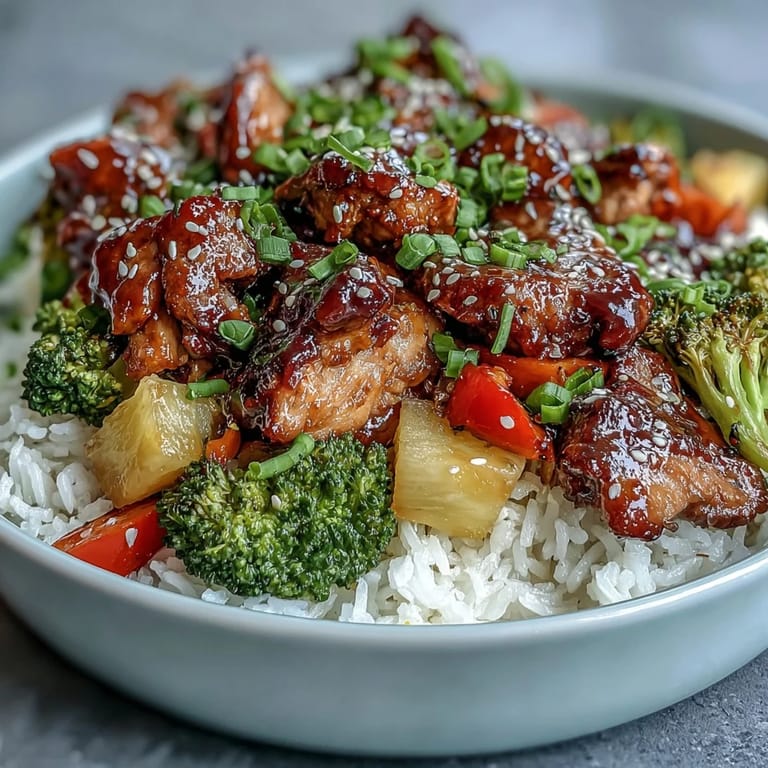
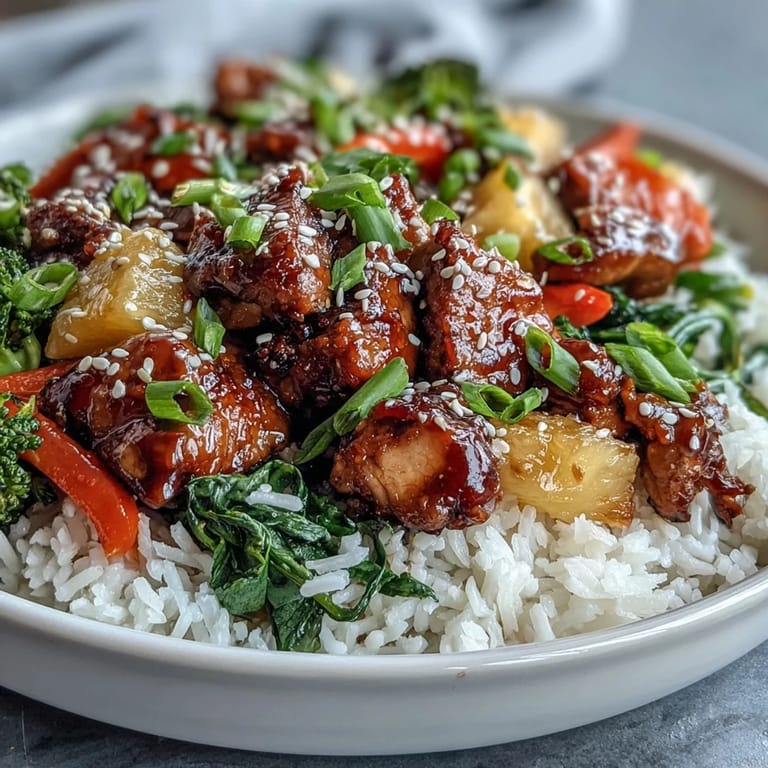
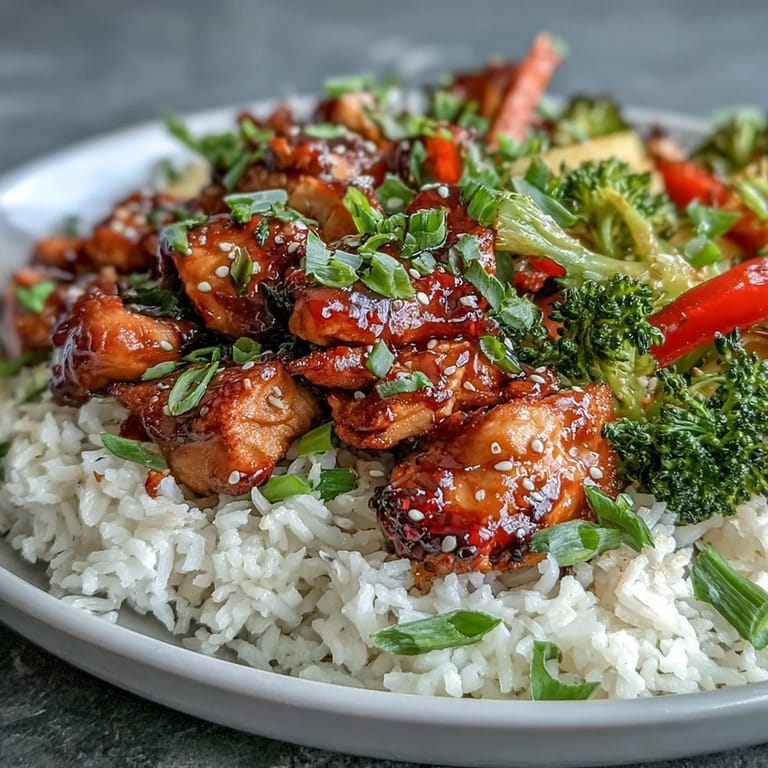
- Divide fluffy rice among four bowls, then top each with teriyaki chicken, its glorious sauce, the stir-fried vegetables, and a generous handful of fresh pineapple. Finish with a scatter of scallions and a sprinkle of toasted sesame seeds that catch the light.
 Pin it
 There's a moment when my kitchen fills with the aroma of ginger and garlic hitting hot oil, when the rice steam fogs up my glasses, and I remember why I keep making this. It's the moment before everything comes together on a single bowl, when I know everyone at the table is going to slow down and actually taste their dinner instead of rushing through it.
Why Homemade Beats Takeout
Ordering teriyaki from a restaurant means accepting a sauce that's often too thick, too sweet, or thickened with cornstarch until it tastes gluey. When you make it yourself, you control the balance—you can taste the individual notes of soy and mirin instead of just a wall of sweetness. Plus, there's something satisfying about watching the sauce thicken and gloss under your own hand, knowing exactly what went into it.
Timing Strategy for Stress-Free Cooking
Start the rice first because it's the most hands-off element and takes the longest; while it steams, prep all your vegetables and make the sauce. By the time the rice is done resting (which is essential, by the way—don't skip this), you're ready to cook the chicken and vegetables back-to-back without any real waiting. This sequence means you're never standing around watching a pot, and everything finishes hot at the same time.
Flexibility Built In
This recipe thrives on substitutions because the teriyaki sauce is forgiving and adapts beautifully. Swap the chicken for tofu or tempeh, throw in mushrooms or zucchini where you'd planned carrots, even use brown rice instead of white if that's your preference. The sauce stays the star, and everything else is just a vehicle for it.
- Vegetarian twist: Press firm tofu and cube it, or use thick tempeh slices—they benefit even more from the marinade and sauce.
- Veggie variations: Baby corn, water chestnuts, green beans, or shiitake mushrooms all sing in this bowl.
- Heat option: A drizzle of sriracha or chili oil transforms this from sweet-savory into something with an edge.
 Pin it
 This bowl has become my answer to the question what should we eat tonight, and I've never regretted that choice. It's generous enough to feel like celebration, simple enough for a Tuesday, and adaptable enough that it never gets boring.
Recipe FAQs
- → Can I use other meats instead of chicken?
Yes, you can substitute chicken thighs with beef strips, shrimp, or even tofu for a vegetarian version. Adjust cooking times accordingly based on your protein choice.
- → What vegetables work best in this bowl?
Broccoli, carrots, bell peppers, and snap peas provide great color and crunch. You can also add mushrooms, zucchini, baby corn, or snow peas based on what's in season.
- → Can I make the teriyaki sauce ahead of time?
Absolutely. The teriyaki sauce can be prepared up to a week in advance and stored in an airtight container in the refrigerator. It actually develops more flavor as it sits.
- → Is this dish spicy?
The base dish is not spicy, but you can easily add heat by serving with sriracha, chili oil, or adding red pepper flakes to the vegetable stir-fry.
- → Can I use brown rice instead of white rice?
Yes, brown rice works well but requires longer cooking time and more water. Plan for about 40-45 minutes of cooking time and use 2.5 cups of water per cup of brown rice.
- → How do I store leftovers?
Store components separately in airtight containers in the refrigerator for up to 3-4 days. Reheat gently and add fresh garnishes when serving.