 Pin it
 There's this moment when you're standing in front of your pantry on a Tuesday evening, mentally exhausted, knowing dinner needs to happen in the next thirty minutes. That's when I discovered this teriyaki noodle bowl—not from a cookbook, but from desperation and whatever vegetables hadn't wilted in the crisper drawer. Now it's become the dish I make when I want something that tastes like I tried harder than I actually did, which honestly feels like winning.
I made this for my roommate on a rainy Saturday after she'd had a rough week, and watching her actually relax over a bowl—shoulders dropping, that first satisfied sigh—reminded me that sometimes the best meals aren't about being fancy. They're about showing up for someone with something warm and honest. She asked for the recipe that same night.
Ingredients
- Egg noodles (300 g): These have a tender, slightly chewy texture that holds onto sauce better than you'd expect, and they cook in just minutes once your water hits a rolling boil.
- Broccoli florets (2 cups): Keep them cut into bite-sized pieces so they cook evenly and don't overshadow the noodles in your bowl.
- Carrots (2 medium, julienned): The thin slices mean they stay crisp instead of turning mushy, and they add a natural sweetness that plays beautifully against the savory sauce.
- Green onions (2, sliced): Save some for garnish because that fresh onion bite at the end is what keeps this from feeling heavy.
- Soy sauce (1/4 cup): This is your umami backbone—don't skimp on quality here because it makes a genuine difference in how the whole bowl tastes.
- Mirin (2 tbsp): If you can't find it, dry sherry works in a pinch, though mirin has a subtle sweetness that mirin brings something special.
- Honey or maple syrup (2 tbsp): This rounds out the sauce with a gentle sweetness that isn't cloying or oversweetened.
- Rice vinegar (1 tbsp): A splash of acidity to brighten everything so the sauce doesn't feel flat.
- Brown sugar (1 tbsp): Extra depth and a touch of molasses that makes the whole sauce feel more complex.
- Sesame oil (2 tsp): Use just enough to perfume the sauce—too much and it overpowers everything else.
- Garlic and ginger (2 cloves minced, 1 tsp grated): Fresh is non-negotiable here because they're what make this taste alive instead of like something from a jar.
- Cornstarch slurry (1 tbsp cornstarch mixed with 2 tbsp water): This is what transforms a thin sauce into something that clings to the noodles instead of pooling at the bottom.
- Toasted sesame seeds (2 tbsp): Toast them yourself if you have time—they taste infinitely better than pre-toasted, and the kitchen smells incredible.
Tired of Takeout? 🥡
Get 10 meals you can make faster than delivery arrives. Seriously.
One email. No spam. Unsubscribe anytime.
Instructions
- Get your noodles cooking:
- Fill a large pot with water and bring it to a rolling boil, then add your egg noodles and stir gently so they don't stick together. Follow the package timing, drain them when they're tender but still have a tiny bit of resistance when you bite one, then rinse under cold water to stop them from overcooking.
- Prep the vegetables while water boils:
- Julienne your carrots so they're thin matchsticks, cut your broccoli into florets about the size of your thumb, and slice your green onions at an angle because it actually does look nicer. Have everything ready before you start cooking the sauce because once that gets going, you won't have time to chop.
- Blanch your vegetables:
- Bring a separate pot of salted water to a boil and drop in your broccoli and carrots for just 2 to 3 minutes—you want them tender enough to eat but still crisp when you bite down. Drain them and set aside immediately so they don't keep cooking.
- Make the sauce from scratch:
- Combine your soy sauce, mirin, honey, rice vinegar, brown sugar, sesame oil, minced garlic, and grated ginger in a small saucepan over medium heat and let it come to a gentle simmer. This takes about 3 minutes, and you'll notice the aroma changing from raw garlic to something softer and more integrated.
- Thicken and finish the sauce:
- Give your cornstarch slurry a quick stir to recombine it (the starch settles), then pour it slowly into your simmering sauce while stirring constantly so you don't end up with lumps. Cook for another minute or two until it's glossy and coats the back of a spoon.
- Toss everything together:
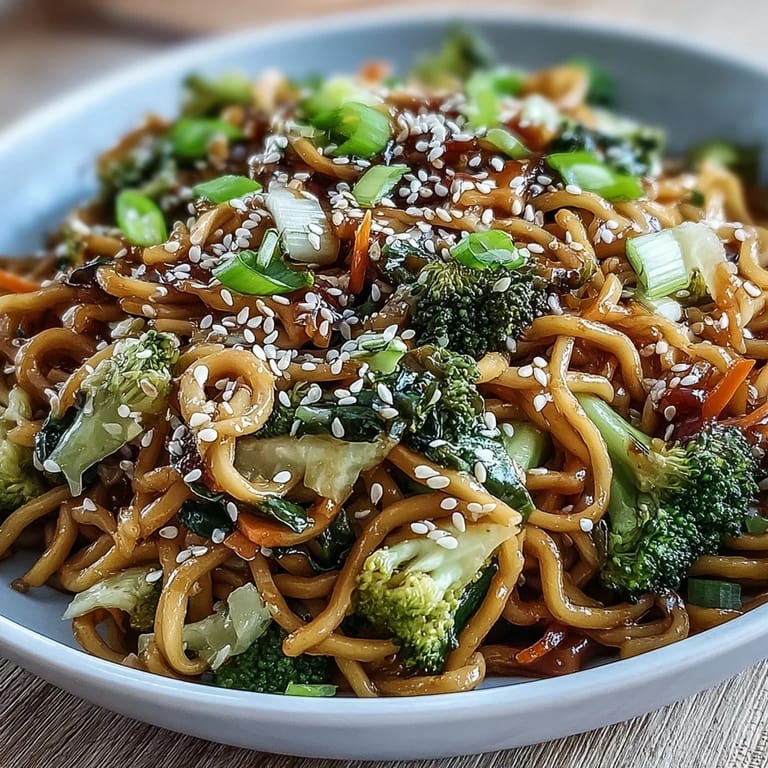
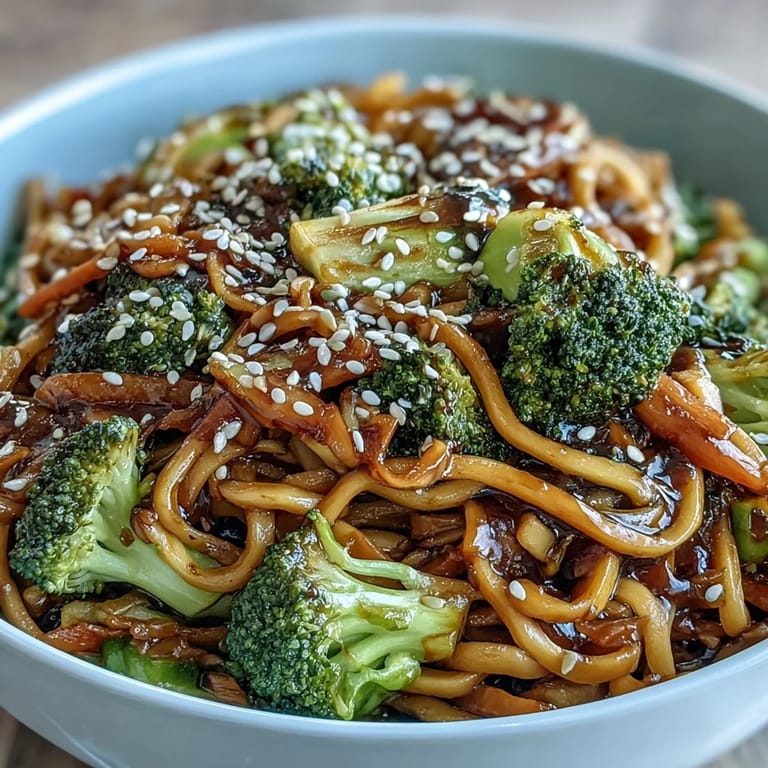
- In a large wok or skillet, combine your cooked noodles, blanched vegetables, and sliced green onions, then pour the sauce over everything and toss gently but thoroughly so every strand of noodle gets coated. This is where it transforms from separate ingredients into an actual dish.
- Serve and finish:
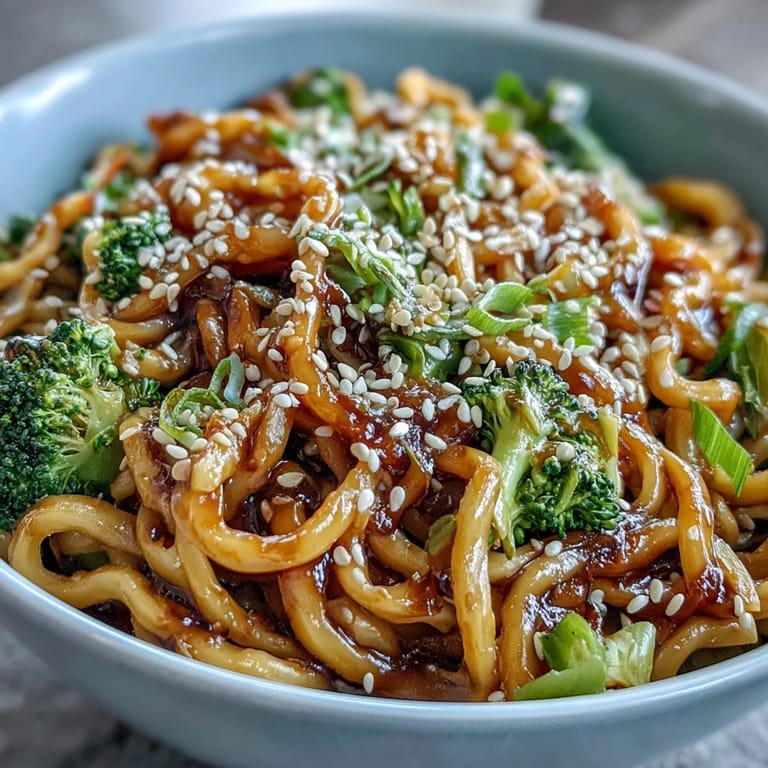
- Divide the noodle mixture among bowls and shower each one with toasted sesame seeds and extra green onion slices while everything is still hot. Eat it right away because it's best when the noodles are warm and the sesame seeds haven't had time to soften.
 Pin it
 Last summer I made this for a small dinner party and someone asked if I'd learned to cook Asian food properly, and I had to laugh because the truth is so much simpler—I just followed what tasted right and paid attention. That's when cooking stopped feeling like following rules and started feeling like having a conversation with the food itself.
When to Make This Bowl
This works on weeknights when you need something that tastes considered but doesn't require hours of planning, and it's equally good on weekend nights when you want to cook something satisfying without heating up your kitchen too much. I've made it in summer when I want noodles but nothing heavy, and in cooler months when I add extra ginger and garlic to make it feel warmer. It's flexible enough to meet you wherever you are, which honestly might be its best quality.
Building Your Own Variations
The beauty of this bowl is that once you understand how the sauce works, you can build outward from there without worrying you'll break something. I've added everything from crispy tofu to rotisserie chicken to thinly sliced mushrooms, and the sauce has never complained. The vegetables can shift with the seasons—snap peas in spring, zucchini in summer, whatever calls to you from the market.
Making It Work For Everyone At Your Table
If you're cooking for someone who's vegan, swap the egg noodles for wheat or rice noodles and use maple syrup instead of honey, and honestly the bowl doesn't feel like you've compromised anything. For people who want extra protein, cook some tofu or tempeh alongside the vegetables, or use store-bought rotisserie chicken torn into pieces. The sauce is naturally adaptable because it's built on such simple, plant-forward flavors that work with almost anything you want to add.
- Grill some chicken thighs the day before and add them cold to the warm noodles for interesting contrast in temperature and texture.
- If you find yourself with leftover sauce, thin it out slightly and use it as a dipping sauce for dumplings or drizzle it over roasted vegetables.
- Make the sauce in double batch on Sunday and you'll have it ready for three quick bowls throughout the week.
 Pin it
 This bowl has become the recipe I reach for when I want to remember that cooking doesn't have to be complicated to be good. It's proof that you can make something that tastes genuinely delicious by just paying attention and trusting what tastes right to you.
Recipe FAQs
- → Can I make this dish vegan?
Absolutely. Swap egg noodles for wheat or rice noodles, and replace honey with maple syrup. The rest of the ingredients are naturally plant-based.
- → How do I store leftovers?
Store in an airtight container in the refrigerator for up to 3 days. Reheat gently in a pan with a splash of water to refresh the sauce coating.
- → What protein additions work well?
Crispy tofu, tempeh, or grilled chicken pair beautifully. Add your protein during the final toss with the sauce so it absorbs the teriyaki flavors.
- → Can I use other vegetables?
Yes. Bell peppers, snap peas, bok choy, or shiitake mushrooms all work wonderfully. Adjust cooking times so vegetables stay tender-crisp.
- → Is the sauce adjustable?
Certainly. Add more honey for sweetness, extra soy for saltiness, or a splash of sriracha if you enjoy heat. The sauce base is quite versatile.