 Pin it
 My coworker brought a Korean beef bowl to lunch one day, and I couldn't stop watching her eat it—the way she mixed everything together, how the colors just popped on that white rice. She caught me staring and laughed, then offered me a bite, and suddenly I understood why people get excited about food that's this alive. That evening I stood in my kitchen trying to recreate it, and what I made wasn't fancy, but it was honest and so deeply satisfying. Now it's become my go-to when I need something that feels both comforting and adventurous at the same time.
I made this for my best friend when she was going through a rough patch, and she showed up at my door looking tired. We sat at my kitchen counter while the beef sizzled, and she started telling me stories again—real ones, the kind she'd been holding in. By the time we ate, she was laughing with her whole body, and she looked at the bowl and said it was the most beautiful thing she'd seen all week. That's when I realized this recipe isn't just about feeding people; it's about giving them a moment where everything feels a little brighter.
Ingredients
- Lean ground beef (1 lb): Choose beef with a decent marbling of fat because it keeps everything moist and flavorful as it cooks down, and it's forgiving enough for beginners.
- Gochujang (3 tbsp): This Korean chili paste is the soul of the dish, bringing heat and depth that regular hot sauce can't match—keep a jar in your pantry always.
- Soy sauce (2 tbsp): It adds umami and saltiness that rounds out the spice, making the whole thing taste intentional rather than just hot.
- Toasted sesame oil (1 tsp): A little goes a long way, and it brings a toasted, nutty richness that you'll taste in every bite.
- Garlic and ginger (3 cloves and 1 tbsp): Fresh is non-negotiable here because they perfume the oil and make everything smell like you've been cooking for hours.
- Rice vinegar (1 tbsp for beef, 1/2 cup for vegetables): It cuts through the richness and adds brightness, preventing the bowl from feeling heavy.
- Brown sugar (1 tbsp): Just enough to balance the heat and salt, creating a sauce that's complex rather than one-note.
- Pickled vegetables (carrots and daikon): These provide contrast and crunch, and the pickling liquid brightens everything on the plate.
- Cucumber and radish slices: They keep things fresh and cool against the warm, spicy beef.
- Kimchi (1 cup): Choose a good quality jar because it's a star player here, adding fermented funk and extra kick.
- Cooked white rice (4 cups): The base that soaks up all the flavors, so don't skimp on making it properly.
- Toasted sesame seeds (1 tbsp): These are your final touch of elegance and a little extra nuttiness.
- Green onions (2): They add a fresh, sharp bite that prevents everything from becoming one muddy flavor.
Tired of Takeout? 🥡
Get 10 meals you can make faster than delivery arrives. Seriously.
One email. No spam. Unsubscribe anytime.
Instructions
- Start your pickled vegetables first:
- Whisk rice vinegar, sugar, and salt in a small bowl until the sugar dissolves completely, then toss in your julienned carrots and daikon radish. Set this aside and let it sit while you work on everything else—the longer it sits, the tangier it becomes, and that's a good thing.
- Get your oil fragrant and alive:
- Heat vegetable oil in a large skillet over medium-high heat until it shimmers, then add your minced garlic and grated ginger. You'll know it's ready when the smell hits you like a wave and your kitchen suddenly feels like a cooking show—this should take about 1 minute.
- Brown the beef with intention:
- Add your ground beef and use a wooden spoon to break it apart as it cooks, letting each piece get contact with the hot pan. Stop when it's fully cooked through and no longer pink, around 5 to 6 minutes, then drain any excess fat if you see puddles sitting on top.
- Build the sauce that ties everything together:
- Stir in your gochujang, soy sauce, brown sugar, rice vinegar, and sesame oil, then let it all bubble together for 2 to 3 minutes until the sauce thickens and becomes glossy. Taste it here—this is your moment to add more of anything you want, because you're in control.
- Finish with freshness:
- Remove from heat and stir in half your green onions, then set the skillet aside so the beef stays warm while you assemble.
- Build each bowl like you're creating art:
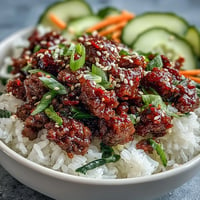
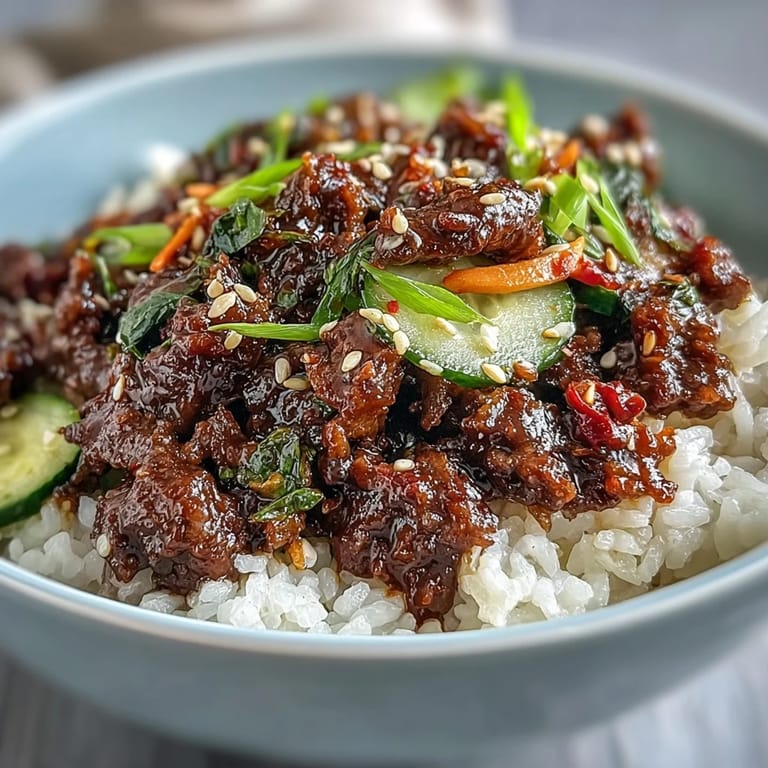
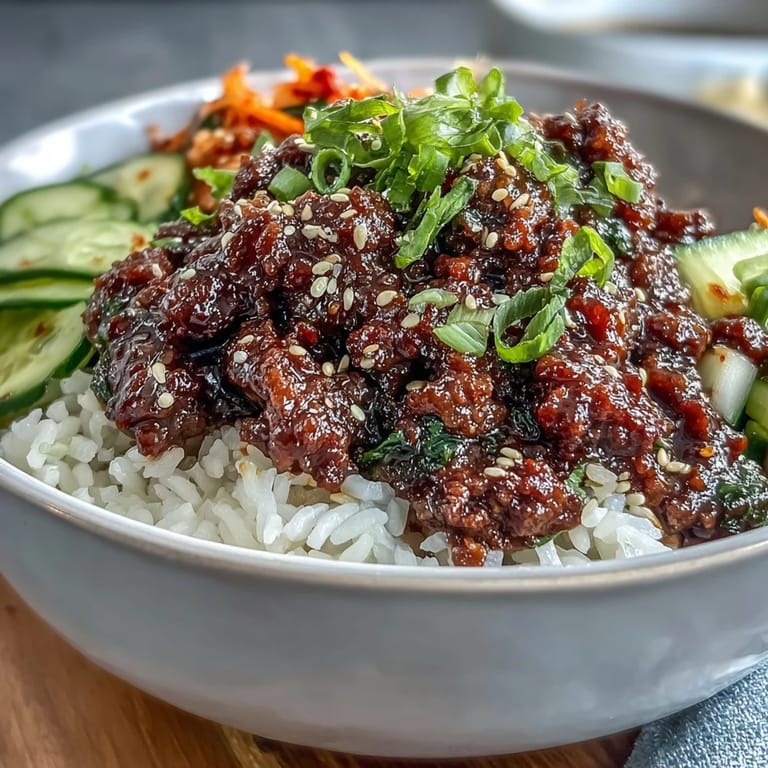
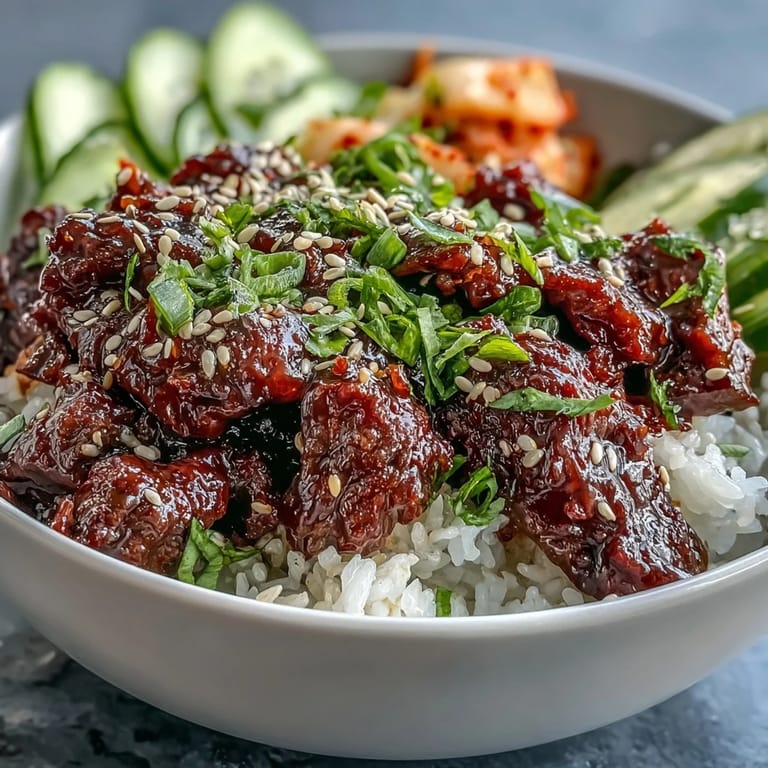
- Divide your cooked rice among 4 bowls, then top each with a generous scoop of the beef mixture. Arrange your pickled vegetables, cucumber slices, radish, and kimchi around the beef in whatever way makes you happy, then sprinkle sesame seeds and remaining green onions on top.
 Pin it
 My neighbor knocked on my door one evening because the smell coming from my kitchen was so good she had to know what I was making. I invited her in, and we ended up sitting across from each other with these bowls, and she told me about her daughter studying abroad and how much she missed her. Food has this weird power to open people up, to create space for honesty and connection in a way that's almost invisible until it's happening.
The Art of Balancing Heat and Flavor
The magic of this bowl isn't about being the spiciest thing on your plate—it's about how the heat plays with sweetness, salt, and tang. When you taste it, you should feel a cascade of flavors rather than just fire, and that comes from respecting each ingredient's job. I learned this the hard way when I tried to amp up the gochujang and ended up with something that just hurt to eat, which taught me that more isn't always better.
Why This Bowl Beats Takeout
You know that moment when takeout arrives and you're disappointed because it doesn't taste as good as you imagined? This bowl is the opposite—it's actually better when you make it because you control every single element. The beef is cooked exactly how you like it, the vegetables are as crisp or pickled as you want them, and the whole thing comes together in your own kitchen with your own care.
Making It Your Own
I've learned that the best recipes are the ones you feel brave enough to change, and this bowl welcomes that. Some nights I use ground turkey because that's what I have, other times I add a fried egg on top because I'm hungry, and once I threw in some roasted broccoli just to see what would happen. Every version is delicious because the foundation is solid, and the components are flexible enough to adapt to whatever you're craving or whatever your pantry holds.
- Try adding a soft fried egg on top if you want something richer and more filling.
- Ground chicken or turkey works beautifully if beef isn't what you're in the mood for.
- If you like it spicier, drizzle extra gochujang or sriracha over the top right before eating.
 Pin it
 This bowl is the kind of meal that feeds you and also makes you feel capable in the kitchen, which is honestly the best gift a recipe can give. Make it soon, and pay attention to how it brings people closer together.
Recipe FAQs
- → What does gochujang taste like?
Gochujang is a fermented Korean chili paste with a complex flavor profile. It offers a balance of sweet, savory, and spicy notes with a deep umami richness. The fermentation process adds depth, making it more flavorful than standard hot sauces.
- → Can I make the pickled vegetables in advance?
Yes, the quick-pickled carrots and daikon can be made up to 3 days ahead. Store them in an airtight container in the refrigerator. The flavors will continue to develop over time, becoming more tangy and infused with the pickling liquid.
- → Is this dish very spicy?
The spice level is moderate and approachable. Gochujang provides warmth rather than overwhelming heat. If you're sensitive to spice, start with less gochujang. For those who love heat, add extra gochujang or a drizzle of sriracha when serving.
- → Can I use other proteins besides ground beef?
Absolutely. Ground turkey or chicken work beautifully as lighter alternatives. For a vegetarian version, use crumbled tofu or plant-based ground meat. Adjust cooking time accordingly, as turkey and chicken may cook slightly faster than beef.
- → What rice works best for Korean bowls?
Short-grain white rice is traditional and provides the ideal fluffy yet slightly sticky texture that holds up well against the saucy beef. Brown rice adds nutty flavor and extra fiber but will have a chewier texture. Jasmine rice is another good option if you prefer aromatic, long-grain varieties.
- → How do I store leftovers?
Store components separately in airtight containers. The beef will keep for 3-4 days in the refrigerator. Reheat gently in a skillet with a splash of water to refresh the sauce. The pickled vegetables can be refrigerated for up to a week. Rice is best used within 2 days or frozen for longer storage.