 Pin it
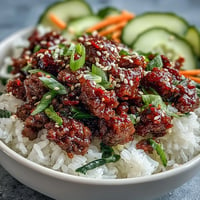
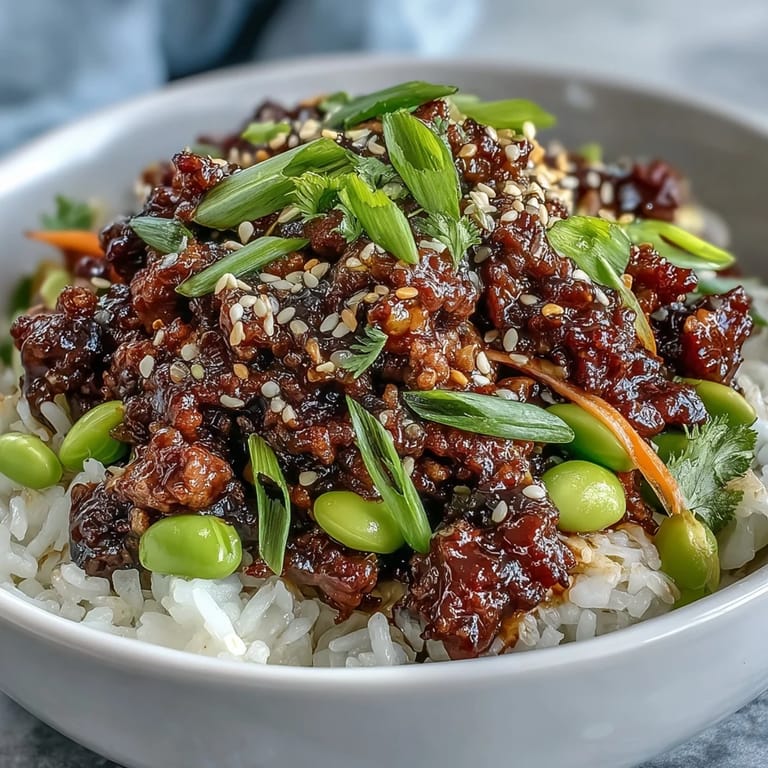
 My coworker brought these Korean beef bowls to lunch one Tuesday, and I couldn't stop thinking about them for days afterward. The way the gochujang-glazed meat glistened over the rice, how the kimchi added this bright, funky punch to every bite—it felt both comforting and exciting at once. I finally asked for her method, and she laughed, saying it takes barely longer than ordering takeout. Now I make these whenever I need something that feels special but doesn't demand hours in the kitchen.
I made these for my sister's birthday potluck, and I watched people go back for thirds without even realizing it. There's something about a bowl with this much color and texture that makes everyone feel like they're eating something restaurant-quality. She still texts me photos of the leftovers she's reheating.
Ingredients
- Lean ground beef (1 lb): The meat is your anchor here, and leaner cuts keep things from becoming greasy while still staying tender once that sauce coats everything.
- Gochujang (2 tbsp): This Korean chili paste is where the magic lives, delivering umami and heat that store-bought marinades can't touch—don't skip it or substitute without tasting first.
- Soy sauce (2 tbsp): Use the real thing, not the light version, because you need that deep saltiness to balance the sweet and spicy.
- Brown sugar (1 tbsp): A small amount rounds out the sauce, making it glossy and slightly caramelized rather than one-note.
- Garlic and ginger (2 cloves and 1 tbsp minced): Fresh is non-negotiable here; the aroma when you first sauté these two together sets the whole tone.
- Toasted sesame oil (1 tbsp for beef, plus oil for sautéing): This oil has a nutty intensity that makes every other ingredient taste more alive.
- Green onions (2 total): Half goes into the beef, half sprinkles on top, giving you freshness in two different ways.
- Short-grain rice (4 cups cooked): The stickier texture catches and holds that gorgeous sauce better than long-grain ever could.
- Edamame (1 cup shelled): These soybeans add protein, a pop of color, and a slightly nutty texture that plays well with everything else.
- Cucumber and carrot (1 cup each): The cool crispness of cucumber and the slight sweetness of julienned carrot keep the bowl from feeling heavy.
- Kimchi (1 cup chopped): The funkiness and vinegary bite are essential; this isn't optional if you want the full experience.
- Toasted sesame seeds (2 tbsp): Toast your own if possible, because the difference between fresh-toasted and pre-packaged is honestly surprising.
Tired of Takeout? 🥡
Get 10 meals you can make faster than delivery arrives. Seriously.
One email. No spam. Unsubscribe anytime.
Instructions
- Bloom the aromatics:
- Heat sesame oil in a large skillet over medium heat, then add minced garlic and ginger. You'll know they're ready when the kitchen smells so good you almost forget why you're cooking.
- Brown the beef:
- Crumble the ground beef into the pan and use a wooden spoon to break it into small pieces as it cooks, about 5-6 minutes total. The meat should be completely cooked through with no pink remaining.
- Build the sauce:
- Stir in gochujang, soy sauce, and brown sugar, mixing until the beef is evenly coated. Let it bubble gently for 2-3 minutes so the sauce thickens and clings to each piece of meat.
- Finish with brightness:
- Remove from heat and fold in half the green onions, giving everything one last gentle toss.
- Assemble your bowls:
- Divide rice among four bowls, then arrange the beef, edamame, cucumber, carrot, and kimchi in neat little sections on top. This isn't just prettier—it gives you a little adventure in every bite.
- Final flourish:
- Scatter the remaining green onions and toasted sesame seeds across the top, then serve immediately while everything is still warm.
 Pin it
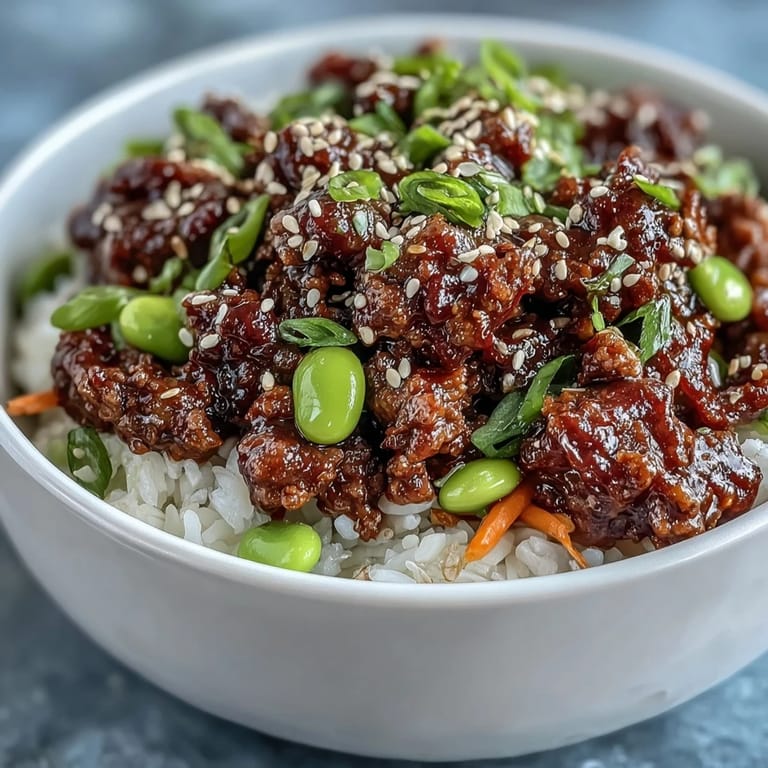
 My neighbor stopped by while I was making this and ended up staying for dinner. We sat outside with these bowls, and she kept saying how every spoonful tasted completely different depending on what vegetables you caught—sometimes more heat, sometimes more cool crunch. It turned into one of those easy, no-fuss meals that somehow became memorable.
Why This Bowl Works for Any Night
There's something liberating about a meal that doesn't require fancy technique or complicated timing. The beef cooks while you slice vegetables, and everything stays hot long enough to assemble without stress. Once you've made it once, you'll find yourself throwing it together on nights when takeout suddenly sounds less appealing than actual fresh food.
Playing with Temperature and Texture
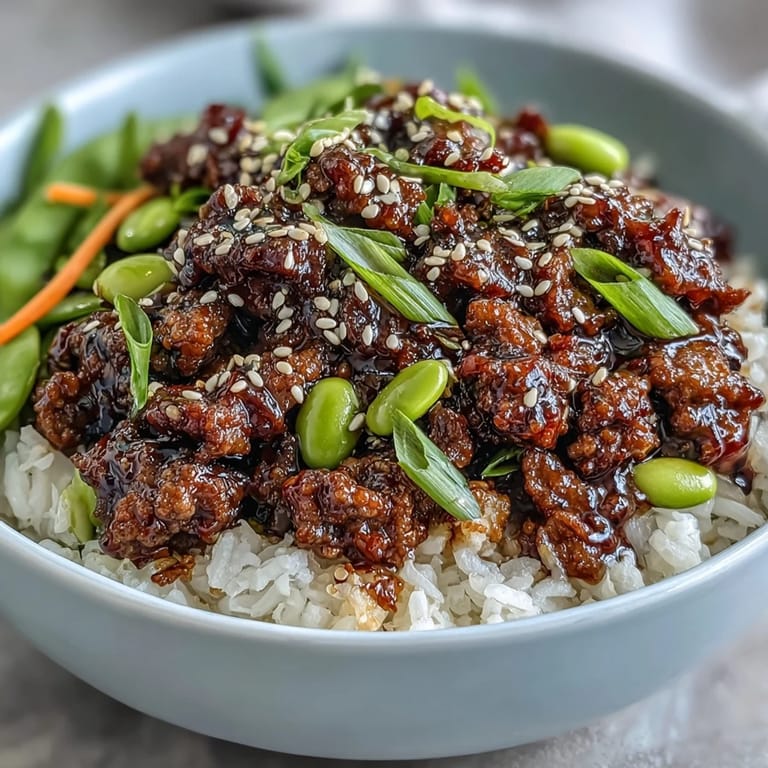
This bowl thrives on contrast—warm beef and rice against cool cucumber and edamame, creamy rice against the slight chew of kimchi, the crunch of sesame seeds scattered throughout. If your kitchen feels boring, this dish reminds you why layering different temperatures and textures matters more than fancy ingredients. You're not just eating; you're experiencing something with dimension.
Making It Work for Your Kitchen
The beauty of this recipe is that it genuinely welcomes swaps and adjustments. Ground turkey or chicken works beautifully if beef isn't your thing, and plant-based crumbles have gotten good enough that vegetarian versions feel complete rather than compromised. I once added shredded cabbage for extra crunch and radish for peppery bite, and it completely changed how the bowl felt.
- If you're sensitive to heat, use less gochujang and taste as you go, remembering you can always add more but you can't undo it.
- Prep all your vegetables the night before and store them separately so you're literally just cooking meat and assembling on busy weeknights.
- A fried egg on top adds richness and richness, turning this from satisfying into genuinely luxurious.
 Pin it
 This bowl somehow manages to feel both comforting and exciting, which is the mark of a recipe worth making again and again. Once you've tasted how gochujang and sesame and kimchi sing together over rice, you'll understand why my coworker's lunch became my regular dinner.
Recipe FAQs
- → Can I make this bowl spicier?
Absolutely. Increase the gochujang to 3 tablespoons for more heat, or add a teaspoon of gochujang-based chili flakes known as gochugaru. You can also serve with additional kimchi on the side for extra spice.
- → What other proteins work well with these flavors?
Ground turkey or chicken create a lighter version while still absorbing the bold seasonings beautifully. For a vegetarian option, use plant-based crumbles or cubed tofu. Even thinly sliced pork or chicken breast work wonderfully with the gochujang sauce.
- → Can I prepare the beef mixture ahead of time?
Yes, the seasoned beef keeps well in the refrigerator for 3-4 days. Store it in an airtight container and reheat gently in a skillet or microwave. The flavors often develop even more after sitting. Just prepare fresh rice and vegetables when serving.
- → Is there a gluten-free option?
Simply substitute the soy sauce with gluten-free tamari. Most gochujang brands are naturally gluten-free, but always check the label to be certain. The remaining ingredients are naturally gluten-free.
- → What can I substitute for kimchi?
If kimchi isn't available, try quick-pickled vegetables made with rice vinegar, sugar, and salt. Sliced radishes, cucumber, or cabbage work well. Alternatively, sautéed bok choy or spinach with sesame oil provides a nice vegetable element.