 Pin it
 I discovered peanut butter mochi cake entirely by accident one rainy afternoon when I was trying to use up a container of mochiko flour before it expired. I'd been craving something chewy but also wanted the comforting richness of peanut butter, and somehow those two thoughts collided in the kitchen. The first batch came out almost too soft, nearly falling apart when I pulled it from the oven, but that slight wobble turned into the most wonderful, custard-like texture. Now it's become my go-to when I want something that feels fancy but actually takes less time than most cakes.
The real magic happened when I brought this to a potluck and watched people's faces light up as they bit into a square—nobody could quite place what made it so different from regular cake. My friend Maria kept asking if there was tapioca in it, which made me realize how the mochi flour creates this distinct chew that reminds people of things they love but can't quite name. That moment of confusion followed by genuine delight is what keeps me making this cake.
Ingredients
- Sweet rice flour (mochiko): This is the secret ingredient that gives the cake its signature chewy, slightly springy crumb—don't substitute regular rice flour or you'll lose that magical texture.
- Granulated sugar: Standard sugar works perfectly here; you could try brown sugar if you want deeper flavor, but I stick with white for the clean taste it lets the peanut butter shine through.
- Baking powder: Just enough to give a gentle lift without making it rise like a traditional cake—this is meant to stay dense and custardy.
- Whole milk and coconut milk: The combination creates a subtly tropical richness; the whole milk keeps it grounded while coconut adds depth and helps maintain that moisture.
- Creamy peanut butter: Use the good stuff with minimal additives—I learned the hard way that overly processed peanut butter makes the flavor taste thin and one-dimensional.
- Eggs and melted butter: These bind everything together and add that tender crumb, while the butter carries the peanut butter flavor throughout.
- Vanilla extract: A small amount that rounds out all the flavors without making it taste like a regular vanilla cake.
Tired of Takeout? 🥡
Get 10 meals you can make faster than delivery arrives. Seriously.
One email. No spam. Unsubscribe anytime.
Instructions
- Set up and heat:
- Preheat your oven to 350°F and prepare a 9x13-inch pan—I use parchment paper because it makes lifting the finished cake so much easier. Getting the oven temperature right is crucial since mochi cakes bake differently than regular cakes.
- Combine the dry ingredients:
- Whisk together your mochiko flour, sugar, baking powder, and salt until you don't see any lumps of flour hiding anywhere. This mixing step prevents streaks of dry flour from ending up in your batter.
- Blend the wet ingredients:
- In another bowl, whisk the milk, coconut milk, eggs, peanut butter, melted butter, and vanilla until completely smooth—small pockets of unmixed peanut butter will create uneven texture. This takes about a minute of steady whisking to get right.
- Marry the two together:
- Pour the wet mixture into the dry mixture and whisk gently until just combined and smooth, stopping as soon as you don't see streaks of flour. Overmixing can make it tough, which defeats the purpose of this tender, chewy cake.
- Pour and settle:
- Transfer your batter to the prepared pan and give it a few gentle taps on the counter to release any air bubbles trapped inside. The batter should look thick and batter-like, not pourable like a regular cake batter.
- Bake until set:
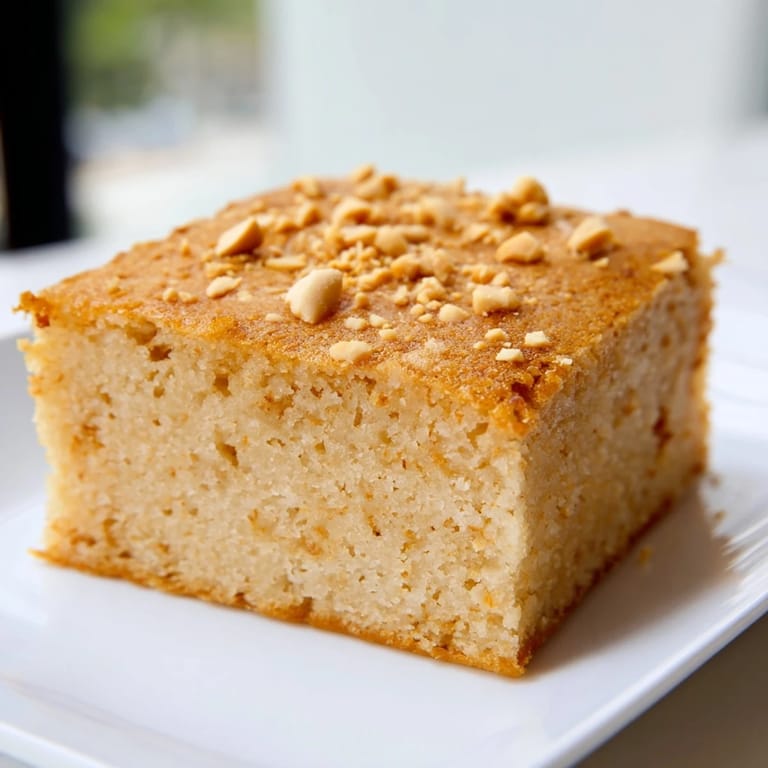
- Bake for 45 to 50 minutes until the top is golden brown and a toothpick inserted in the center comes out clean or with just a few moist crumbs. The edges might pull away from the pan slightly, which is a good sign.
- Cool completely:
- Let it cool entirely in the pan before cutting—I know it's tempting to slice it while it's warm, but waiting makes it much easier to cut neat squares. Once cooled, it firms up just enough to hold its shape.
 Pin it
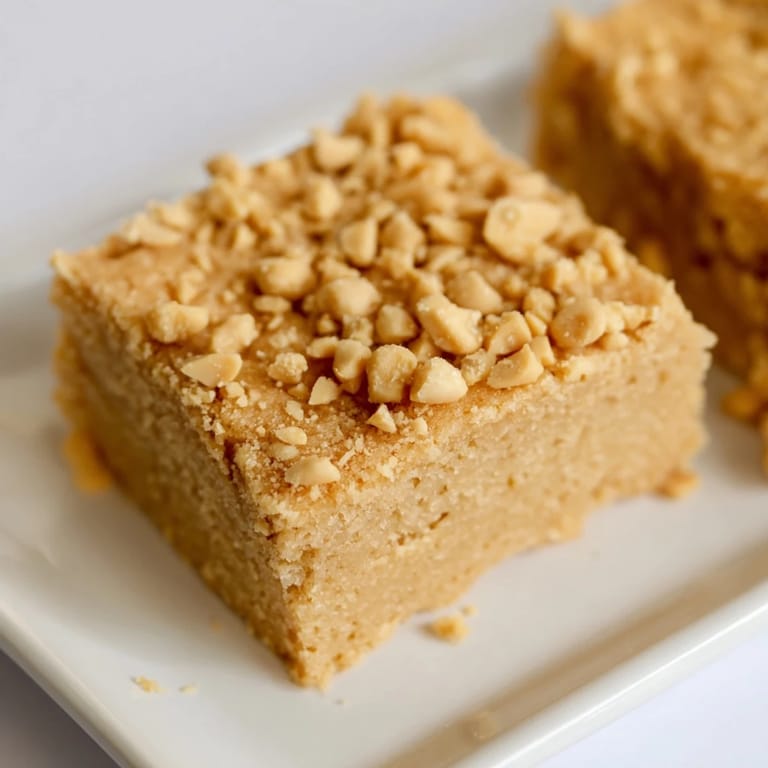
 There's something almost meditative about watching this cake develop in the oven—the way the top gradually turns from pale to golden, the smell that fills your kitchen with toasted peanut and something warm and vaguely tropical. I find myself checking through the oven window more often than necessary, just to watch the transformation happen.
Why This Blend of Flavors Works
Peanut butter has this natural sweetness and richness that pairs beautifully with the mild, slightly sticky nature of mochi. The coconut milk doesn't announce itself loudly—instead it creates this subtle warmth underneath that makes the peanut flavor more complex and interesting. It's the kind of flavor combination that feels familiar but also surprising, like someone added an unexpected ingredient to a beloved recipe and somehow made it even better. The chewy texture of the mochi rounds out the heaviness of the peanut butter, so each bite feels luxurious without being overwhelming.
Storage and Serving Ideas
This cake actually improves over a day or two as the flavors deepen and the texture becomes even creamier, so it's perfect for making ahead. Room temperature is lovely, but I genuinely prefer it chilled straight from the refrigerator—the cold seems to amplify the peanut butter and makes it almost mousse-like.
Make It Your Own
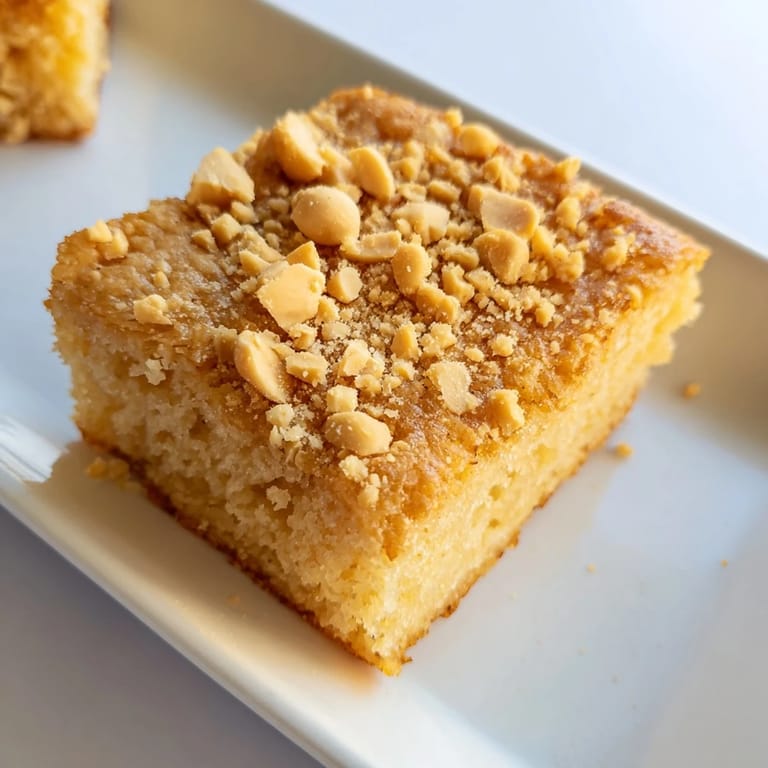
The beauty of mochi cakes is how forgiving they are when you want to play with flavors. I've added a handful of roasted peanuts scattered on top before baking for an extra crunch, swapped the coconut milk for evaporated milk when I wanted something lighter, and even tried a drizzle of chocolate on top once. The base is so solid that little variations just add personality without breaking anything.
- A dusting of powdered sugar or cocoa powder on top adds visual appeal and a subtle flavor boost.
- Serve with whipped cream, fresh berries, or even a scoop of vanilla ice cream for something special.
- This cake travels well if you need to bring it somewhere, unlike many delicate desserts that fall apart easily.
 Pin it
 This cake has become my comfort dessert and my go-to gift, the kind of thing people actually remember and ask for again. There's something deeply satisfying about a recipe this simple producing something this special.
Recipe FAQs
- → What makes mochi cake chewy?
The use of sweet rice flour (mochiko) gives the cake its signature chewy and tender texture.
- → Can I substitute the peanut butter?
Yes, creamy peanut butter gives richness, but smooth almond or cashew butter can also be used for variation.
- → How do I know when it’s baked perfectly?
The top should be golden brown and a toothpick inserted in the center should come out clean without wet batter.
- → Is coconut milk necessary for moisture?
Coconut milk adds richness and moisture, but evaporated milk can offer a lighter alternative while maintaining tenderness.
- → How should leftovers be stored?
Store leftovers in an airtight container in the refrigerator to preserve freshness and texture.