 Pin it
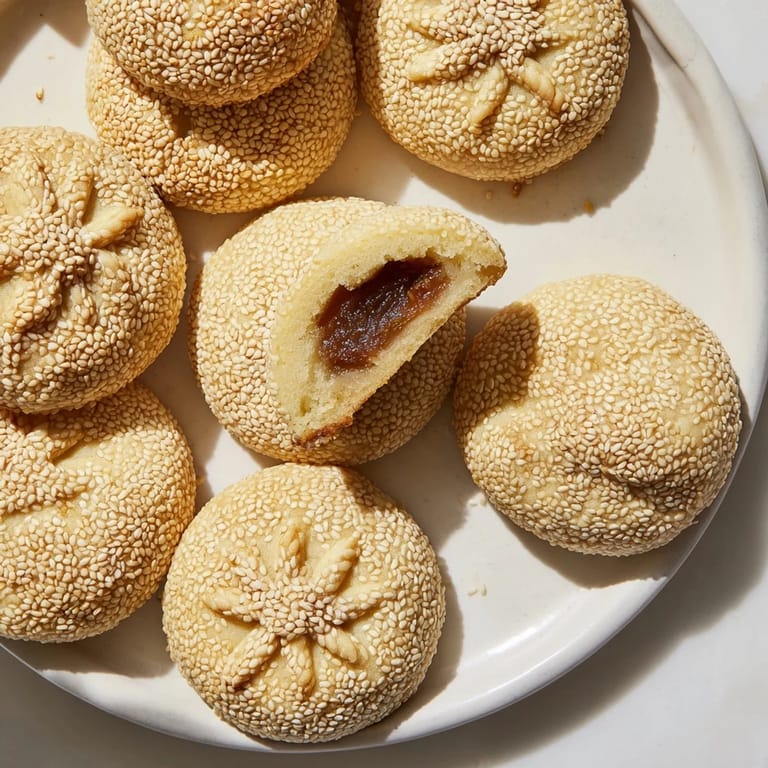
 The first time I truly understood kahk was watching my neighbor press each cookie with an old fork, her hands moving with such certainty that I realized these weren't just cookies—they were a language. She'd learned from her mother, who learned from hers, and when she handed me one still warm from the oven, the sesame seeds caught the light like tiny jewels. That moment taught me that some recipes carry stories deeper than their ingredient lists, and kahk is one of them.
I made these for a small gathering last winter, and what struck me most was how everyone's face softened the moment they bit in. Someone asked if they were difficult, and I realized that the medium difficulty was mostly theater—the actual process is just butter, patience, and believing in yourself. That's when I understood why families have passed this recipe down for generations; it's not complicated, it's just honest.
Ingredients
- All-purpose flour (3 cups): The foundation here is flour, but don't rush the creaming stage—this is where you build tenderness into every crumb before the flour even arrives.
- Unsalted butter (1 cup, softened): Cold butter makes tough cookies; room-temperature butter creams into clouds, which is exactly what you want.
- Powdered sugar (1/2 cup): This dissolves into the butter completely, giving you that silky dough texture that makes folding the filling feel like working with silk.
- Milk (1/4 cup, plus more as needed): Add it slowly—your dough might need less than you think, and too much milk turns delicate dough into something clingy and stubborn.
- Baking powder (1/2 teaspoon) and salt (1/4 teaspoon): These aren't afterthoughts; they wake up the butter's flavor and keep everything balanced.
- Vanilla extract (1 teaspoon): This whispers through the whole cookie, especially noticeable when you bite past the sesame into the buttery crumb.
- Medjool dates (1 cup, pitted and chopped): The star of the filling—use the soft, jammy ones, not the hard dried dates that won't soften properly.
- Butter for filling (2 tablespoons): This melts with the dates into a luxurious paste that doesn't need much else to shine.
- Ground cinnamon (1/2 teaspoon) and cardamom (1/4 teaspoon, optional): Cinnamon is non-negotiable; cardamom adds a floral whisper if you're feeling adventurous.
- Sesame seeds (1/2 cup, untoasted): Toast them lightly in a dry pan first if you want deeper flavor, but raw seeds give you that pale, delicate look traditional kahk should have.
Tired of Takeout? 🥡
Get 10 meals you can make faster than delivery arrives. Seriously.
One email. No spam. Unsubscribe anytime.
Instructions
- Preheat and prepare:
- Get your oven to 350°F and line your sheet with parchment—this keeps the bottoms from browning too fast while you're going for that golden-but-pale effect.
- Build the dough base:
- Cream butter and powdered sugar for about 2-3 minutes until it looks almost whipped. This is what traps air into the dough and makes each cookie tender instead of dense.
- Add flavor and structure:
- Drop in vanilla, then add your dry ingredients gently, mixing just until no flour streaks remain. Overworking this dough is the enemy.
- Reach the right consistency:
- Pour in milk one tablespoon at a time, kneading by hand until the dough feels soft and slightly tacky but not sticky—like a baby's skin, someone once told me. Cover and let it rest while you work on the filling.
- Cook the date filling:
- Combine your chopped dates and butter in a small pan over low heat, stirring constantly. Within 3-5 minutes, the dates will soften and collapse into a paste-like consistency that's almost glossy.
- Season the filling:
- Stir in cinnamon and cardamom (if using), mixing until the spices are completely distributed. Let it cool to room temperature before you fill the cookies, or it'll soften the dough.
- Divide and shape:
- Divide your dough into 24 equal pieces—a small kitchen scale helps here, but even just dividing into rough quarters and then eights works. Flatten each piece into a thin disk right in your palm, like a tiny pita.
- Fill and seal:
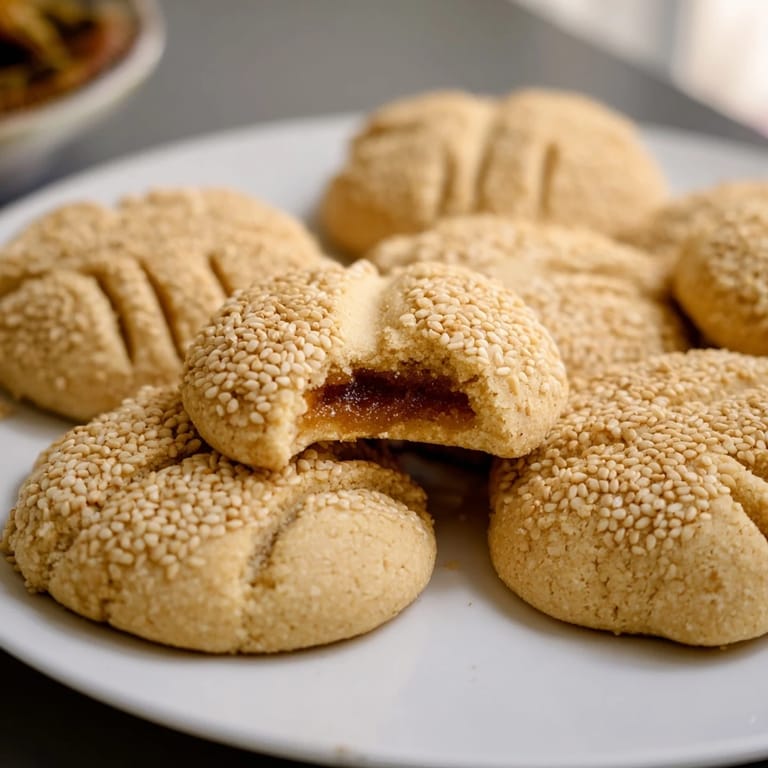
- Place about a teaspoon of cooled date paste in the center, then fold the dough up and around it, pinching the top to seal completely. The filling shouldn't peek out, or it'll burn at the edges.
- Coat in sesame:
- Roll each sealed ball gently in sesame seeds, pressing lightly so they stick without bruising the dough. The seeds won't adhere perfectly everywhere, and that's authentic.
- Create the signature pattern:
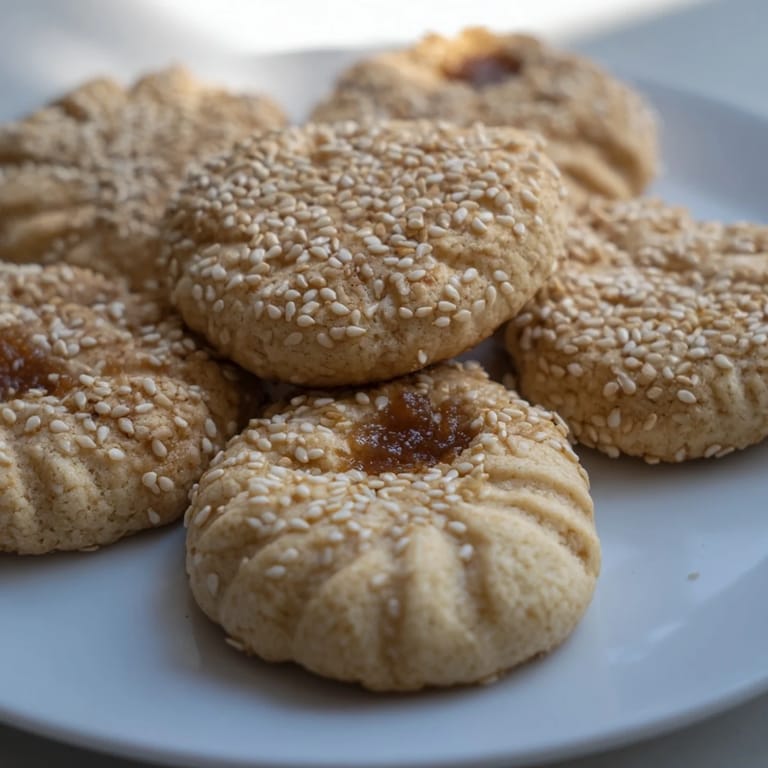
- Place cookies on your baking sheet, then use a fork (tines down) or a kahk mold to gently flatten and imprint a pattern. This isn't just decoration—the slight pressure helps them bake evenly.
- Bake until golden:
- Bake 18-20 minutes. You're looking for golden bottoms and pale tops, a delicate balance that means the insides are cooked but not overbaked. The sesame seeds should barely brown.
- Cool completely:
- Let them cool on a wire rack so air circulates underneath and they firm up with a tender crumb instead of steaming and becoming dense.
 Pin it
 My favorite memory of these isn't from eating them—it's from sitting across from someone who made them with her grandmother's hands still somehow guiding hers. She told me that kahk means 'cookies' in Arabic, but it also means 'circle,' and that's what family meals are. That's when I realized why this recipe matters so much to the people who make it.
The Filling Matters More Than You Think
I once tried to rush the filling by using a food processor to blend the dates, and they turned into baby food rather than paste. The next time, I did it the slow way—low heat, constant stirring, watching them surrender to the butter's warmth. The texture changed everything; the paste became almost glossy, with tiny date pieces that gave you little bursts of flavor. The butter isn't just there to help the paste; it transforms the dates into something richer than they could be alone. When the filling cools, it should be spreadable but hold its shape, firm enough to stay inside the dough when you seal it.
Why the Sesame Seeds Make Them Special
Sesame seeds seem like a small detail until you understand that they're toasting on the outside of the cookie while the inside stays tender. There's a contrast—a slight crunch against soft buttery dough, a subtle nuttiness that anchors the sweetness of the dates. I've seen people use toasted sesame seeds, and the cookies taste deeper, more complex. I've seen others use raw seeds and get that pale, delicate look that looks almost precious. Neither is wrong, but they're different cookies, and knowing which you want changes everything about how you approach them.
Storage and Serving
These cookies stay soft for about a week if you keep them in an airtight container, though they're most tender in the first three days. I've learned that serving them with coffee or mint tea isn't just tradition—it's actually a flavor pairing that works, the slight bitterness cutting through the sweetness and making each bite taste better. They're also the kind of cookie that bridges seasons; they feel right in winter with hot tea, but they're equally at home on a summer table with cold milk.
- Keep them in an airtight container with a small piece of bread or an apple slice to maintain softness.
- Serve them slightly warm if you can, when the butter flavor is most vibrant.
- They freeze beautifully for up to three months, though you'll want to thaw them gently at room temperature.
 Pin it
 These cookies are more than a recipe; they're a small act of care you can give to people you love. Once you've made them once, you'll find yourself making them again, and each time you'll get a little closer to the magic.
Recipe FAQs
- → How do I make the date filling for Kahk?
Simmer chopped Medjool dates with butter over low heat until soft and paste-like, then stir in cinnamon and optional cardamom for warmth.
- → What is the best way to shape the Kahk dough?
Divide the dough into equal portions, flatten each into a disk, place date filling in the center, fold and seal carefully, then roll into a ball before coating with sesame seeds.
- → Can I add nuts to the filling?
Yes, finely chopped walnuts can be mixed into the date filling for added crunch and flavor.
- → How are the sesame seeds used in this treat?
Each dough ball is rolled in untoasted sesame seeds before baking, adding a delicate nutty crunch to the exterior.
- → How should Kahk be stored after baking?
Keep them in an airtight container at room temperature for up to one week to maintain freshness and texture.