 Pin it
 I brought a tray of Basbousa to a potluck once, not expecting much fuss, and watched it vanish in minutes. Someone asked if I'd flown it in from Cairo. The cake was still warm, the syrup pooling around the edges, and the almonds glistened under the kitchen light. I'd made it that morning without overthinking, using a recipe my neighbor had scribbled on the back of a grocery receipt. It tasted like every sweet shop I'd wandered into on a summer evening abroad, but simpler, more forgiving.
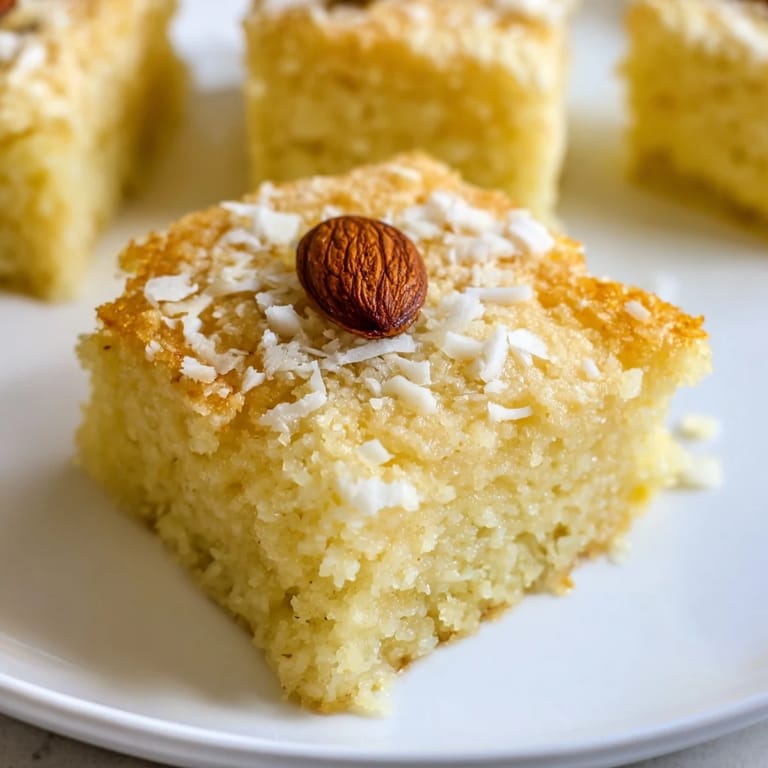
I remember making this late one Friday night after a long week, craving something sweet but not wanting to fuss with layers or frosting. The batter spread thick and golden in the pan, and I scored it with a butter knife before pressing an almond into each square. My daughter wandered in, drawn by the smell of toasted coconut and butter, and we ate two pieces each straight from the pan, still warm, syrup dripping onto our fingers. It became our unspoken weekend ritual after that.
Ingredients
- Fine semolina: This gives Basbousa its signature grainy texture, so don't swap it for flour or the whole character changes.
- Granulated sugar: Used in both the cake and syrup, it dissolves cleanly and doesn't overpower the delicate coconut flavor.
- Desiccated coconut: Unsweetened is key here, the syrup adds all the sugar you need and the coconut should taste pure and toasted.
- Plain yogurt: It keeps the cake tender and adds a slight tang that balances the sweetness, I've tried Greek yogurt and it works but the cake turns denser.
- Unsalted butter or ghee: Ghee brings a nutty richness that feels more authentic, but butter is perfectly fine and easier to find.
- Baking powder: Just enough to give a gentle lift without making it fluffy, Basbousa should be dense in the best way.
- Vanilla extract: A small amount rounds out the flavors without competing with the rose or orange blossom later.
- Salt: A pinch sharpens everything and keeps the sweetness from feeling flat.
- Whole blanched almonds: They mark each portion and add a buttery crunch, pistachios work beautifully too if you want a pop of green.
- Water and lemon juice for syrup: The lemon cuts through the sugar and keeps the syrup from crystallizing as it cools.
- Rose water or orange blossom water: Optional but transformative, a teaspoon is enough to make the whole tray smell like a Middle Eastern bakery.
Tired of Takeout? 🥡
Get 10 meals you can make faster than delivery arrives. Seriously.
One email. No spam. Unsubscribe anytime.
Instructions
- Prep the pan and preheat:
- Set your oven to 350°F and grease a 9x9 inch pan generously with butter or a thin layer of tahini, which adds a subtle nuttiness. The tahini trick I learned from a friend who swore it kept the edges from sticking.
- Mix the dry ingredients:
- Whisk together semolina, sugar, coconut, baking powder, and salt in a large bowl until evenly distributed. You'll notice the coconut flakes catch the light, that's when you know it's ready.
- Add the wet ingredients:
- Pour in yogurt, melted butter, and vanilla, then stir with a spatula until a thick, pourable batter forms. It should look shaggy at first but will smooth out as you fold it together.
- Spread and score:
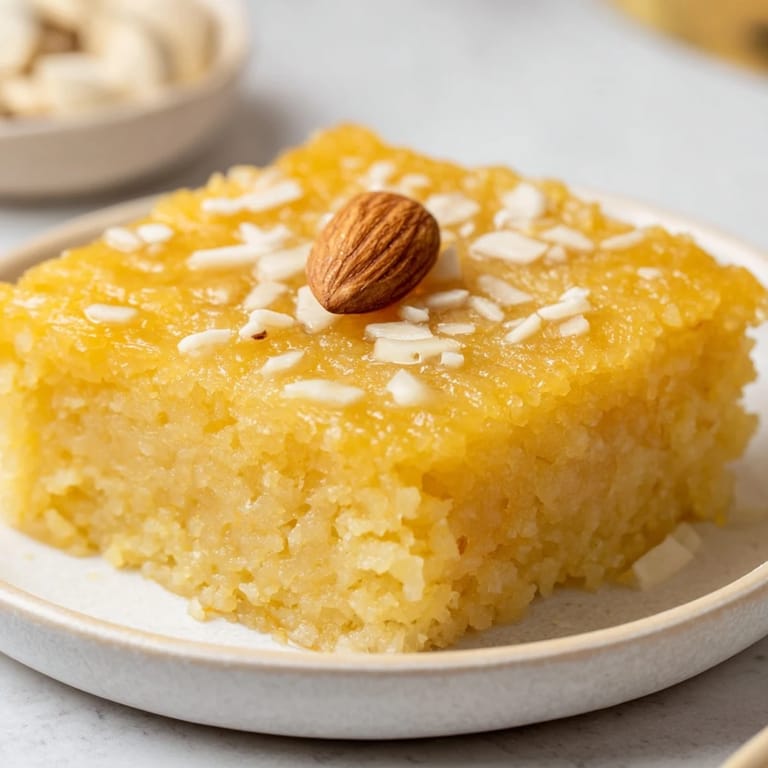
- Scrape the batter into your prepared pan and smooth the top with the back of a spoon. Use a sharp knife to score 12 squares or diamonds, then press an almond into the center of each piece so they stay put during baking.
- Bake until golden:
- Slide the pan into the oven for 30 to 35 minutes, watching for the edges to pull away slightly and the top to turn a deep honey color. A toothpick poked in the center should come out clean with just a few moist crumbs.
- Make the syrup:
- While the cake bakes, combine sugar, water, and lemon juice in a small saucepan and bring to a boil. Let it simmer for 8 to 10 minutes until it thickens slightly, then remove from heat and stir in rose or orange blossom water if using, the steam will carry the fragrance through your whole kitchen.
- Soak the hot cake:
- The moment the Basbousa comes out of the oven, pour the cooled syrup evenly over the hot surface. You'll hear a faint sizzle as the syrup seeps into every crevice, this contrast of hot cake and cool syrup is what makes the texture so perfect.
- Cool and serve:
- Let the pan sit at room temperature until completely cool, then re-cut along the scored lines and lift each piece out carefully. Serve on a platter with mint tea or strong coffee.
 Pin it
 One evening I brought a pan of Basbousa to a small gathering, and someone's grandmother tasted a piece, closed her eyes, and said it reminded her of home. She told stories about making it in a wood-fired oven with her sisters, the syrup cooling in glass jars on the windowsill. I realized then that this dessert carries more than flavor, it holds entire afternoons, laughter, and the patience of hands that made it over and over until it was just right.
Storing and Serving
Basbousa keeps well at room temperature for up to three days, covered loosely with foil so the top doesn't get sticky. I've also refrigerated it for a week, and the cold syrup firms up slightly, which some people prefer. Let it come to room temperature before serving, or warm individual pieces in the microwave for ten seconds to bring back that just-baked softness.
Variations You Might Try
I've swapped half the yogurt for sour cream when I wanted extra richness, and the tang was more pronounced in a good way. You can also fold in a handful of chopped pistachios or hazelnuts into the batter for texture, or sprinkle extra coconut on top before baking for a toasted crust. If you're feeling adventurous, replace the rose water with a few drops of cardamom extract, it shifts the flavor profile toward something warm and a little unexpected.
What to Serve It With
This dessert shines alongside hot mint tea or thick Turkish coffee, the bitterness cuts through the sweetness and each sip resets your palate. I've also served it with a dollop of unsweetened whipped cream or a spoonful of thick Greek yogurt on the side, which adds a cool contrast to the syrupy warmth.
- A small dish of fresh berries or sliced oranges on the side adds brightness and a juicy pop that balances the richness.
- For a fancier presentation, dust the top lightly with powdered sugar and scatter a few dried rose petals before serving.
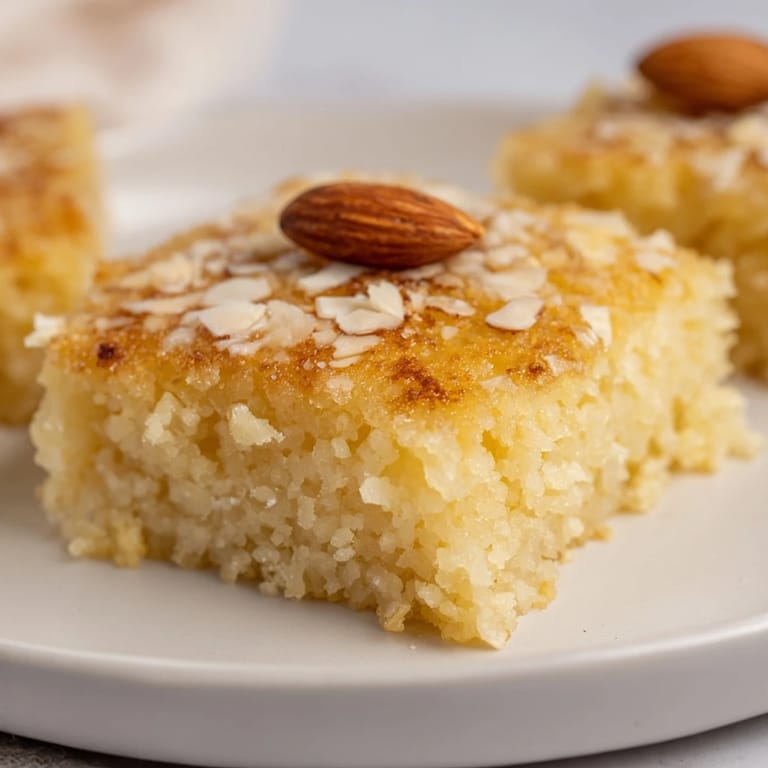
- If you're making this for a crowd, cut smaller pieces and arrange them on a platter with the almonds facing up, they look like little jewels.
 Pin it
 Every time I make Basbousa now, I think about that potluck and the way a simple tray of cake can start conversations and bring people together. It's forgiving, generous, and always tastes like you put in more effort than you did.
Recipe FAQs
- → What type of semolina is best for this dish?
Fine semolina works best to create the tender, moist texture typical of this cake.
- → Can the syrup be flavored differently?
Yes, adding rose water or orange blossom water imparts a delicate floral aroma to the syrup.
- → What alternatives are there for the almond garnish?
Pistachios can be used as a substitute for almonds for a different flavor and texture.
- → How should the cake be scored before baking?
The batter is scored into squares or diamond shapes to make portioning easier after baking.
- → Is it possible to make this dish dairy-free?
Substituting butter with plant-based alternatives and using dairy-free yogurt can adapt the dish to be dairy-free.