 Pin it
 The steam rising from my bowl carried ginger and garlic through the entire apartment, making it smell like a tiny noodle shop had taken over my kitchen. I'd been skeptical about these zero-carb noodles everyone kept talking about, honestly convinced they'd taste like nothing or have that weird texture that ruins everything. But watching them curl into the fragrant broth, something shifted. This wasn't about diet food anymore, it was about comfort in a bowl that happened to be incredibly light.
My friend Sarah came over exhausted from work one night, and I set this down in front of her expecting a polite taste. She demolished it in under five minutes, looking up with broth shimmered lips and asking if I had seconds. That's when I knew this wasn't just another healthy meal attempt, it was genuinely delicious comfort food that happens to be good for you.
Ingredients
- High quality bone broth: The foundation of everything, choose one you'd happily drink from a mug because that flavor carries the whole dish
- Fresh ginger: Slice it thin so it infuses gently without overpowering, leaving behind subtle warmth that builds
- Garlic: Smash it with the side of your knife to release oils and make it easy to fish out later
- Soy sauce or tamari: This brings deep umami and saltiness, adjust based on your broth's natural seasoning
- Rice vinegar: Just enough brightness to cut through the rich broth and wake up your palate
- Sesame oil: A finishing touch that adds nutty depth, use it sparingly as it's potent
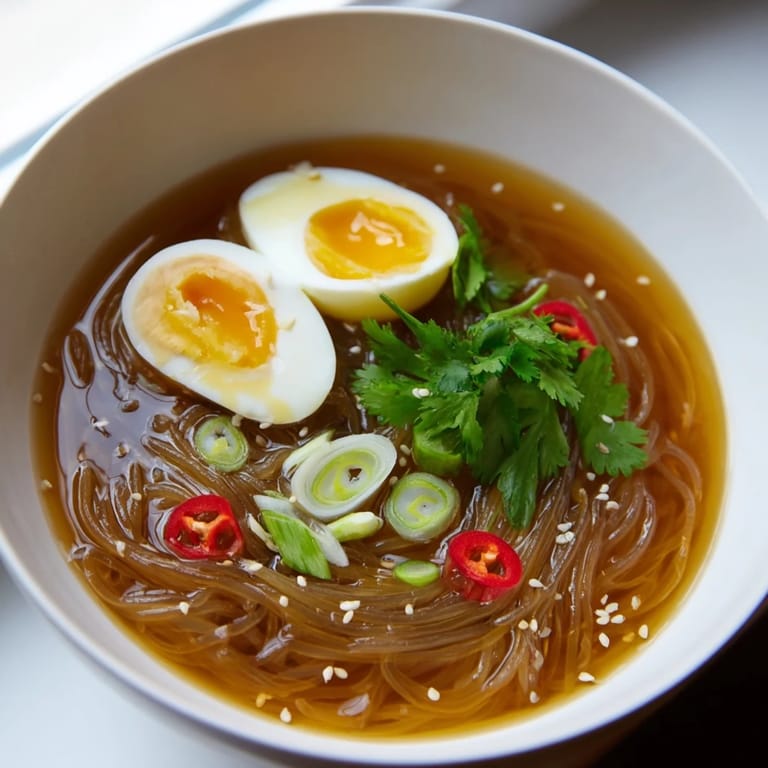
- Shirataki noodles: Rinse them thoroughly and don't skip the boiling water rinse, it removes any natural odor and improves texture dramatically
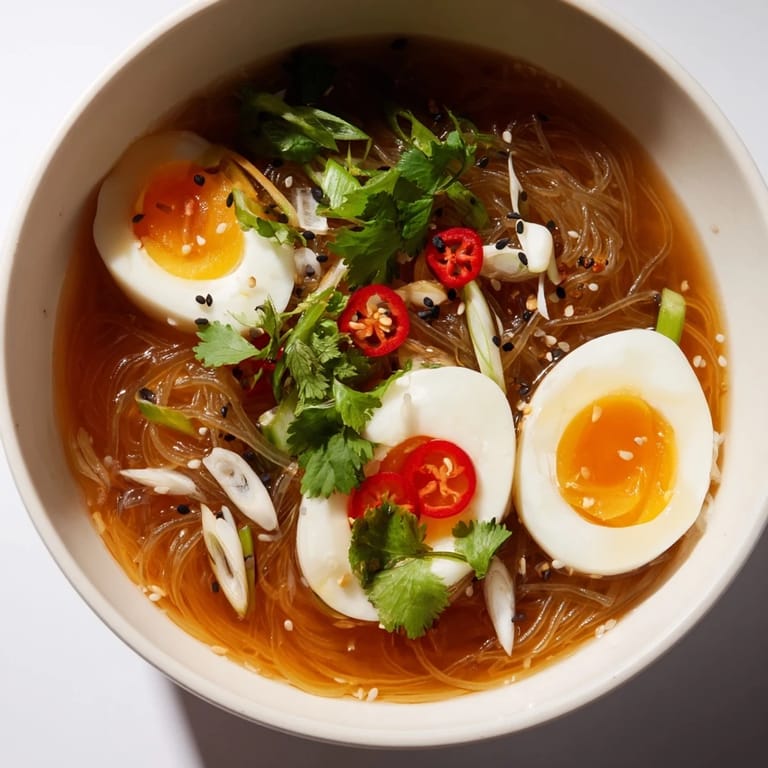
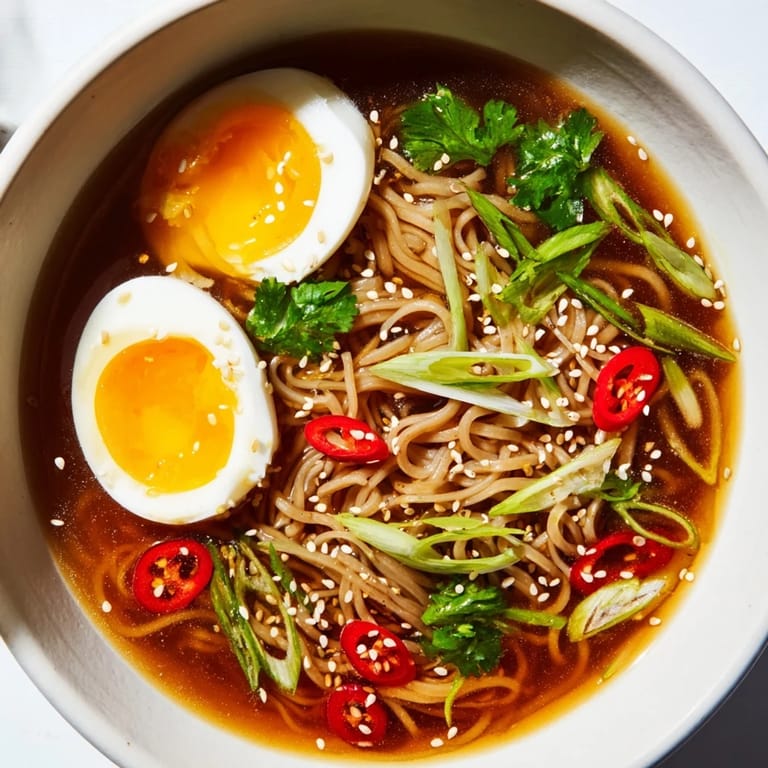
- Soft boiled eggs: Optional but recommended, that golden yolk melting into hot broth creates incredible richness
- Spring onion: Fresh crunch and mild onion bite that brightens each spoonful
- Red chili: Thin slices add heat and color, adjust based on your spice tolerance
- Fresh herbs: Coriander brings brightness while parsley offers earthy notes, choose what you love
- Toasted sesame seeds: Sprinkle them last for tiny bursts of nutty flavor and pleasant texture
Tired of Takeout? 🥡
Get 10 meals you can make faster than delivery arrives. Seriously.
One email. No spam. Unsubscribe anytime.
Instructions
- Build your flavor base:
- Combine bone broth, ginger slices, smashed garlic, soy sauce, rice vinegar, and sesame oil in a medium pot, letting everything come together over medium heat until you see the first gentle bubbles breaking the surface.
- Let it get to know each other:
- Reduce the heat to low and let the broth simmer quietly for about 10 minutes, giving the ginger and garlic time to infuse their magic into every inch of liquid.
- Prep the noodles properly:
- Drain and rinse the shirataki noodles thoroughly under cold water, then place them in a sieve and pour boiling water over them for about 30 seconds, which completely removes any odor and improves their texture.
- Bring it all together:
- Add the prepared noodles to your fragrant broth and let them warm through for just 2 or 3 minutes, absorbing all that flavor you've built.
- Finish with care:
- Fish out the ginger and garlic slices, then divide the noodles and broth between two bowls, piling on your favorite toppings while everything is piping hot.
 Pin it
 Last winter when I was fighting off a cold, this became my go to comfort meal. Something about that aromatic ginger broth wrapping around me felt healing, like a warm blanket for my insides. Now it's the first thing I make whenever anyone needs taking care of, including myself.
Making It Your Own
The beauty of this bowl is how easily it adapts to whatever you're craving or have on hand. I've added shredded rotisserie chicken for extra protein, and once I stirred in miso paste for an entirely different depth. Think of the broth as your canvas and build from there.
Broth Matters
Your final bowl is only as good as the broth you start with, so taste yours before beginning and adjust accordingly. If it's already heavily seasoned, ease up on the soy sauce. A homemade broth will give you the most incredible results, but there are excellent store bought options that make this come together in minutes.
Topping Ideas
The toppings are where this simple bowl becomes something special and completely yours. I love keeping a variety of options on hand so everyone can customize their own bowl exactly how they like it.
- Sautéed shiitake mushrooms add meaty texture and earthy flavor
- Bok choy or spinach wilted directly in the broth brings color and nutrients
- Norichopped or crumbled adds subtle ocean flavor and crunch
 Pin it
 There's something deeply satisfying about a meal that nourishes you so completely without leaving you heavy. This bowl has become my answer to almost every craving, and I hope it finds its way into your regular rotation too.
Recipe FAQs
- → How do I prepare shirataki noodles to remove the odor?
Drain and rinse the noodles thoroughly under cold water, then place them in a sieve and pour boiling water over them. This step removes any natural odor and prepares them to absorb the flavorful broth.
- → Can I make this vegetarian?
Yes, simply substitute the bone broth with a rich vegetable broth and use tamari instead of traditional soy sauce. For protein, add tofu cubes or omit eggs if desired.
- → What makes this dish low-carb and paleo-friendly?
Shirataki noodles are naturally zero-carb, made from konjac yam. Combined with bone broth and simple seasonings, this bowl fits perfectly into low-carb, paleo, and gluten-free eating patterns.
- → How long does the broth need to simmer?
Simmer the broth for about 10 minutes after bringing it to a gentle boil. This allows the ginger, garlic, and seasonings to infuse properly, creating a deeply flavorful base for the noodles.
- → What protein options work well with this dish?
Soft-boiled eggs are traditional, but you can also add shredded cooked chicken, seared tofu, or even thinly sliced beef. The noodles themselves provide minimal protein, so toppings help make it more filling.
- → Can I store leftovers?
The broth can be stored separately for up to 5 days in the refrigerator. Add freshly rinsed noodles when reheating, as they can become mushy if stored too long in liquid.