 Pin it
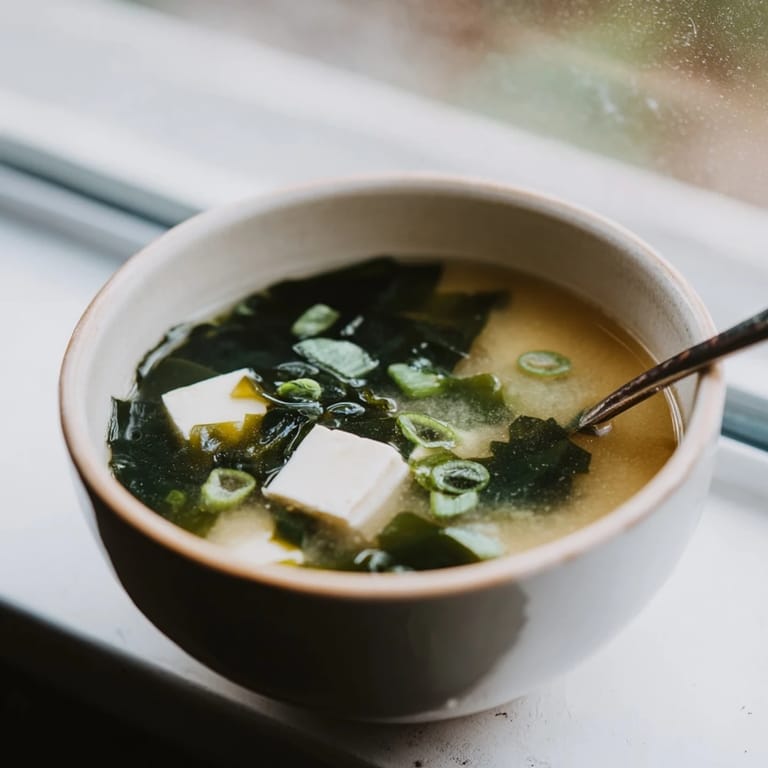
 The first time I made wakame soup, I was amazed at how something so simple could taste so comforting. I had just come home from a long rainy walk, and within twenty minutes, I was curled up with a steaming bowl that felt like a warm hug in liquid form. The way the silky wakame ribbons dance in the golden broth still makes me pause and appreciate the beauty of uncomplicated food.
Last winter, my friend who was feeling under the weather came over, and I made this soup for her. She took one sip and looked at me with wide eyes, asking how something so minimalist could have so much depth. Now whenever she visits, she half jokingly asks if theres wakame soup on the menu, and honestly, I never mind making it.
Ingredients
- Dried wakame seaweed: This expands dramatically when rehydrated, so a little goes a long way
- Dashi stock: The foundation of Japanese cooking, use vegetarian dashi made from kombu to keep it plant based
- Silken or firm tofu: Silken feels luxurious in the broth, while firm holds its shape better if you prefer substance
- White miso paste: Its milder and sweeter than red miso, perfect for this delicate soup
- Soy sauce: Just a touch adds depth without overpowering the miso
- Sesame oil: Optional but adds a lovely nutty finish that ties everything together
- Fresh scallions: Their bright bite cuts through the richness and adds fresh color
Tired of Takeout? 🥡
Get 10 meals you can make faster than delivery arrives. Seriously.
One email. No spam. Unsubscribe anytime.
Instructions
- Wake up the wakame:
- Place the dried seaweed in a small bowl with cold water and watch it expand and soften over about 5 minutes
- Warm the broth:
- Bring your dashi stock to a gentle simmer in a medium saucepan, keeping the heat moderate so it doesnt boil too aggressively
- Add the heart:
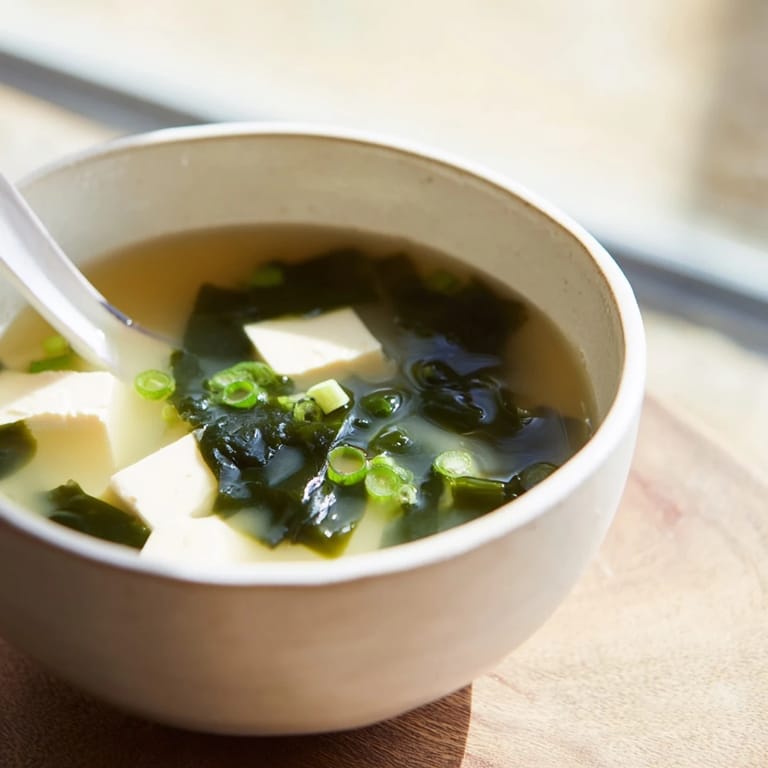
- Gently slide in your tofu cubes and drained wakame, letting them swim together for just 2 to 3 minutes until heated through
- Dissolve the miso:
- Whisk the miso paste with a ladleful of hot broth in a separate bowl until silky smooth, then return it to the pot
- Finish with finesse:
- Stir in the soy sauce and sesame oil if using, heating for just one more minute while being careful never to let it boil
- Garnish and serve:
- Ladle into bowls immediately and scatter those fresh scallion slices on top for a pop of color and flavor
 Pin it
 This soup became my go to remedy during stressful weeks at work. Something about the ritual of preparing it, the smell of the dashi filling the kitchen, and that first mindful sip helped ground me when everything else felt chaotic. Now it is not just food, it is a tiny self care practice I return to again and again.
Making It Your Own
Once you are comfortable with the basic version, you will start seeing opportunities to customize. Sometimes I add sliced shiitake mushrooms during the simmering stage, or throw in a handful of baby spinach at the very end so it just wilts. The beauty is in how adaptable this soup is while still maintaining its soul.
The Secret To Great Dashi
I used to rely on instant dashi powder until a friend taught me how to make it from scratch using just water and kombu. The difference is remarkable, with homemade dashi having a cleaner, more nuanced flavor that makes the whole soup sing. If you have an extra hour, it is absolutely worth the minimal effort.
Serving Suggestions
While this soup is beautiful on its own, I love serving it as part of a larger Japanese inspired meal. It pairs perfectly with steamed rice and some simple pickles on the side, or as a light starter before a main course of tempura vegetables. The soup cleanses the palate and prepares your stomach for whatever comes next.
- Keep extra miso paste in the refrigerator, it lasts for months
- Try topping with crispy fried garlic for extra texture
- Make it a meal by adding udon noodles to the broth
 Pin it
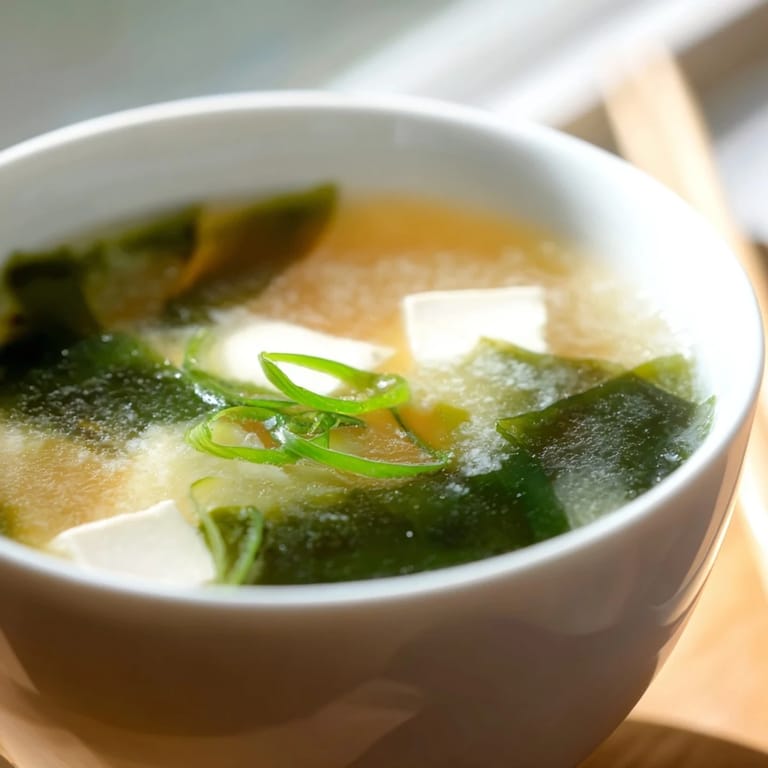
 There is something profoundly healing about a bowl of wakame soup. I hope it brings you as much comfort and quiet joy as it has brought me over the years.
Recipe FAQs
- → What does wakame taste like?
Wakame offers a subtle ocean flavor with a tender, slightly slippery texture. When rehydrated, it becomes mild and naturally sweet, absorbing the savory miso broth beautifully.
- → Can I make this vegan?
Absolutely. Use kombu and shiitake mushroom dashi instead of fish-based stock. Verify your miso paste contains no bonito flakes, and you'll have a completely plant-based version.
- → Why shouldn't I boil miso?
Boiling miso paste destroys its beneficial enzymes and alters the delicate flavor profile. Always dissolve it in warm broth separately and add it at the end, heating gently without reaching a boil.
- → How long does dried wakame last?
Properly stored in an airtight container away from moisture and direct sunlight, dried wakame keeps for 1-2 years. Rehydrated wakame should be used within 2-3 days when refrigerated.
- → What can I add for more substance?
Consider adding sliced shiitake mushrooms, julienned carrots, baby spinach, or cooked udon noodles. For protein enhancement, add edamame or small shrimp if not vegetarian.