 Pin it
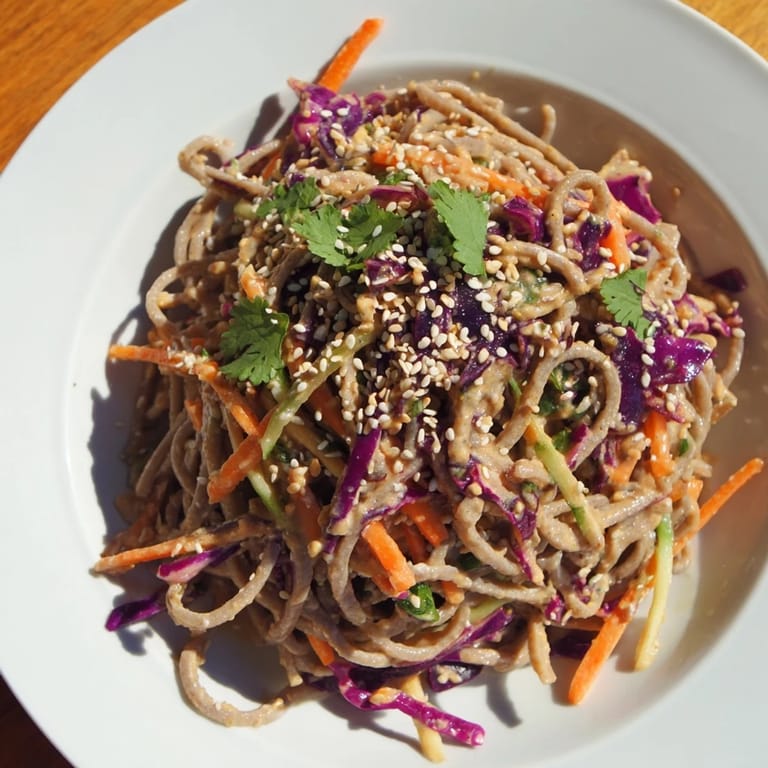
 There's something almost meditative about the first time you discover soba noodles—the way they cook in just minutes, releasing this subtle nutty aroma that fills your kitchen. I was searching for something lighter than my usual heavy pasta salads one sweltering afternoon, and a friend casually mentioned tossing cold soba with a peanut dressing. Twenty minutes later, I had a bowl of noodles that tasted like a fusion of every good meal I'd ever had, crisp vegetables snapping between my teeth, silky sauce clinging to buckwheat strands. Now it's become my go-to when I need to feed people something that feels restaurant-quality but takes practically no effort.
I made this for a potluck once where everyone brought the same tired salad variations, and mine was gone before dessert arrived. My coworker came back for seconds and asked if I'd opened a restaurant, which felt like the highest compliment possible. That's when I realized this dish has this quiet confidence to it—nothing showy, but undeniably satisfying.
Ingredients
- Soba noodles (250 g): These buckwheat strands cook faster than you'd expect and have a toothier texture than regular pasta—look for pure buckwheat versions if you're avoiding gluten.
- Carrot, julienned: The natural sweetness becomes even more pronounced after sitting in the dressing, and the thin cuts mean they soften just enough without getting mushy.
- Cucumber, sliced into thin strips: Keep this cold until the last moment; it's your freshness anchor that stops the whole bowl from feeling heavy.
- Red bell pepper, thinly sliced: The slight crunch and bright color matter more than you'd think—this isn't just about nutrition, it's about that moment when your fork hits it.
- Spring onions, finely sliced: A little sharpness goes a long way; don't skip the white parts, they have more punch than the green.
- Red cabbage, shredded: This adds earthiness and holds up beautifully in the fridge, staying crisp for days after you make it.
- Peanut butter (3 tbsp) or tahini: Creamy peanut butter makes this more luxurious, but tahini brings a nuttier edge if you want to feel a bit fancier.
- Soy sauce (2 tbsp): This is your umami anchor; don't dilute it by going light-handed, but do use tamari if gluten troubles you.
- Rice vinegar (1 tbsp): It cuts through the richness without being aggressive, which is why it's the right choice here instead of regular vinegar.
- Toasted sesame oil (1 tbsp): A little goes far—this stuff is intense in the best way, with a toasted depth that makes the whole dressing feel alive.
- Maple syrup or honey (1 tbsp): The sweetness balances the salt and vinegar; maple has a subtle smokiness that honey doesn't quite match.
- Fresh ginger (1 tsp, grated): Grate it right before mixing so you get that bright, slightly sharp heat that mellows as it sits.
- Garlic clove (1 small, minced): Raw garlic can be aggressive, but one small clove adds backbone without overpowering everything else.
- Water (1–2 tbsp): The dressing should be pourable but not thin; add this slowly and taste as you go.
- Toasted sesame seeds (2 tbsp): These add nuttiness and a subtle crunch that makes people ask what your secret ingredient is.
- Fresh cilantro (2 tbsp, chopped): Bright and herbaceous, this is your final flourish that makes everything feel intentional.
- Red chili, thinly sliced (optional): A tiny amount gives heat without turning this into something aggressive; this is garnish as punctuation, not exclamation.
- Lime wedges: Squeeze these over your bowl just before eating; that acid hits different when it's fresh.
Tired of Takeout? 🥡
Get 10 meals you can make faster than delivery arrives. Seriously.
One email. No spam. Unsubscribe anytime.
Instructions
- Boil the soba until just tender:
- Bring a large pot of water to a rolling boil and add the noodles, stirring gently so they don't stick. They'll cook in about 5 to 7 minutes, and you'll know they're done when they're tender but still have a slight bite. The moment they're cooked through, drain them in a colander and run cold water over them for a good 30 seconds—this stops the cooking and rinses away the extra starch that would make them gummy.
- Whisk the dressing into submission:
- In a large bowl, combine the peanut butter, soy sauce, rice vinegar, sesame oil, maple syrup, ginger, and garlic. Whisk it all together until the peanut butter starts to break down and everything begins to look creamy. Add water one tablespoon at a time until you've got a dressing that flows smoothly off your whisk but isn't watery—it should coat the back of a spoon with intention.
- Toss everything together with purpose:
- Add your cold noodles and all the vegetables to the bowl with the dressing, and toss everything together until every strand of noodle and every vegetable piece is coated. This is where the magic happens—the dressing clings to the buckwheat, the vegetables release a bit of their juice, and suddenly you've got this cohesive thing that tastes way more complex than the sum of its parts.
- Plate and finish with intention:
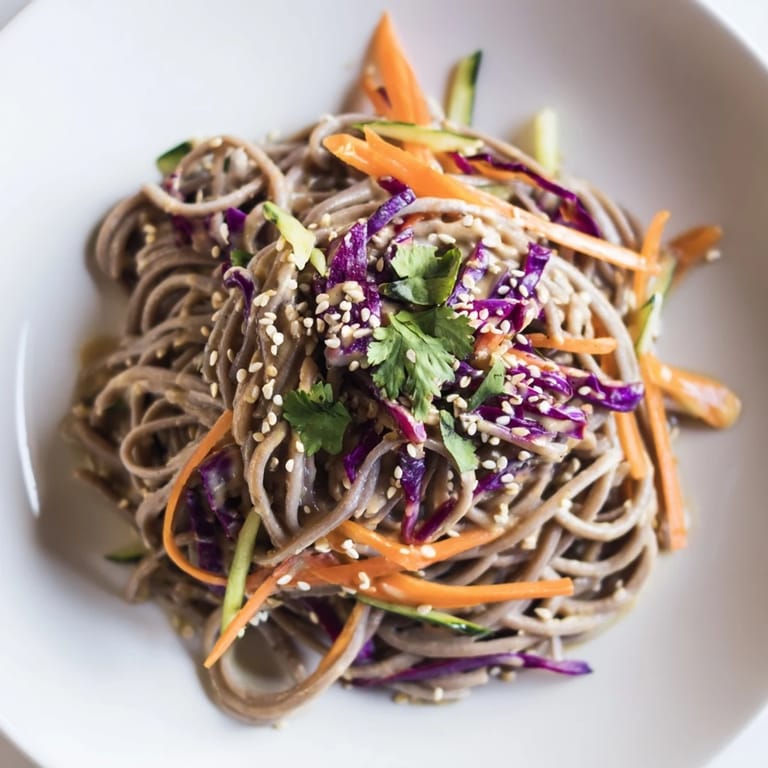
- Divide the salad among your serving bowls, letting the dressing pool slightly at the bottom. Top each bowl with sesame seeds, cilantro, and a scatter of chili slices if you're feeling bold. Serve with lime wedges on the side, letting people squeeze them in at the last second if they want that final brightness.
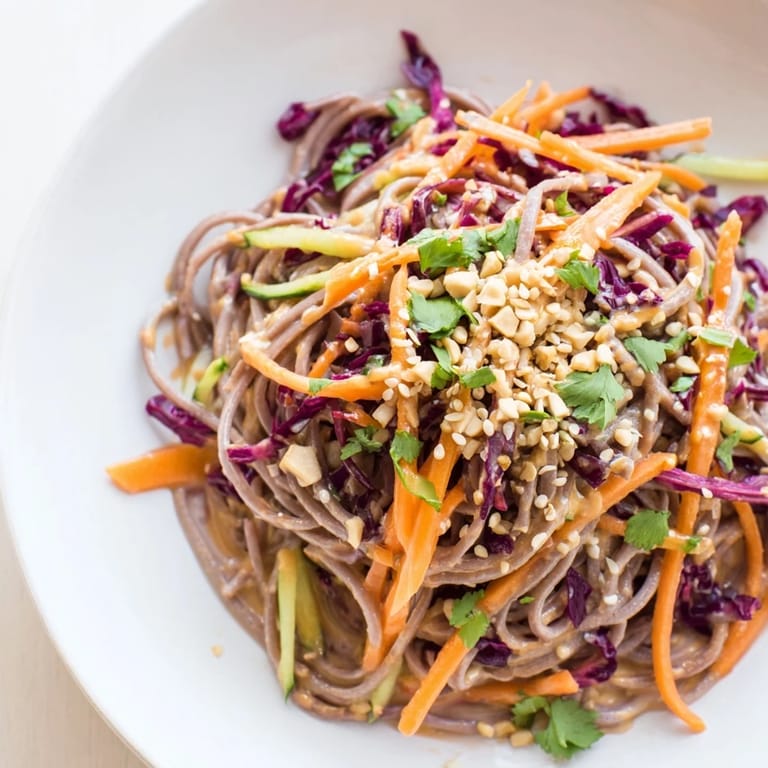 Pin it
 There's this moment that happens every time I make this—when someone who usually doesn't get excited about salad takes a bite and their eyes light up. It's become my quiet proof that vegetables and noodles can absolutely hold their own as a main event, not just a supporting act.
Why Cold Noodles Hit Different
Cold noodle dishes feel like they exist in this pocket of time where restaurant food meets home cooking—they're elegant enough for guests but casual enough for eating alone at your kitchen counter. Soba specifically has this nutty undertone that warm noodles never quite capture in the same way, and when you dress them while they're still cool, that flavor stays bright and doesn't get muted by heat. There's also something deeply satisfying about a salad where the texture stays interesting from the first bite to the last.
Building Layers of Flavor
The dressing here works because it's got every flavor dimension covered—salt from the soy sauce, umami depth, a little sweetness to soften the edges, vinegar's bright acidity, and sesame oil tying everything together with its toasted richness. What makes it special is the ratio; too much of anything tips the balance, but get it right and it tastes sophisticated without trying. This is why whisking matters—you're emulsifying the peanut butter and sesame oil into something creamy and cohesive rather than letting them sit separately.
Making It Your Own
The beauty of this salad is that it's genuinely flexible without losing its character. You can add grilled tofu for protein, toss in some edamame for earthiness, or even add shredded chicken if you're feeding someone who needs more substance. The vegetables can shift with seasons too—in summer, add fresh corn or cherry tomatoes; in cooler months, swap the cucumber for thinly shaved daikon or add some steamed broccoli for a sturdier bite.
- If you're making this for a crowd, you can cook the noodles and prep vegetables hours ahead, but don't dress it until right before serving or the textures will soften.
- For a nut-free version, tahini alone works beautifully and actually adds a more sophisticated sesame flavor.
- This keeps in the fridge for up to two days, but refresh it with a squeeze of fresh lime and a tiny splash of water before the second serving.
 Pin it
 This salad has somehow become the thing I make when I want to prove to myself that eating well doesn't have to feel like deprivation. Every time I've made it, someone's asked for the recipe, and I always say the same thing: it's easier than it sounds, and it tastes like you've been cooking all day.