 Pin it
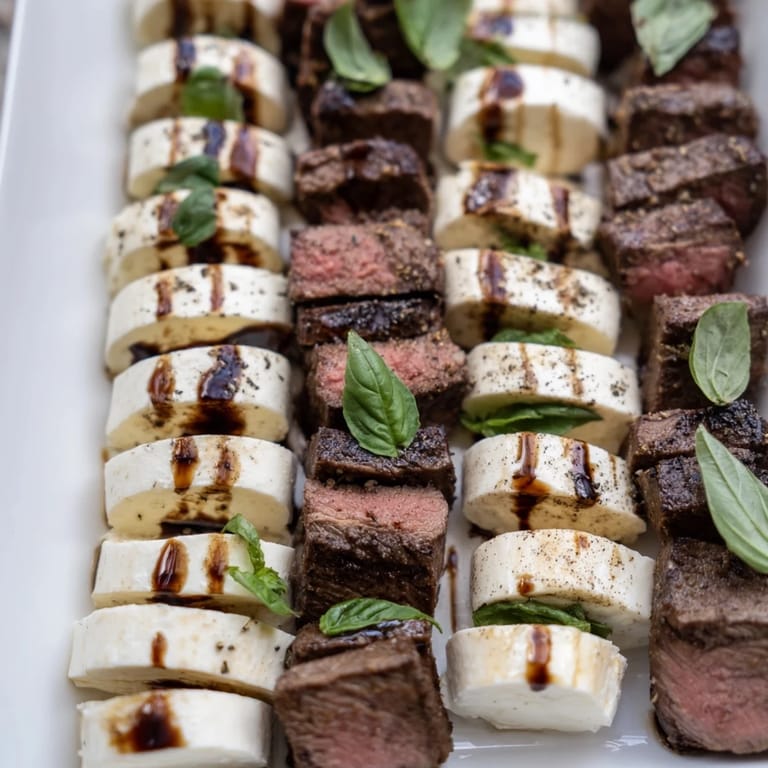
 I discovered this striped beauty at a summer dinner party where someone casually arranged cheese and meat on a platter, drizzled it with something glossy, and suddenly everyone stopped talking just to admire it. The way the white mozzarella caught the light against those dark meat strips felt almost intentional, like edible art that tasted even better than it looked. What struck me most wasn't the complexity, but how something so simple could feel elegant without trying too hard. I've been making it ever since, usually when I want people to think I spent all afternoon cooking when really it took less time than setting the table.
My friend Marcus brought this to a rooftop gathering in late August, and I remember the moment someone broke the striped pattern with their fork and how satisfying that first bite was, soft cheese melting against warm meat and that sticky-sweet balsamic. We kept eating them while watching the sun set, and nobody even bothered with napkins because we didn't want to break the rhythm. That's when I realized the visual part wasn't just for show, it actually made the eating experience feel special somehow.
Ingredients
- Fresh mozzarella, 250 g sliced into 1 cm strips: Use whole milk mozzarella for the creamiest texture, and slice it right before serving so it stays soft and slightly yielding.
- Feta cheese, 200 g sliced into 1 cm strips: The tanginess cuts through the richness of the mozzarella, creating that perfect balance that keeps you reaching for more.
- Beef tenderloin, 200 g cut into 1 cm strips: This is the premium choice because it's tender enough that you barely need to chew, making every bite feel luxurious.
- Chicken breast, 200 g cut into 1 cm strips: Lighter than beef but when seared properly, it gets a golden crust that holds the balsamic glaze beautifully.
- Olive oil, 2 tbsp: Good quality here matters because you taste it directly, so don't reach for the bottom shelf bottle.
- Salt and freshly ground black pepper to taste: Season generously before searing because the meat needs to season itself while it cooks.
- Balsamic vinegar, 120 ml: This becomes the glue that holds the whole dish together flavor-wise, so don't use the cheap stuff that tastes thin.
- Honey, 1 tbsp: It tames the vinegar's sharp edges and makes the glaze sticky enough to coat properly.
- Fresh basil leaves for garnish: Tear them by hand right before serving so the bruises release their fragrance.
- Cracked black pepper for finishing: This adds a whisper of heat and texture that people notice but can't quite name.
Tired of Takeout? 🥡
Get 10 meals you can make faster than delivery arrives. Seriously.
One email. No spam. Unsubscribe anytime.
Instructions
- Build your glossy magic:
- Pour the balsamic vinegar into a small saucepan with honey and let it simmer over medium heat for 8 to 10 minutes, watching it transform into something thicker and darker. You'll know it's ready when it coats the back of a spoon and you can draw a line through it that doesn't immediately disappear.
- Sear the protein with confidence:
- Season your beef and chicken strips generously with salt and pepper, then get your skillet screaming hot before adding just enough olive oil to shimmer. Sear the beef first for about a minute and a half on each side until the outside is caramelized and the inside is still tender, then do the same with the chicken, which will take roughly the same time.
- Create your striped canvas:
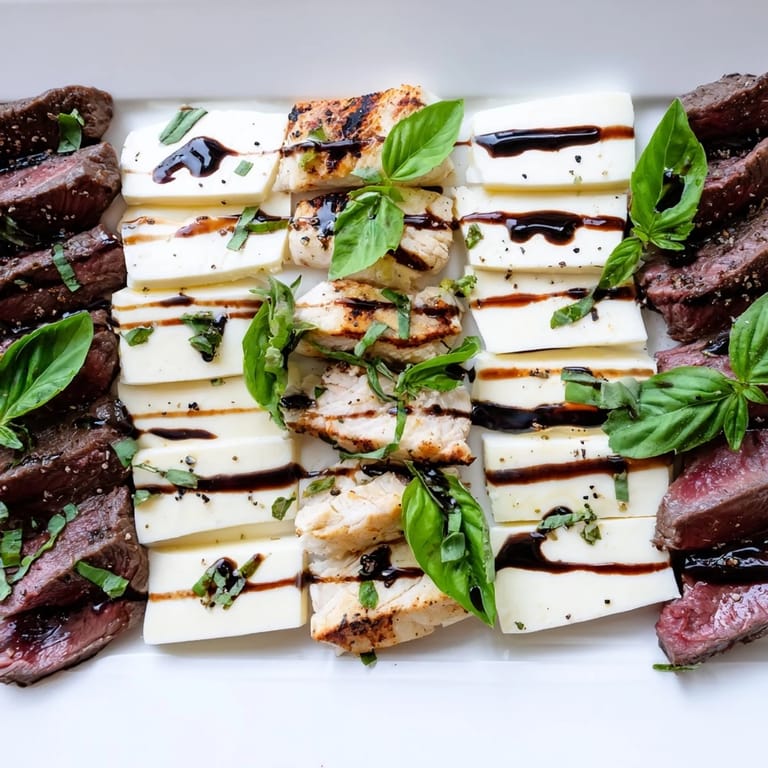
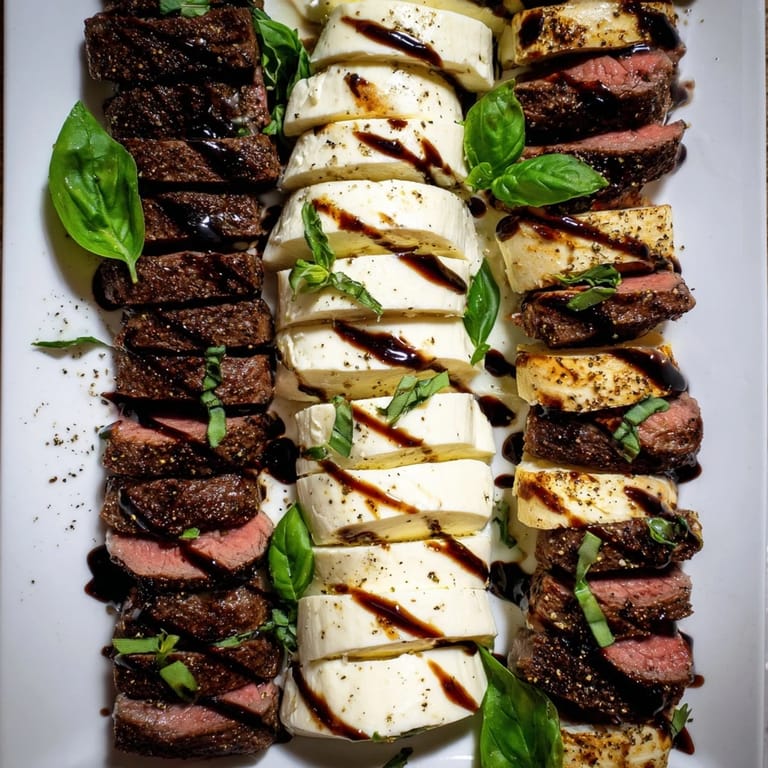
- While everything cools, arrange your cheese and meat strips in alternating rows on your serving platter like you're painting with food, creating a visual rhythm that makes people lean in closer. The pattern doesn't have to be perfect, just intentional enough that it catches the eye.
- Glaze with purpose:
- Drizzle the cooled balsamic glaze generously over just the meat strips, letting it pool slightly in the spaces between them so every bite gets that sticky-sweet note. Don't shy away with the glaze, this is where the magic happens.
- Finish with intention:
- Scatter fresh basil leaves across the platter and finish with cracked black pepper, which adds a subtle heat that balances the sweetness of the glaze. Serve immediately while the cheese is still soft and the meat is still warm.
 Pin it
 There's a moment when someone who's usually polite about food suddenly goes quiet and just eats another stripe, and that's when you know the dish worked. It stopped being about impressing anyone and became about creating something that tasted as good as it looked, which is honestly the whole point.
Timing and Temperature Matter More Than You Think
The first time I made this, I seared everything ahead of time and chilled it, thinking I was being clever by doing prep work early. It didn't have the same impact because the cheese stayed too firm and the meat lost something in the temperature shift. Now I sear just before serving, letting the meat cool for only a few minutes on the counter so it's still slightly warm when it hits the platter. The warmth of the meat actually softens the cold cheese slightly, creating this texture contrast that feels intentional. That small shift in timing changed how the whole dish tasted and felt in your mouth.
Why This Works as Theater Too
Part of what makes this dish special is that it does the heavy lifting for you visually, so you can actually be present and enjoy hosting instead of fussing. I've learned that people eat with their eyes first, and when you give them something genuinely beautiful to look at, they're already half convinced it's delicious before they taste it. The stripes become a conversation starter without being precious about it, and that's the sweet spot between impressive and approachable. The whole thing feels like a small celebration, which makes people want to linger and actually talk to each other instead of just grabbing and going.
Customization Without Losing the Magic
This striped concept is flexible enough that you can swap proteins based on what you love or what's in your budget, and it somehow always works. I've done it with prosciutto for richness, smoked turkey for something lighter, and once even grilled eggplant strips for a vegetarian crowd that surprised everyone with how elegant it still felt. The key is keeping the visual principle of alternating light and dark, because that's what makes someone actually pause and notice. The balsamic glaze works with almost anything you put it on, which is why this feels less like a rigid recipe and more like a template you can make your own.
- Swap the proteins but keep the contrast, so the stripes still read visually.
- Make the balsamic glaze a day ahead to save yourself a step, just reheat it gently before serving.
- If you're feeding a crowd, you can double the platter and it somehow looks even more impressive.
 Pin it
 This is the kind of dish that reminds you that good food doesn't have to be complicated, it just has to be thoughtfully put together. Serve it and watch what happens.