 Pin it
 The first time I made this soup was on a sweltering afternoon when my neighbor knocked on the door with an armful of cucumbers from her garden, still warm from the sun. I had Greek yogurt in the fridge and a handful of herbs on the windowsill, so I threw together what felt like an experiment. Within minutes, I was holding a bowl of something so cold and silky it felt like summer itself had turned into food. My kids came back inside from playing and actually asked for seconds—which, in retrospect, should have told me I'd stumbled onto something special.
I still think about the dinner party where I served this as an opener on the patio. Someone asked if I'd been to culinary school, and I laughed so hard I nearly dropped my bowl. The truth is simpler: a good cold soup on a hot day tastes like you put in way more effort than you actually did, and that's the best kind of cooking shortcut.
Ingredients
- 2 large cucumbers, peeled, seeded, and chopped: The seeding step matters because watery seeds make the soup thin and dilute the flavor—you want that clean, crisp cucumber taste to shine.
- 2 cups plain Greek yogurt: Skip the flavored versions; you need the tangy blank canvas that lets everything else speak.
- 2 scallions, chopped: These give you a whisper of onion without the bite, and they're where the soup goes from nice to memorable.
- 1 small clove garlic, minced: Use fresh and mince it small—this soup relies on that garlic distributing evenly once everything blends.
- 2 tablespoons fresh dill, chopped: Fresh dill is non-negotiable here; dried tastes like you're eating medicine.
- 1 tablespoon fresh mint, chopped: Optional but not really—it adds a cooling sensation that makes the whole thing feel more intentional.
- 2 tablespoons lemon juice: Fresh lemon only; bottled juice tastes thin and sorry for itself in a cold soup.
- 1 tablespoon extra-virgin olive oil: This enriches the texture and adds a grassy note that feels Mediterranean and right.
- 1/2 teaspoon salt and 1/4 teaspoon black pepper: Taste as you go because seasoning is everything in a cold soup where heat can't round out rough edges.
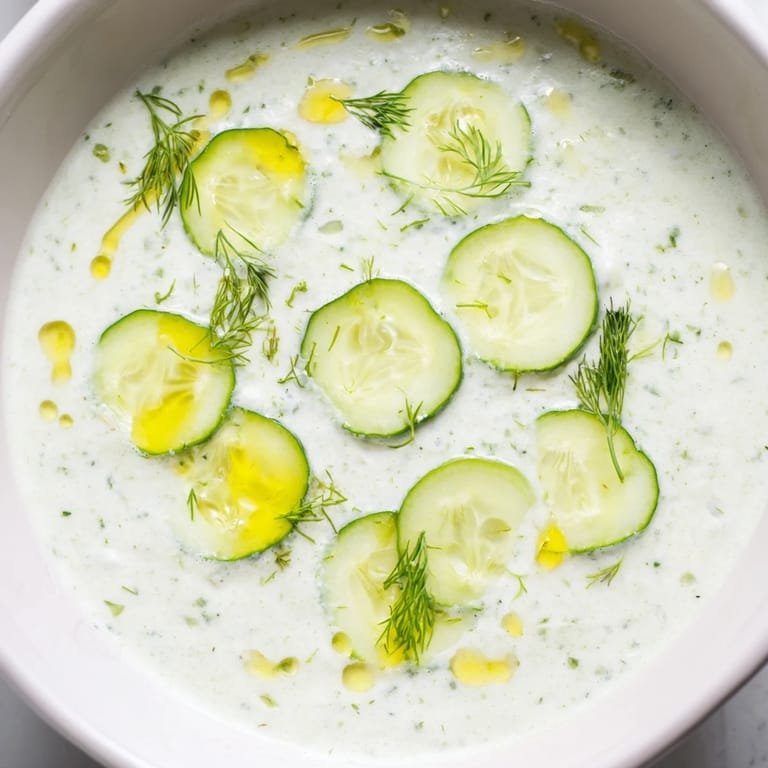
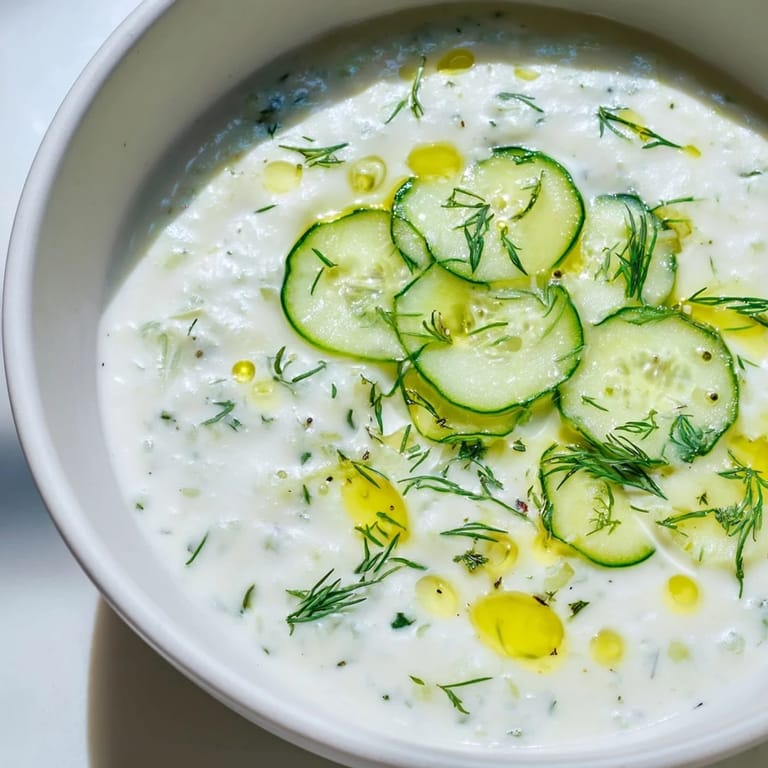
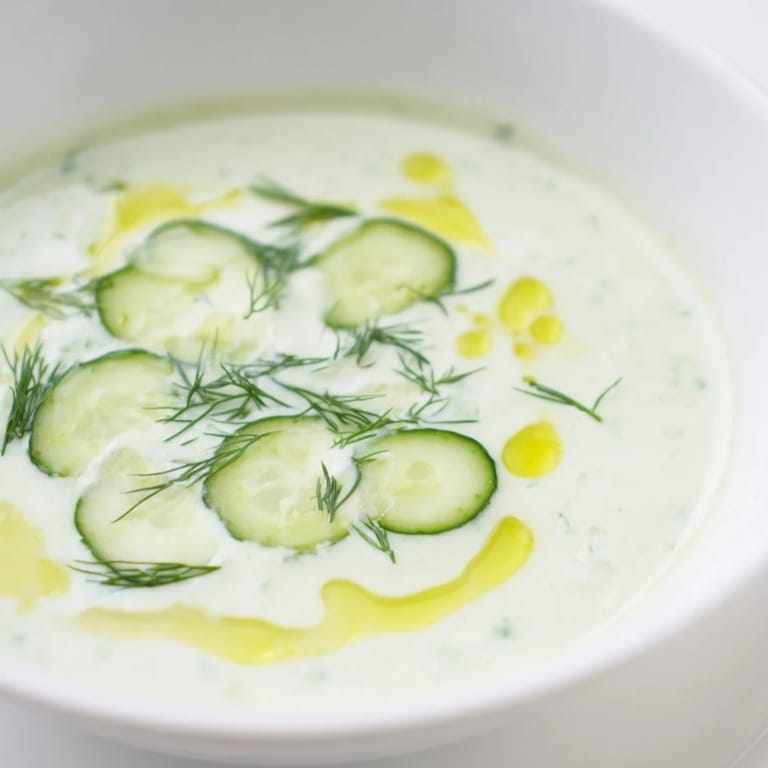
- Sliced cucumber, extra dill, and olive oil for garnish: These finishing touches look intentional and add texture that reminds you why you made this from scratch.
Tired of Takeout? 🥡
Get 10 meals you can make faster than delivery arrives. Seriously.
One email. No spam. Unsubscribe anytime.
Instructions
- Gather and prep your vegetables:
- Peel your cucumbers and scoop out the seeds with a spoon—this is the part that feels fussy but pays off by keeping the soup from turning watery. Chop everything into pieces small enough that your blender won't work too hard.
- Blend it all until smooth:
- Combine everything in the blender and pulse, then blend until you reach that silky consistency where the texture feels almost indulgent. Stop and taste; if the garlic feels aggressive, add a touch more yogurt to smooth it out.
- Season and adjust:
- This is where you become the chef: taste, adjust salt and pepper, maybe add a squeeze more lemon. Cold soup muffles flavors, so season it slightly bolder than you think you need to.
- Chill and rest:
- Transfer to a bowl, cover, and let it sit in the fridge for at least an hour—the flavors deepen and marry together, and the cold sets in properly. If you're impatient like I am, just taste it before serving anyway.
- Serve with intention:
- Stir it gently, ladle it into chilled bowls, and finish with a curl of cucumber, a pinch of fresh dill, and a drizzle of good olive oil that catches the light. These little touches make it feel special.
 Pin it
 There's something almost meditative about serving a cold soup in the middle of summer. It's the moment when someone closes their eyes for a second after the first spoonful, and you know you made something that did more than just fill a bowl.
Why This Soup Became My Go-To
I stopped stressing about impressing people with complicated food the day I realized a perfect cold soup in July beats a fussy sauce in December. It's the kind of dish that says you understand what your guests actually need in that moment—something refreshing, something light, something that doesn't heat up the kitchen. Over time, I started tweaking it slightly based on what was growing that week: sometimes more dill, sometimes a handful of spinach, once even a whisper of basil. The soup doesn't resist these changes; it welcomes them, which is the mark of a recipe that knows what it's doing.
Variations and Flexibility
The beauty of this soup is that it's almost impossible to get wrong because the core flavors are forgiving. I've made it with different herb combinations—cilantro and lime instead of dill for a different mood, or parsley when dill ran out. I've thinned it with vegetable broth on days when it felt too thick, and I've kept it spoonable when I wanted something more substantial. Even the yogurt bends: coconut yogurt for vegan, or regular yogurt if Greek isn't what I have on hand. The soup adapts to your situation while staying true to its essence.
Serving Suggestions and Pairings
On its own, this soup is complete, but it gets even better when you think about what's around it. Crusty bread torn into pieces for dipping, grilled fish on the side, or a simple salad of tomatoes and feta turns it into the opening act of a whole meal. I've served it as a late lunch on days too hot to think about cooking dinner, and I've used it as the first course when I wanted something elegant but didn't want to spend all afternoon in the kitchen. The truth is that cold soup gives you permission to relax, and everything tastes better when you're not stressed about timing.
- Pair with grilled bread or pita for scooping and substance.
- Add a side of fresh salad or smoked fish to make it a full meal.
- Serve it chilled in bowls straight from the fridge for the best first impression.
 Pin it
 This soup is proof that the best cooking doesn't require heat or stress or hours of your time. It's just good ingredients, a few minutes of attention, and the willingness to let something simple be exactly what it is.
Recipe FAQs
- → Can I make it vegan?
Yes, substitute plain Greek yogurt with unsweetened coconut or another plant-based yogurt for a dairy-free version.
- → How do I make the soup thinner?
Add cold water or chilled vegetable broth gradually until you reach the desired consistency.
- → What herbs enhance the flavor best?
Fresh dill and mint add bright, complementary notes that enhance the cucumber and garlic flavors.
- → Is peeling the cucumbers necessary?
Peeling helps achieve a smoother texture, but if using thin-skinned cucumbers, you can leave the peel on for added nutrients.
- → Can I prepare it ahead of time?
Yes, chilling the soup for at least one hour allows flavors to meld and enhances its refreshing quality.