 Pin it
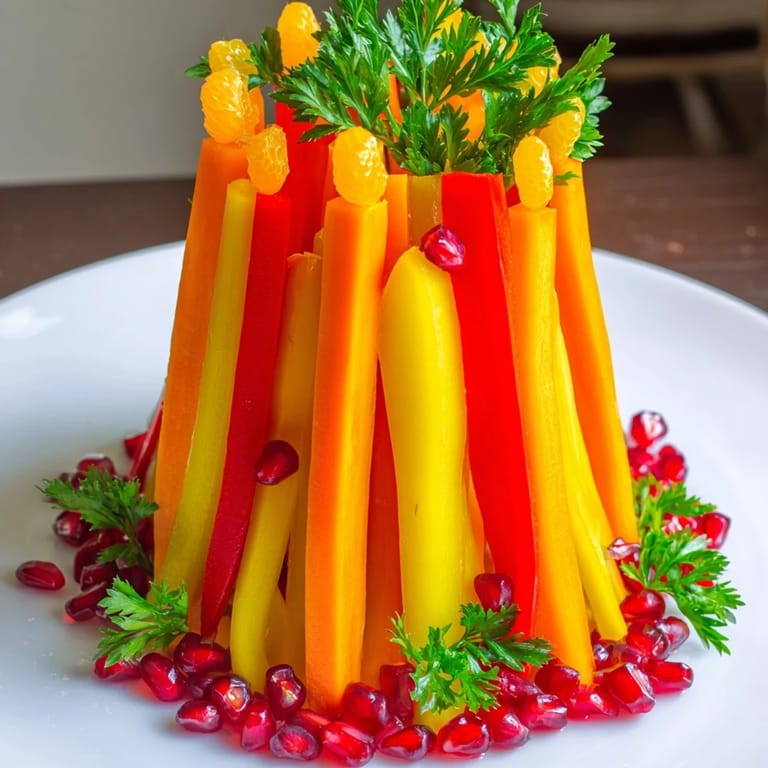
 I'll never forget the autumn evening when my friend Sarah brought this stunning bonfire centerpiece to our garden gathering. As the sun dipped low and the air turned crisp, she unveiled this vibrant tower of oranges, reds, and yellows arranged on a simple white plate—and for a moment, everyone gathered around like it was an actual fire warming us from within. It wasn't just beautiful; it sparked conversations and laughter. That night taught me that the most memorable meals aren't always about what's on the plate, but how it makes people feel.
The first time I made this was for a potluck where I'd been asked to bring something 'impressive.' I stood in my kitchen wondering if raw vegetables could ever feel elegant enough. Two hours later, watching my shy neighbor reach for a carrot stick and then stay to chat for twenty minutes—that's when I realized this simple arrangement had become the heart of the party.
Ingredients
- 2 large carrots, peeled and cut into long thin sticks: These are your golden flames—look for carrots that are straight and uniform so they stand tall and proud. The sweetness of raw carrot is a revelation when you let it shine without cooking.
- 1 yellow bell pepper, seeded and sliced into strips: Yellow brings that warm, honeyed glow that makes the whole arrangement feel alive. Slice them thick enough to hold their shape but thin enough to feel delicate.
- 1 red bell pepper, seeded and sliced into strips: The deepest color in your fire, these strips add drama and that final flicker of intensity. Choose peppers with thick walls so they don't collapse.
- 3 mandarins, peeled and segmented: These sweet jewels are what catch the light and make people lean in closer. Their natural brightness brings authenticity to the bonfire effect.
- Fresh parsley or mint sprigs: These scattered around the base feel like cooling ash or embers settling around a fire. They add a whisper of freshness and visual complexity.
- 1 small handful pomegranate seeds (optional): If you can get them, these tiny rubies are the final touch—like sparks dancing up from the flames. They catch light beautifully and add a luxurious feel.
- 1/2 cup hummus or yogurt-based dip (for serving on the side): This is your safety net and your flavor anchor. Choose whatever calls to you—hummus brings nuttiness, yogurt dip brings cool creaminess.
Tired of Takeout? 🥡
Get 10 meals you can make faster than delivery arrives. Seriously.
One email. No spam. Unsubscribe anytime.
Instructions
- Prep everything with intention:
- Lay out your cutting board and really take your time here. Cut the carrots into long, elegant sticks—imagine them as the backbone of your fire. Slice your peppers into strips that feel substantial in your hand. This isn't rushed cooking; this is meditation. As you work, think about how the colors will look together.
- Create your bonfire base:
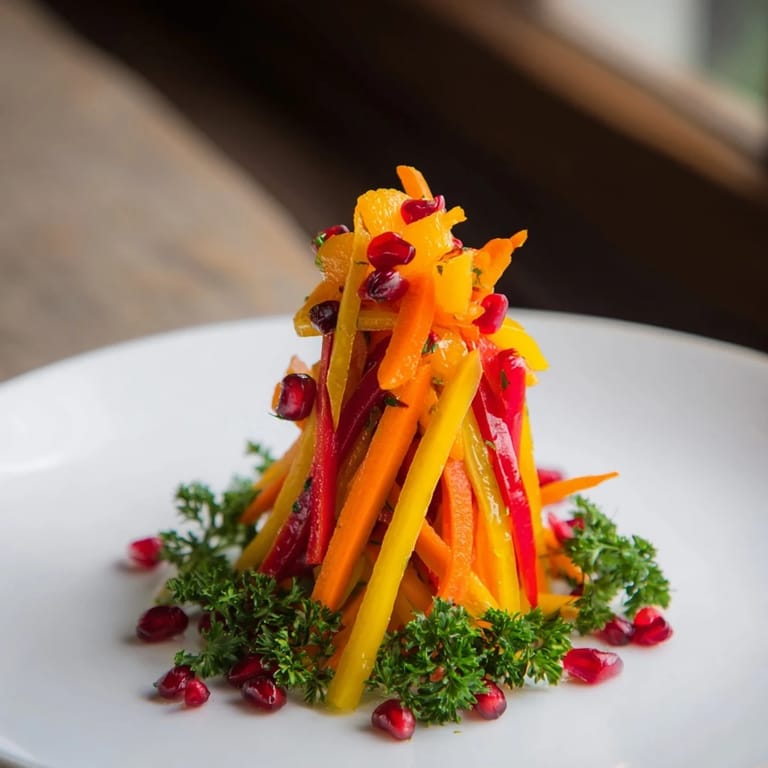
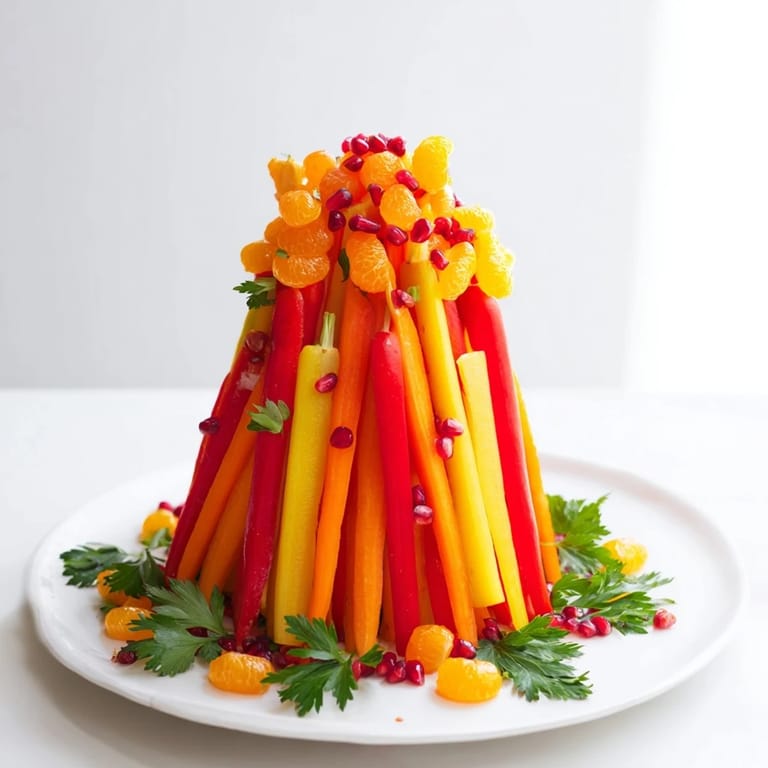
- On your serving plate, gather the carrot sticks and arrange them vertically in the center, leaning them together to form a teepee. You're creating architecture here—lean them at slight angles so they look natural and dynamic, not stiff. This is the skeleton of your fire.
- Layer in the flickering effect:
- Now weave your yellow and red pepper strips among the carrots, mixing them as you go. Don't be too perfect—a real fire dances and moves. Some strips should peek out front, others hide behind the carrots. Rotate around your arrangement as you work, stepping back every few additions to see how it looks from all angles.
- Add warmth with mandarin segments:
- Tuck these beautiful orange segments at various heights—some nestled at the base, others placed halfway up the arrangement. They bring moisture, sweetness, and that final color note that ties everything together. These are your fire's heart.
- Scatter the embers:
- Arrange fresh parsley or mint sprigs around the base, letting them sprawl naturally like ash settling. This greenery provides the contrast that makes all those warm colors pop. Don't fuss—organic placement feels most authentic.
- Add sparkle if you choose:
- If you have pomegranate seeds, scatter them across the arrangement like tiny flames or sparks. They're optional, but they transform the piece into something truly special—something that feels celebratory.
- Serve with intention:
- Place your small bowl of hummus or dip nearby, but slightly apart. Your centerpiece is the star; the dip is just the supporting player. Step back and look at what you've created—this is edible art.
 Pin it
 There was this moment at my sister's dinner party when her five-year-old daughter looked at this centerpiece and whispered, 'Is it real fire?' I watched my sister crouch down and explain that sometimes the most beautiful things in life aren't dangerous at all—they're just vegetables arranged with love. That child ate more vegetables that night than she had in months, just because they were beautiful.
Why This Works as a Centerpiece
Centerpieces usually sit there, decorative and untouchable. This one is different—it's meant to be eaten, touched, explored. There's something about an edible centerpiece that makes people feel welcome and cared for. It says, 'I made this for you, and you can have it.' It transforms a table from formal to intimate. The colors are so striking that phones come out, photos get taken, and suddenly your simple arrangement becomes a memory people want to hold onto.
Building the Bonfire Effect
The real secret to making this work is understanding that a bonfire isn't one solid shape—it's a composition of different elements at different heights and angles. Your carrots create the vertical drama, the peppers add the movement and flicker, the mandarins bring warmth and dimension, and the herbs provide that essential contrast. Step back frequently as you're building it. Look at it from your guests' perspective, from above, from the sides. A truly successful centerpiece feels different from every angle.
Variations and Personal Touches
This is a template, not a rulebook. I've made it with golden beets sliced thin for extra shimmer, with thinly shaved yellow carrot for subtlety, with pomegranate arils scattered like embers. Some seasons I add thin apple slices for autumn gatherings, or persimmon slices for deeper warmth. I've even made a winter version with roasted root vegetables arranged the same way—not raw, but still stunning. The point is to see what speaks to you, what's available in your market, what matches the season or the feeling you want to create. Trust your instincts and your eye.
- Try golden beets or yellow carrot for added dimension and color variety
- Serve with assorted crackers or thinly sliced baguette on the side for dipping
- Pair with a crisp white wine, a citrusy mocktail, or sparkling water with fresh citrus
 Pin it
 The truth is, this recipe isn't really about vegetables or technique. It's about creating a moment where people feel seen and celebrated. Every time I make this, I think about those gatherings where the food became secondary to the connection, where something simple and beautiful brought people closer together.
Recipe FAQs
- → How do I create the flame effect with the vegetables?
Cut carrots and bell peppers into long, thin sticks. Arrange them vertically in a teepee shape, mixing colors to mimic flickering flames.
- → What fruits add to the warm glow of the centerpiece?
Mandarin segments are nestled among the vegetables to add bright orange tones that enhance the bonfire illusion.
- → Can I include garnishes to improve the centerpiece's look?
Fresh parsley or mint sprigs can be placed around the base to resemble embers, and pomegranate seeds sprinkle a subtle sparkle effect.
- → What dips pair well with this arrangement?
Hummus or yogurt-based dips served on the side complement the fresh vegetable flavors and add a creamy element.
- → Are there suggestions to enhance the color variety?
Adding thin strips of golden beet or yellow carrot can bring extra hues and deepen the warm effect.