 Pin it
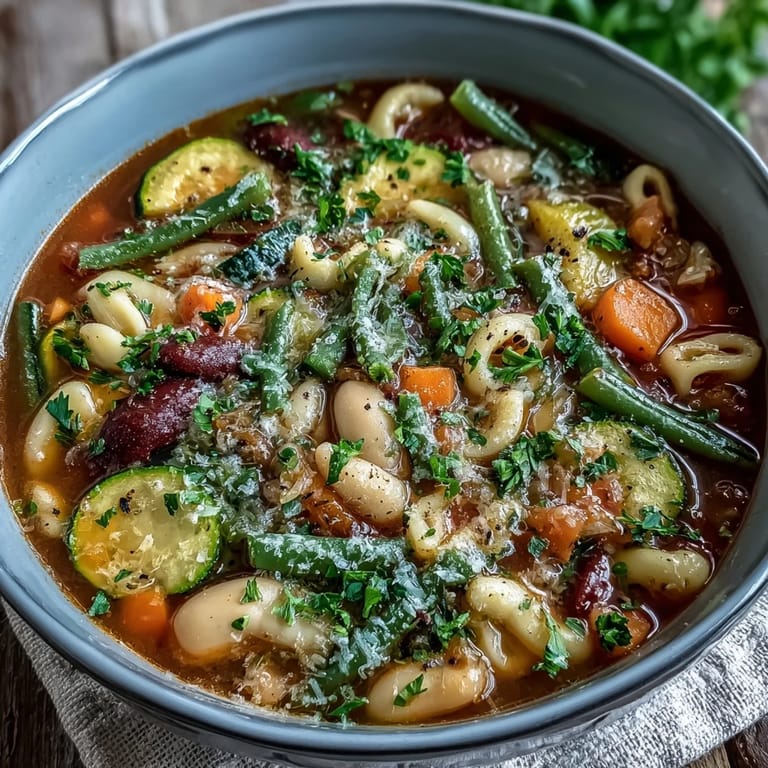
 The smell of simmering vegetables and herbs fills my kitchen whenever I make minestrone, reminding me of how this soup transformed from a random collection of ingredients into something magical. I first started making it during college when I needed something filling but affordable, and now it is a staple that changes with whatever vegetables I have on hand.
Last winter, my neighbor came over shivering from a long walk, and I served her a steaming bowl with crusty bread. She sat at my table, spoon in hand, and told me it tasted exactly like the soup her Italian grandmother used to make on cold Sunday afternoons. That moment made me realize how food carries memories across generations.
Ingredients
- 2 tbsp olive oil: Creates the flavorful foundation for sautéing vegetables
- 1 medium onion, diced: Provides aromatic sweetness as the base
- 2 carrots, diced: Adds natural sweetness and color
- 2 celery stalks, diced: Brings essential savory depth
- 1 small zucchini or butternut squash, diced: Seasonal vegetable that adapts the soup
- 1 cup green beans or kale, chopped: Adds texture and nutrients
- 3 cloves garlic, minced: Infuses aromatic intensity
- 1 can diced tomatoes: Provides body and rich acidity
- 1 medium potato, diced: Optional thickener that adds heartiness
- 1.5 liters vegetable broth: The soul of the soup, so choose quality
- 1 can cannellini or borlotti beans: Creamy protein that makes it satisfying
- 100 g small pasta: Ditalini or elbows work best for spoonability
- Salt and pepper: Essential for bringing all flavors forward
- 1 bay leaf: Subtle herbaceous backbone
- 1 tsp dried oregano and basil: Classic Italian dried herbs for depth
- 2 tbsp fresh parsley: Bright finish that cuts through richness
- Grated Parmesan: Optional salty umami garnish
Tired of Takeout? 🥡
Get 10 meals you can make faster than delivery arrives. Seriously.
One email. No spam. Unsubscribe anytime.
Instructions
- Build your aromatic base:
- Heat olive oil in a large pot over medium heat, then add onion, carrots, and celery, sautéing for 5 minutes until softened and fragrant.
- Add seasonal vegetables:
- Stir in garlic, zucchini or squash, and green beans or kale, cooking for 3 minutes to start developing their flavors.
- Create the soup foundation:
- Add diced tomatoes, potato if using, and bay leaf, cooking for 2 minutes before pouring in vegetable broth.
- Let it simmer:
- Bring to a boil, then reduce heat and simmer for 15 minutes to let vegetables soften and flavors meld.
- Add pasta and beans:
- Stir in beans and pasta, simmering uncovered for 10 to 12 minutes until pasta is tender and vegetables are cooked through.
- Season and finish:
- Add oregano, basil, salt, and pepper, remove the bay leaf, then stir in fresh parsley before serving.
 Pin it
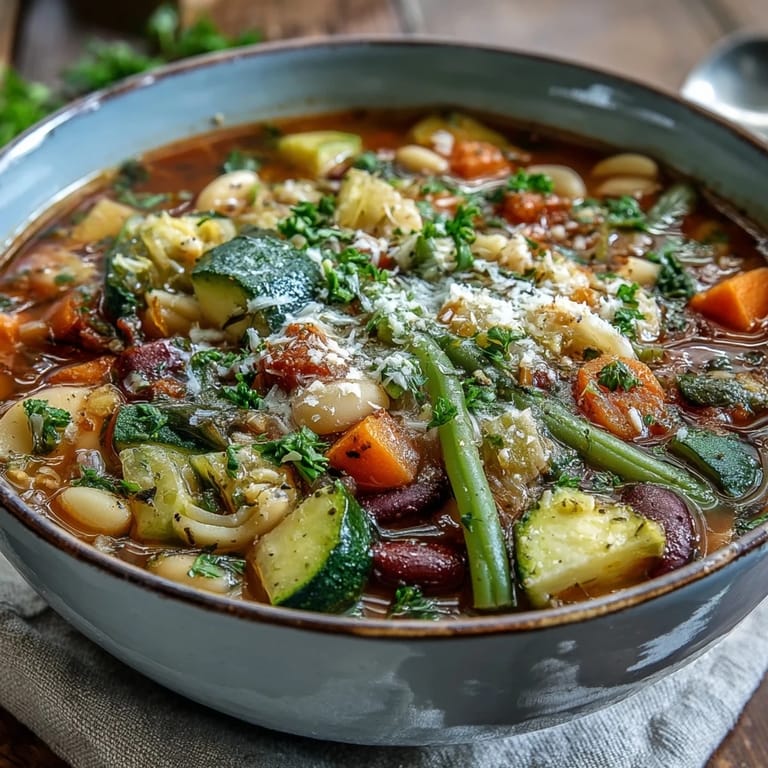
 This soup has become my go-to when friends need comfort, whether they are celebrating good news or nursing a broken heart. There is something universally soothing about a bowl of minestrone that says everything will be okay.
Seasonal Swaps
In spring, I add fresh peas, leeks, or tender asparagus for a lighter touch. Summer calls for more zucchini, bell peppers, and fresh basil instead of dried. Winter demands hearty squash, kale, and maybe some cabbage for staying power through cold months.
Making It Your Own
Some days I add a splash of red wine for depth, or a pinch of red pepper flakes if I want gentle warmth. A handful of spinach stirred in at the end wilts beautifully and adds vibrant color. Trust your instincts and use what you love.
Serving Suggestions
Crusty bread is nonnegotiable for soaking up every last drop. A drizzle of your best extra virgin olive oil right before serving adds luxurious finish. A simple green salad with bright vinaigrette balances the heartiness perfectly.
- Grate extra Parmesan directly over bowls for the freshest flavor
- Keep red pepper flakes on the table so everyone can adjust heat
- Make a double batch because leftovers disappear remarkably fast
 Pin it
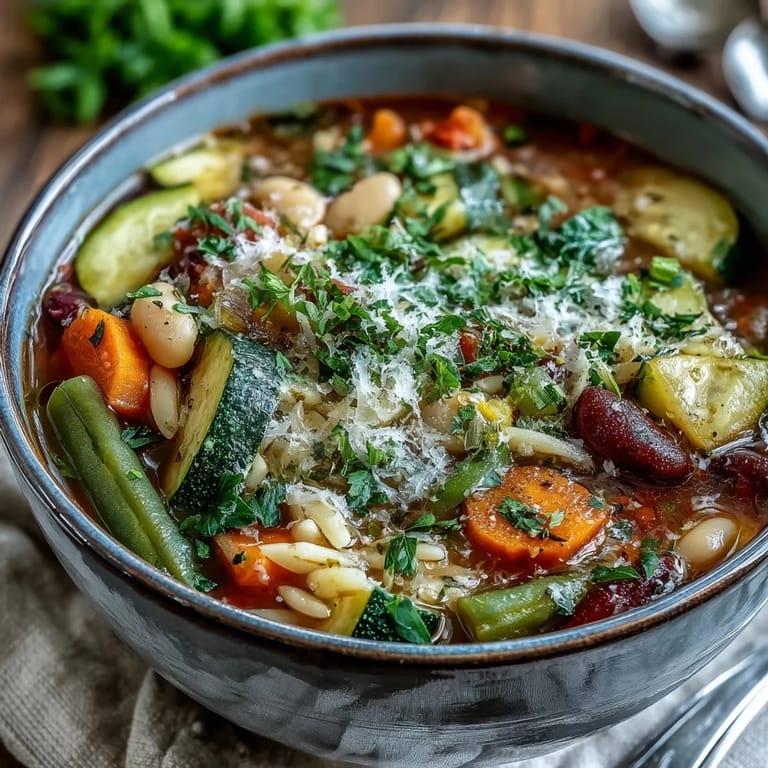
 Every time I make minestrone, I am reminded that the best recipes are the ones that evolve with you. Whatever vegetables you choose, whatever season it is, this soup will always feel like coming home.
Recipe FAQs
- → What vegetables work best in minestrone?
The classic base includes onion, carrots, and celery. From there, choose seasonal vegetables like zucchini and green beans in summer, or butternut squash and kale in winter. The soup adapts beautifully to whatever fresh produce you have available.
- → Can I make minestrone gluten-free?
Absolutely. Simply substitute regular pasta with gluten-free varieties like rice or corn-based shapes. The rest of the ingredients—vegetables, beans, and herbs—are naturally gluten-free, making this an easy adaptation.
- → How long does minestrone keep in the refrigerator?
Stored in an airtight container, minestrone keeps well for 4-5 days. The flavors often deepen and improve after sitting. Note that pasta will continue absorbing liquid, so you may need to add extra broth when reheating leftovers.
- → What pasta shape is traditional for minestrone?
Small pasta shapes like ditalini, elbow macaroni, or small shells are traditional. Their size matches well with the chunky vegetables and beans, ensuring every spoonful contains a bit of everything. Broken spaghetti or other small shapes work too.
- → Can I freeze minestrone soup?
Yes, though it's best to freeze without the pasta. Cook vegetables and broth, cool completely, then freeze for up to 3 months. When ready to serve, thaw and add freshly cooked pasta to prevent it from becoming mushy.
- → What's the secret to richer flavor?
Adding a Parmesan cheese rind while simmering infuses deep umami notes. Remove before serving. Also, don't rush the initial vegetable sauté—those caramelized bits form the flavor foundation of your entire soup.