 Pin it
 I discovered this bowl on a Tuesday night when I had salmon thawing and absolutely nothing else calling my name. Instead of the usual pan-sear-and-forget approach, I decided to brush up on my glaze game, inspired by the glossy teriyaki bowls I kept seeing everywhere. The first time I spooned that silky sauce over the flaked salmon, something clicked—it wasn't just dinner, it became the kind of meal I actually wanted to make again, and again, and again.
I made this for my partner one evening after work, and I watched their face light up the moment they took that first bite. The crisp vegetables, the tender salmon, the creaminess of the avocado against the heat of the sriracha—they kept saying it tasted like something you'd order at a high-end poke spot, except we'd made it at home in less time than it takes to order delivery.
Ingredients
- Salmon fillets: Two boneless fillets are ideal here; skin-on works too if that's what you've got, just give them a quick sear skin-side down to crisp it up.
- Soy sauce: This is the backbone of your glaze, so don't skip or substitute with something watered down—quality soy makes a real difference.
- Mirin: That touch of natural sweetness that gives the glaze its signature shine and keeps it from becoming one-note salty.
- Honey or maple syrup: Your choice here; both work beautifully, though maple brings a deeper note.
- Rice vinegar: Adds brightness and keeps everything balanced—it's the detail that makes people ask what your secret is.
- Sesame oil: Just a teaspoon, but it rounds out the whole flavor profile with something toasty and grounding.
- Garlic and ginger: These minced into the glaze create tiny flavor bombs throughout; don't be shy with them.
- Cornstarch slurry: Dissolve it in water first so it doesn't clump—this is what gives you that glossy, cling-to-the-salmon texture.
- Short-grain white rice: The slightly sticky nature of it works with the bowl concept; leftover rice actually works great here, just fluff it gently.
- Avocado: Slice it at the last possible moment to keep it from browning and looking sad.
- Cucumber: Keep the slices thin and crisp by cutting them just before serving.
- Carrot: Julienning it by hand takes a minute but makes the whole presentation feel intentional, or use a julienne peeler to save time.
- Scallions: The green parts especially bring freshness and a gentle onion bite that cuts through the richness.
- Sesame seeds: Toast them yourself if you can—they taste so much brighter than pre-toasted ones.
- Nori: Those strips of seaweed add a briny, umami note and a satisfying crunch.
- Mayonnaise, sriracha, and lime: This trio creates magic; the lime juice is essential because it keeps the mayo from feeling heavy.
Tired of Takeout? 🥡
Get 10 meals you can make faster than delivery arrives. Seriously.
One email. No spam. Unsubscribe anytime.
Instructions
- Build your glaze base:
- Whisk soy sauce, mirin, honey, rice vinegar, sesame oil, minced garlic, and grated ginger together in a small bowl until they're all friendly with each other. This is your foundation, so take ten seconds to make sure everything's combined smoothly.
- Get the salmon ready:
- Place your salmon fillets skin-side up in a shallow dish and pour half of that glaze over them. Let them sit for ten minutes while you gather your other ingredients—this isn't a long marinate, but it's long enough for the flavors to start whispering to the fish.
- Cook the salmon with confidence:
- Heat your non-stick skillet over medium heat until it's warm but not screaming hot. Lay the salmon in skin-side down (if it has skin) and cook for three to four minutes per side until it's just opaque and flakes gently when you test it with a fork. You're looking for cooked through, not overdone and dry.
- Create the sauce:
- Pour that reserved glaze into the same pan and stir in your cornstarch slurry, watching as it thickens right before your eyes into something silky and glossy. Let it bubble gently for a minute or two, then return the salmon to the pan and spoon that beautiful glaze all over it.
- Mix the sriracha mayo:
- While the salmon's getting its glaze, stir mayonnaise, sriracha, and lime juice together in a small bowl until you get a smooth, creamy drizzle consistency. Taste it and adjust—if you like heat, add more sriracha; if you want brightness, another squeeze of lime.
- Assemble with intention:
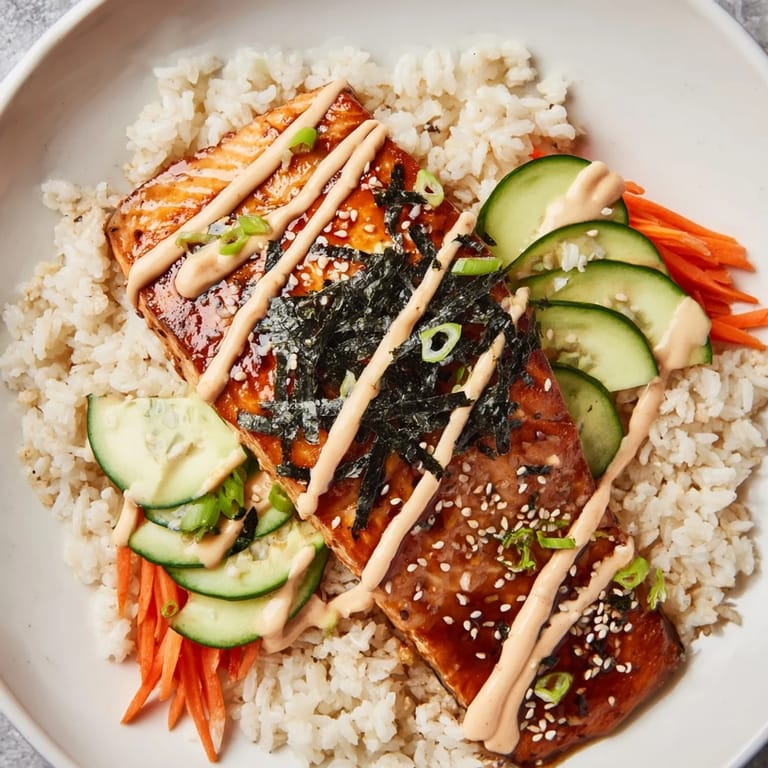
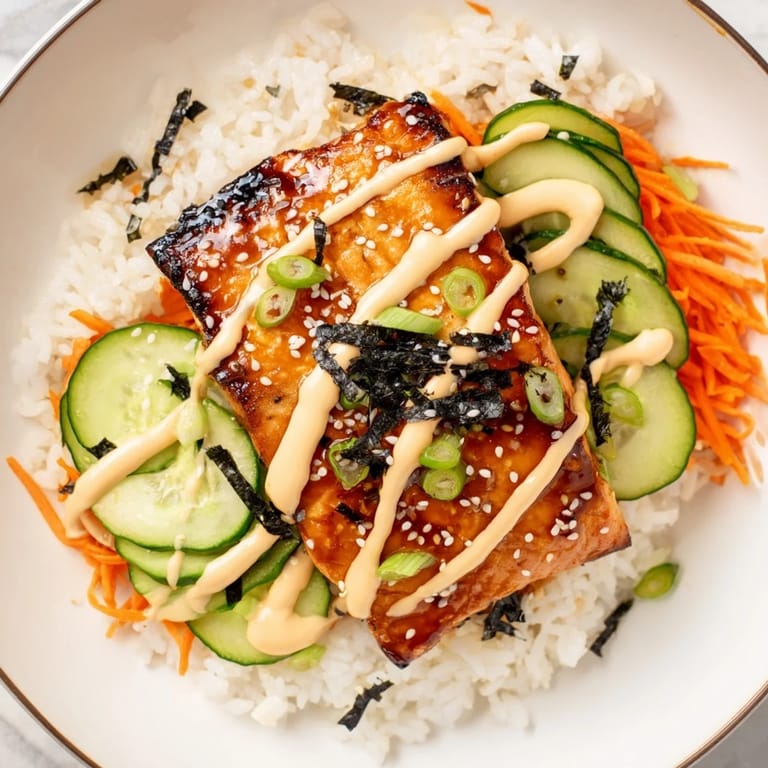
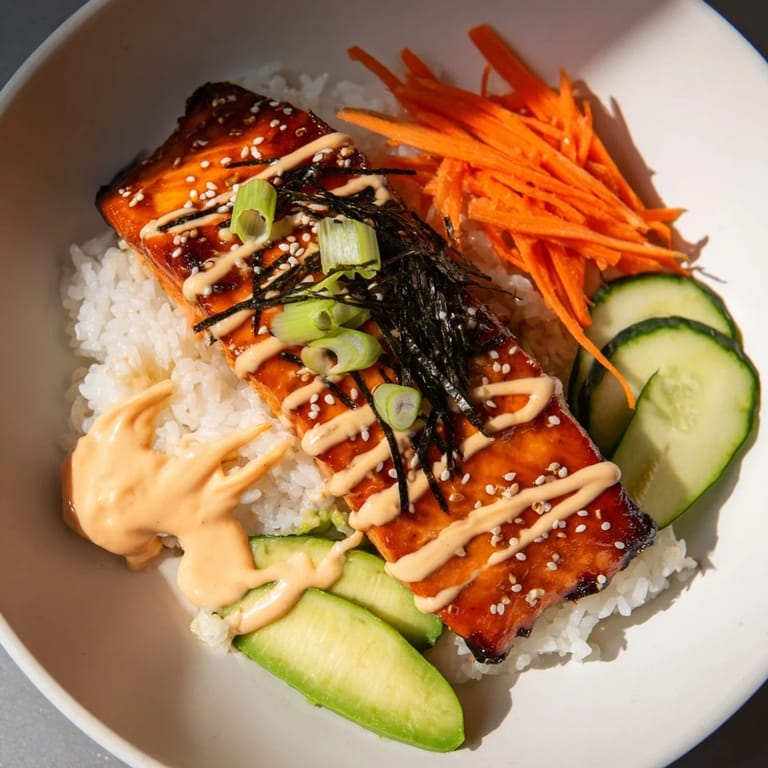
- Divide your warm rice between two bowls, flake the glazed salmon over top, and arrange avocado, cucumber, and carrot around it like you're creating something worth photographing. Drizzle generously with that sriracha mayo.
- Finish and serve:
- Sprinkle scallions, toasted sesame seeds, and nori strips over everything and get it to the table while it's still warm. The rice will hold the heat, keeping the bowl comfortably warm while the toppings stay fresh and crisp.
 Pin it
 The moment when all the elements come together in one bowl—when you've got warm, glossy salmon, cool crisp vegetables, creamy avocado, and that unexpected heat from the sriracha mayo hitting your palate all at once—that's when you realize this isn't just a meal, it's a little victory on a plate. It's become the thing I make when I want to feel like I've accomplished something in the kitchen without stressing myself out.
Why This Bowl Works So Well
There's something almost meditative about how this bowl builds flavors in layers. The teriyaki glaze brings umami depth and that signature glossy shine, the vegetables add textural contrast and freshness, and the sriracha mayo pulls it all together with creaminess and heat. Every component has a reason for being there, and nothing feels like filler.
Making It Your Own
This bowl is forgiving in the best way—if you don't have avocado, swap in something creamy like cucumber-yogurt sauce or even a fried egg. If mirin isn't in your pantry, a little extra honey or brown sugar works in a pinch. The rice can be brown, white, or even quinoa if that's what you've got. The beautiful part is that once you understand how the glaze and sriracha mayo work together, you can riff on the vegetables endlessly.
Storage and Keeping
This bowl is really best eaten fresh and warm, but leftovers keep in the fridge for a day or two if you store the components separately—rice in one container, salmon in another, vegetables in a third, and that sriracha mayo in a little jar. The flavors actually develop a bit overnight, which is nice, though the vegetables will soften slightly. Reheating the rice and salmon gently in a pan or microwave brings everything back to a pleasant warmth without drying things out.
- Keep the nori, sesame seeds, and scallions separate and add them right before eating so they stay crispy and bright.
- If you're meal-prepping, make your glaze ahead and store it in the fridge for up to five days so you can throw together dinner in minutes on busy evenings.
- The sriracha mayo lasts about a week in the fridge and is honestly good on everything—sandwiches, roasted vegetables, fried foods, you name it.
 Pin it
 This bowl turned into something I reach for not just because it's easy, but because it reminds me that good food doesn't have to be complicated. It's the kind of thing you can make on a Wednesday night and feel genuinely proud of.
Recipe FAQs
- → How do I achieve a glossy teriyaki glaze on the salmon?
Simmer the marinade with cornstarch slurry until thickened, then spoon it over the cooked salmon to create a shiny, flavorful glaze.
- → Can I substitute the rice with other grains?
Yes, brown rice or quinoa can be used to boost fiber and add a different texture while maintaining the bowl’s balance.
- → How spicy is the sriracha mayo, and can it be adjusted?
The mayo offers a mild heat that can be easily adjusted by varying the sriracha amount according to taste preferences.
- → What cooking tools are essential for this dish?
A non-stick skillet for salmon, mixing bowls for sauces and marination, along with basic knives and measuring spoons, are needed.
- → Is this bowl suitable for gluten-free diets?
Yes, by substituting traditional soy sauce with tamari or gluten-free soy sauce, this dish can be made gluten-free.