 Pin it
 There's something about the sound of a hot wok that gets me every time—that sharp sizzle when the pork hits the oil, followed by the smell of garlic and ginger filling the kitchen in seconds. My neighbor actually introduced me to this teriyaki version during a lazy Sunday when she was teaching me the difference between a stir-fry that feels rushed and one that feels alive. The trick, she said, wasn't fancy technique but respecting the heat and the order of things. Now it's become my go-to when I need dinner on the table but don't want it to feel like a weeknight compromise.
I made this for my partner one night after we'd had a stressful day at work, and watching them take that first bite—the way their shoulders actually relaxed—reminded me why I love cooking. They asked me to write down what I'd done because they wanted to make it themselves next time. That request meant more to me than any compliment, because it meant the food had done what food does best: it brought someone back to themselves.
Ingredients
- Pork tenderloin, thinly sliced (450 g / 1 lb): This cut cooks fast and stays tender if you don't overthink it; I learned the hard way that thin slices mean it's done before you can talk yourself into overcooking it.
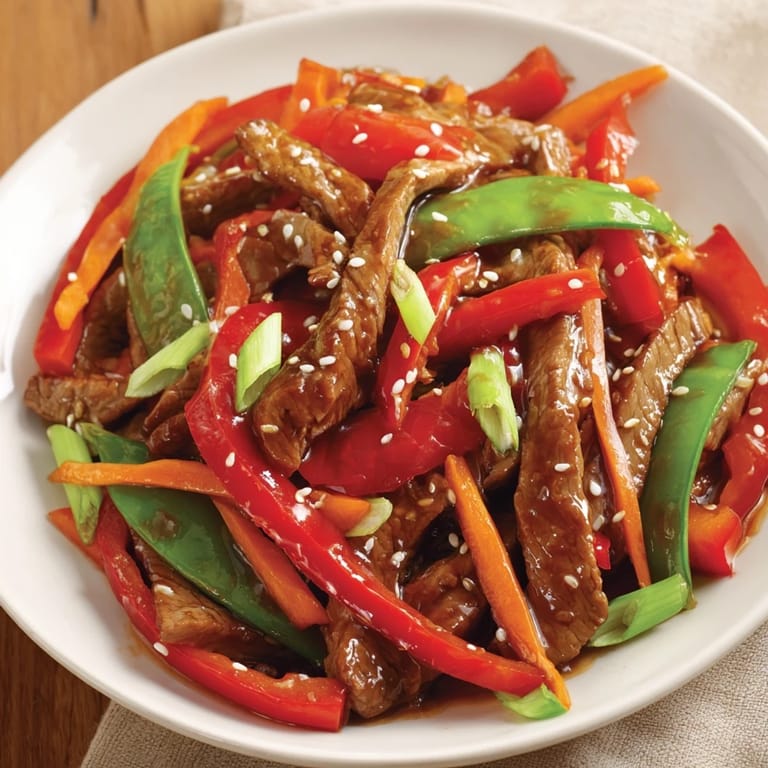
- Red bell pepper, sliced into strips (1): The sweetness balances the soy sauce beautifully, and the color is half the appeal.
- Snap peas, trimmed (1 cup / 100 g): They stay crisp if you don't crowd the pan, and that little pop when you bite into them is non-negotiable.
- Carrot, julienned (1 medium): Thin strips mean it cooks through in minutes without getting mushy.
- Green onions, sliced (3), plus extra for garnish: Half goes in during cooking to build flavor, the rest is scattered on top for brightness and texture.
- Garlic and ginger (2 cloves minced, 1 tsp grated): These go in at the very end so they're aromatic and alive, not cooked into oblivion.
- Low-sodium soy sauce (60 ml / 1/4 cup): Low-sodium gives you control; regular soy can make the whole dish taste like a salt lick if you're not careful.
- Mirin or sweet rice wine (60 ml / 1/4 cup): This is the secret to that glossy, layered sweetness—don't skip it or substitute it with plain sugar and expect the same magic.
- Brown sugar or honey (2 tbsp): Either works, though honey dissolves cleaner if you're whisking cold.
- Rice vinegar (1 tbsp): Just enough to brighten and cut through the richness without making it taste tangy.
- Cornstarch (1 tbsp): This is what makes the sauce cling to everything; I mix it with cold water first so it doesn't clump.
- Cold water (60 ml / 1/4 cup): Keep it cold so the cornstarch slurry stays smooth.
- Sesame oil (1 tsp): A little goes a long way; it's the whisper at the end that makes people ask what you did differently.
- Vegetable oil for cooking (2 tbsp): High-heat neutral oil—nothing fancy, just something that won't smoke.
- Toasted sesame seeds and extra green onions (for garnish): These finish the dish with texture and a final hit of freshness.
Tired of Takeout? 🥡
Get 10 meals you can make faster than delivery arrives. Seriously.
One email. No spam. Unsubscribe anytime.
Instructions
- Make your sauce first, so it's waiting for you:
- In a small bowl, whisk together soy sauce, mirin, brown sugar, rice vinegar, cornstarch, and cold water until the cornstarch dissolves and there are no lumps. Stir in the sesame oil and set it aside. This takes two minutes and saves you from scrambling later when everything in the pan is hot and demanding your attention.
- Sear the pork with confidence:
- Heat 1 tablespoon of vegetable oil in your wok or skillet over medium-high heat until it's shimmering and almost smoking. Add the pork slices in a single layer and let them sit for 30 seconds before you stir—this is how you get color, which is flavor. Stir-fry for 3 to 4 minutes total until the outside is browned and the inside is just cooked through. Transfer to a plate.
- Cook the vegetables until they're still alive:
- Add the remaining oil to the pan, then immediately add the bell pepper, snap peas, and carrot. Keep everything moving for 2 to 3 minutes; you want them tender but still with a little resistance when you bite them. If you stand there poking at them, they'll overcook while you're watching.
- Build the flavor layers:
- Add the garlic, ginger, and half the green onions. Stir for about 30 seconds until your kitchen smells incredible—that's your signal that you've done it right. If you wait too long here, the garlic gets bitter, so be quick.
- Bring it all back together:
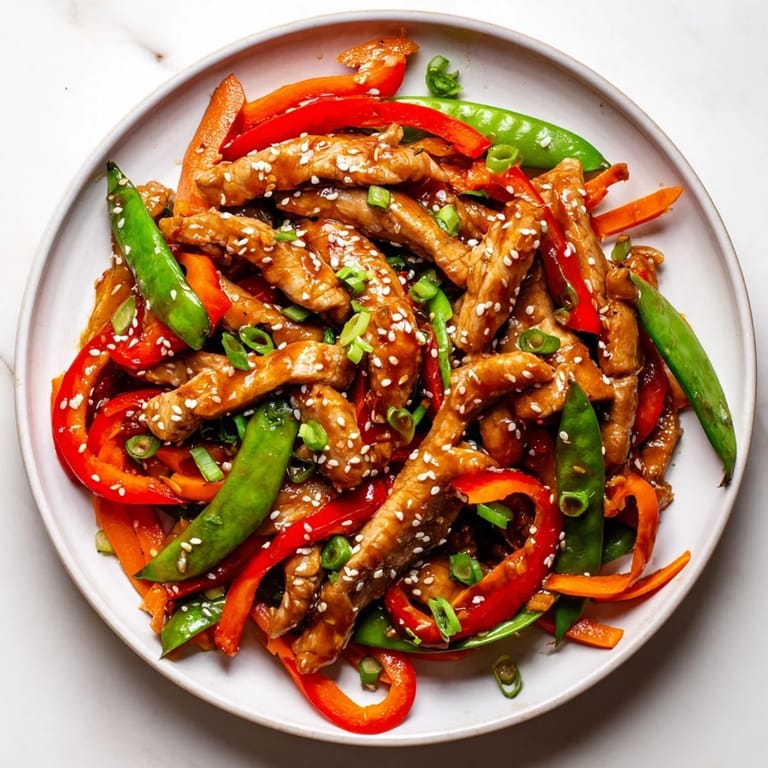
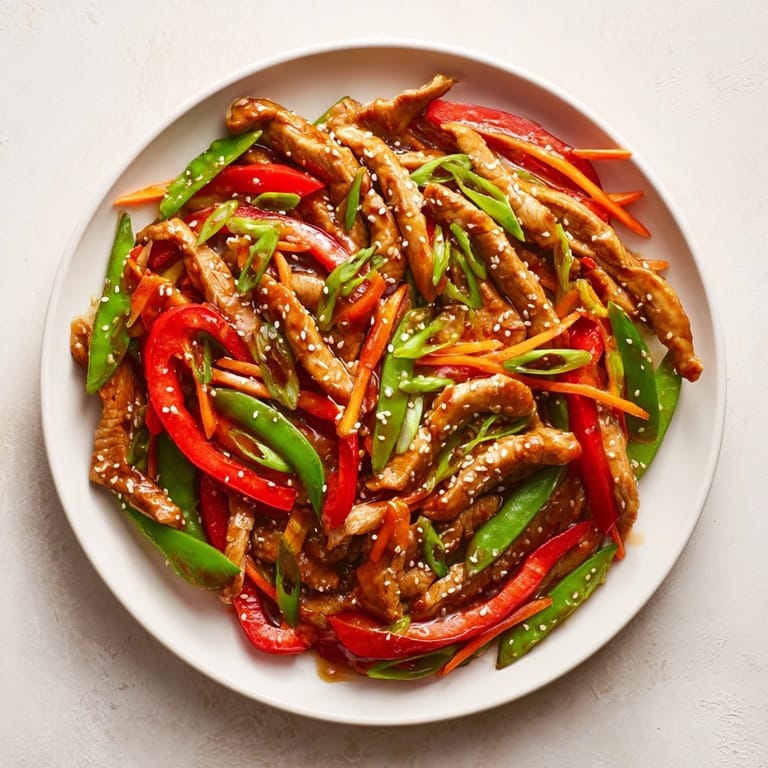
- Return the pork to the pan, give your teriyaki sauce a quick stir to redistribute any settled cornstarch, and pour it over everything. Toss constantly for 1 to 2 minutes as the sauce thickens into a glossy, clingy coating. This is the satisfying part—watching everything turn shiny and come alive.
- Finish and serve hot:
- Remove from heat, sprinkle with sesame seeds and the remaining green onions, and serve immediately over steamed rice or noodles. If it sits around, the sauce keeps thickening and things dry out, so don't wait.
 Pin it
 My friend's seven-year-old ate three plates of this without complaining about the vegetables, which felt like a small miracle. Later, she asked if she could help make it again, and I realized that sometimes the best part of cooking isn't the flavor—it's the moment someone wants to learn it from you.
Why This Works as a Weeknight Dinner
Speed is part of it, but it's really about the psychology of eating something that tastes intentional even when you made it in 15 minutes. Stir-fry has this built-in confidence because everything happens at once—the sizzle, the aroma, the visible transformation from raw to cooked. There's no slow simmering that tests your patience or hidden steps that could go wrong. By the time your rice finishes steaming, the pan is clean and your plate is full.
How to Customize Without Losing the Plot
The beauty of this dish is that you can swap proteins without changing a thing—chicken breast, cubed tofu, even beef sirloin all work under the same sauce and same timeline. Vegetables are equally flexible; I've used broccoli, bok choy, mushrooms, and snow peas depending on what's in the fridge. The only rule is to respect the cooking time: harder vegetables like broccoli need an extra 30 seconds, while tender ones like bok choy barely need more than a stir-through. The sauce is the anchor that makes everything taste cohesive, so as long as you keep that consistent, the rest is just improvisation.
The Sauce is Everything
This is the part where I learned to stop treating recipes like instructions and start treating them like suggestions. I've made this sauce with different ratios of soy to mirin depending on how sweet or salty I wanted it that day, and I've added a pinch of red pepper flakes when I needed heat. The cornstarch is non-negotiable if you want that glossy cling, but everything else is open to your preferences and what you have on hand.
- If your soy sauce is already high-sodium, use less and taste as you go—you can always add more, but you can't take it back.
- Honey and brown sugar dissolve differently; brown sugar sinks and needs stirring, while honey blends more evenly into cold liquid.
- The sesame oil is optional but it's the difference between good and unforgettable, so I never skip it.
 Pin it
 This dish has become the recipe I reach for when I want to feel capable in the kitchen without pretending to be a chef. It's proof that good food doesn't require fancy equipment or complicated steps—just respect for your ingredients and the willingness to let heat and timing do most of the work for you.
Recipe FAQs
- → What cut of pork works best?
Pork tenderloin or thinly sliced pork loin are ideal for quick stir-frying and tender results.
- → Can I substitute vegetables in this dish?
Yes, broccoli, mushrooms, or bok choy make excellent alternatives or additions for varied texture and flavors.
- → How do I make the sauce thicker?
The cornstarch slurry in the teriyaki sauce thickens it during cooking; ensure to stir constantly as the sauce simmers.
- → Is this dish suitable for gluten-free diets?
Use tamari instead of soy sauce to keep the sauce gluten-free, and verify all ingredients accordingly.
- → What is the best way to serve this dish?
Serve over steamed rice or noodles to complement the juicy pork and glazed vegetables perfectly.