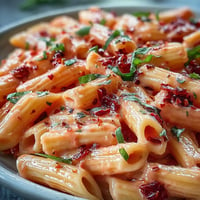
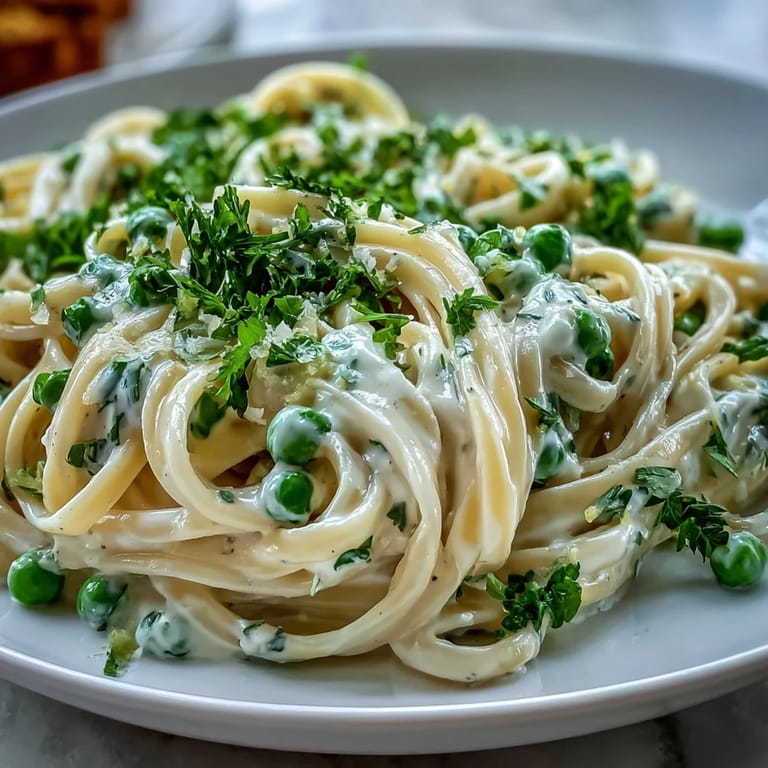
 Pin it
 The first hint that spring had arrived was the sudden surge of fresh peas at the market, glistening in the lightly chilled produce bins. One afternoon, I brought a handful home with no plan and heard the soft snap as I shelled them, letting their sweetness linger on my fingers. That moment inspired me to craft a meal that tasted like sunshine after rain: pasta tossed in lemon cream, peas, and tender greens. The aroma of garlic sizzling in butter always lures curious family members into the kitchen, creating its own kind of anticipation. There's something quietly joyful about cooking a dish that announces the change of season.
I remember serving this pasta at an impromptu Sunday lunch, when friends pulled up chairs and we passed around bowls until not a strand was left. The conversation drifted as the spinach wilted and the Parmesan melted into the sauce—a small moment of quiet happiness. Someone spilled a little lemon juice, and we joked it was good luck. Even the leftovers seemed more cheerful the next day. Cooking for a crowd taught me this recipe’s true charm is sharing it.
Ingredients
- Linguine or fettuccine: Using dried pasta gives a satisfying structure and holds the creamy sauce well—I've learned to undercook it slightly then finish in the sauce.
- Fresh or frozen peas: Fresh peas are grassy and sweet, but frozen are perfect when you're short on time—I always taste one to check tenderness.
- Baby spinach: Chop roughly so it folds in quickly—spinach tenderizes just as the sauce thickens, blending into each bite.
- Fresh chives: Chives add peppery brightness—slicing them fine lets their flavor thread gently through the pasta.
- Unsalted butter: Starting with butter creates a mellow baseline—just be careful not to brown it unless you want extra nutty depth.
- Garlic: Mince or crush for the strongest aroma—if you burn it, start that step again; it's worth it.
- Heavy cream: Cream serves as both canvas and cushion for the lemon—don't rush the simmer or it can split.
- Lemon zest and juice: Zest brings pure citrus flavor, while juice brightens the whole dish—taste as you add, since lemons differ.
- Parmesan cheese: Grating fresh gives you melty ribbons that thicken the sauce—I scoop some aside for garnishing.
- Salt and black pepper: Seasoning at the end lets you control depth—a pinch of pepper just before serving makes a difference.
- Extra grated Parmesan, freshly ground black pepper, lemon zest: These garnishes add warmth, sharpness, and sparkle—I've learned not to skip them.
Tired of Takeout? 🥡
Get 10 meals you can make faster than delivery arrives. Seriously.
One email. No spam. Unsubscribe anytime.
Instructions
- Start the pasta:
- Fill a large pot with salted water and let it roar—drop in the linguine or fettuccine, stir once to prevent sticking, and cook until it's just barely tender. Save a splash of the cooking water for later before draining.
- Prepare the silky base:
- While the pasta steams, heat butter in a wide skillet, letting it quietly melt. Toss in the garlic and stir until the scent rises without any scorching.
- Simmer the lemon cream:
- Pour in heavy cream and bring to a gentle bubble—add zest and juice, letting the sauce thicken while stirring gently so nothing catches.
- Cook the peas:
- Tip in peas and let them simmer, watching for vibrant green and just-soft texture—fresh or frozen, the peas should add a pop of color.
- Finish the pasta:
- Drop the drained pasta into the sauce along with spinach, Parmesan, and chives—use tongs to toss so the spinach wilts and sauce clings. Add pasta water bit by bit to reach your perfect consistency.
- Season and serve:
- Sift salt and pepper over everything, stirring and tasting as you go—scoop into bowls and top with extra Parmesan, lemon zest, and pepper.
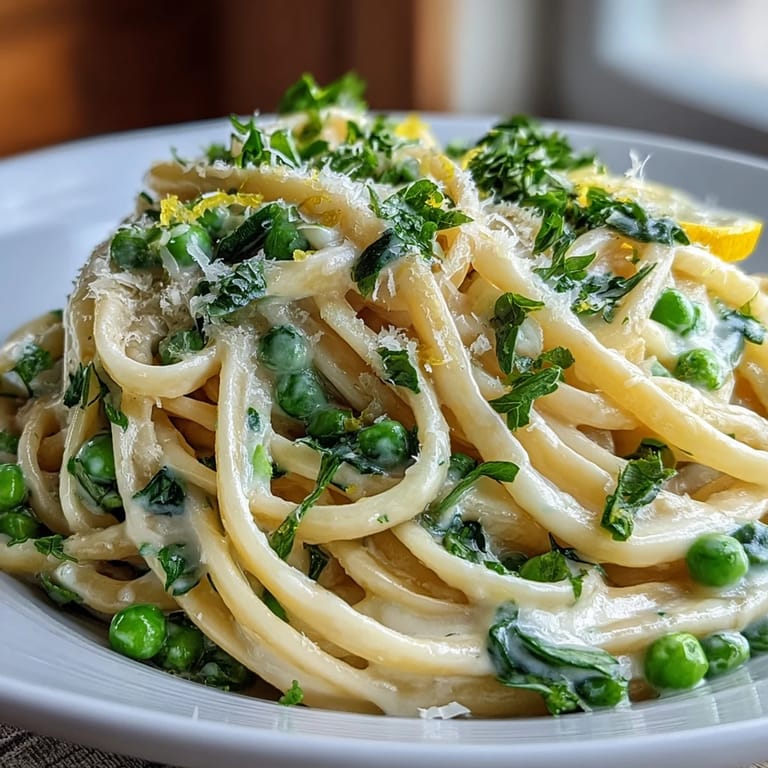 Pin it
 The first spring evening I cooked this, we ate outside with birds singing overhead, and every forkful felt like a celebration. The lemony aroma hovered for hours, reminding me that food can set a mood as much as it satisfies hunger.
Getting That Perfect Creamy Sauce
I've had cream split on me when the heat was too fierce, so now I watch for steady gentle bubbles rather than boiling. Stirring often and grating the Parmesan directly into the skillet helps the sauce stay silky and thick. The trick is patience: letting the sauce come together is what makes the pasta glossy and flavorful.
When to Add Greens and Herbs
If you toss in spinach too early, it shrivels to mush—wait until the pasta is nearly ready, then stir it in for just a minute. I sprinkle chives at the very end because their fresh green brightness is best uncooked. This simple timing keeps the colors lively and the flavors crisp.
Finishing Touches That Make a Difference
Top your pasta with a flurry of grated Parmesan and a scattering of lemon zest for an inviting look and punchy flavor. I always grind pepper right before serving, so its aroma isn’t lost. A splash more lemon juice added just before eating boosts freshness for every plate.
- Save a few peas and chives for a pretty garnish.
- Use a microplane for fluffy Parmesan and fine zest.
- Don’t forget to warm the serving bowls—the sauce will cling and stay luscious.
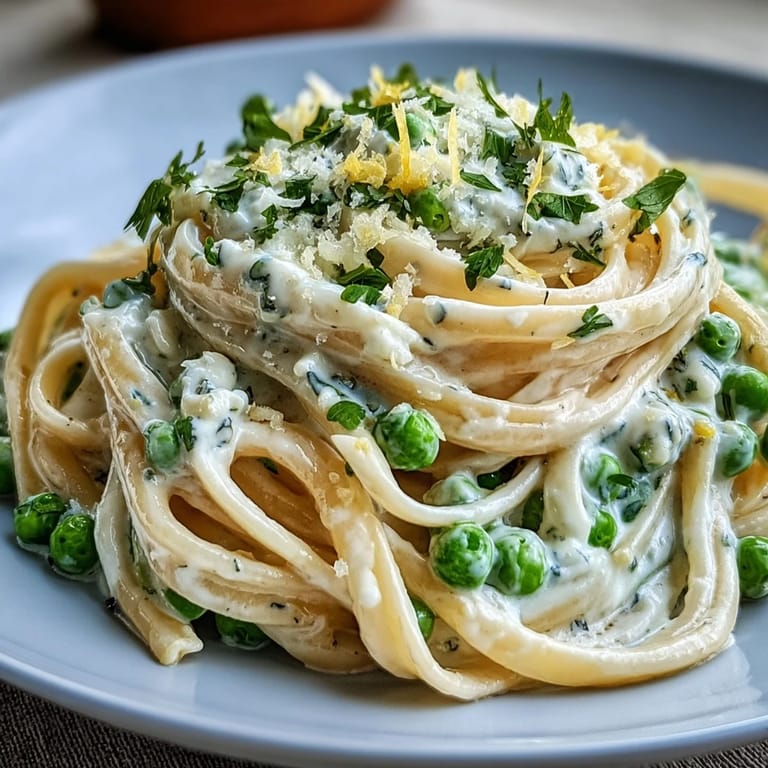 Pin it
 This dish is best shared with others, but tastes just as wonderful when made simply for yourself. Next time you see peas at the market, give it a try and let spring find its way onto your plate.
Recipe FAQs
- → How can I make the lemon cream sauce silky?
Simmer heavy cream with butter and lemon juice, whisking gently until smooth and creamy. Add pasta water as needed.
- → Can I use frozen peas instead of fresh?
Yes, frozen peas work well. Add them to the sauce and cook for 1–2 minutes until tender.
- → What pasta types suit this dish?
Linguine or fettuccine are ideal, but spaghetti or tagliatelle can also be used for a similar texture.
- → Is there a suitable vegetarian cheese for Parmesan?
Choose a hard cheese labeled vegetarian, like Grana Padano or Pecorino, for a similar salty and savory flavor.
- → How do I adjust sauce thickness?
Use reserved pasta water to thin the sauce, adding slowly until the desired creaminess is reached.
- → What wine pairs well with this dish?
Crisp white wines such as Sauvignon Blanc or Pinot Grigio complement the lemony and creamy notes best.