 Pin it
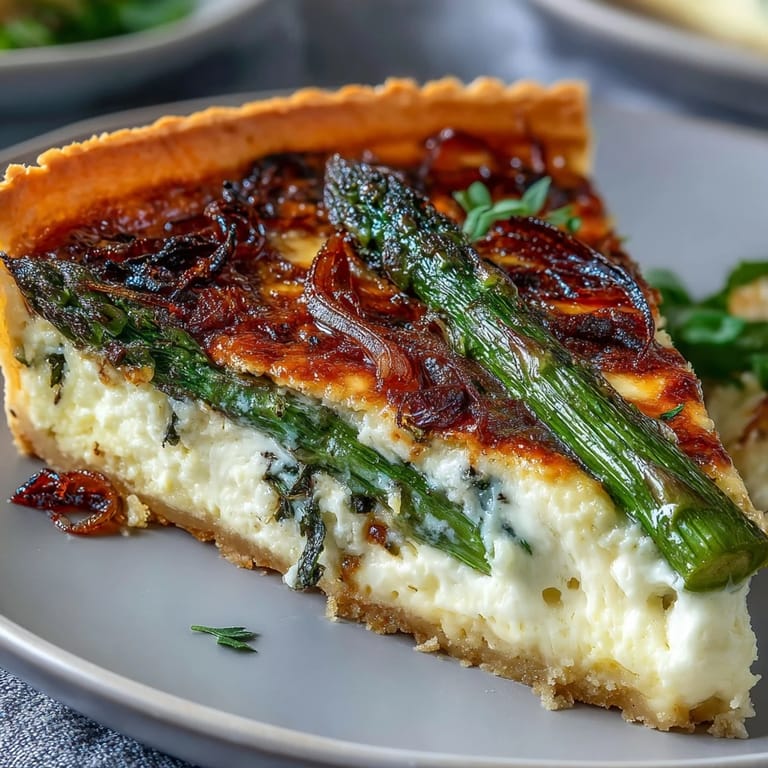
 When asparagus first hits the market stands in early spring, I get a little thrill thinking of all the ways I might enjoy it. Last year, a sudden cloudburst sent me darting beneath the awning of a tiny bakery, where the smell of baking pastry reminded me how much I love making quiche at home. That afternoon, with a soaked umbrella drying by the door, I decided to craft my own Spring Asparagus Quiche as a bright antidote to the gray weather. The scent of caramelizing shallots wafted through my kitchen, mingling with the nutty aroma of Gruyère. Sometimes, it′s the smallest seasonal shifts that inspire a kitchen adventure.
I made this quiche for a picnic last April, wrapping slices in parchment while my friend Hannah and I packed a basket with strawberry lemonade and wildflowers. We ended up sitting on the grass for hours, nibbling and laughing, and every crumb of quiche disappeared long before the sun set. That little feast became a yearly tradition, with the tart′s buttery scent marking the start of our favorite season. Quiche in hand, we agreed: eating outdoors somehow makes everything taste brighter. It was a simple afternoon but every bite felt celebratory.
Ingredients
- All-purpose flour: The basis of a sturdy yet tender crust—I always fluff and spoon it into the cup for accuracy.
- Unsalted butter: Use butter straight from the fridge; cold chunks yield those prize-worthy flaky layers.
- Salt: Just a pinch is enough to sharpen the flavor of both crust and custard.
- Ice water: Adding this one tablespoon at a time ensures the dough never gets sticky, so keep extra ice handy.
- Olive oil: This helps shallots caramelize slowly without burning, adding an earthy-sweet undertone.
- Shallots: Thinly sliced, they turn soft and golden — if you let them linger, they turn almost jammy.
- Fresh asparagus: Choose firm stalks with tight tips—slice on the bias for a pretty look in the final quiche.
- Gruyère cheese: The nutty, creamy character gives every slice a subtle richness; grate it yourself for best melt.
- Eggs: Whisk until the yolks and whites disappear into a single golden pool.
- Heavy cream: Adds body and silkiness to the custard—I never skimp here, it′s worth it.
- Whole milk: Balances the richness of cream for a filling that isn′t too dense.
- Fine sea salt: Season with a light hand since the cheese is already salty.
- Black pepper: Freshly ground makes a real difference—just a quarter teaspoon for a hint of warmth.
- Ground nutmeg: A pinch is all you need, but it transforms the eggs with its cozy aroma.
Tired of Takeout? 🥡
Get 10 meals you can make faster than delivery arrives. Seriously.
One email. No spam. Unsubscribe anytime.
Instructions
- Make the dough:
- Combine flour and salt in a big mixing bowl, then cut in the cold butter swiftly until the mixture looks like crumbly pebbles; drizzle in ice water by the spoonful, gently tossing and pressing the dough just until it clumps together. Gather into a disk, cover, and chill for at least half an hour to let it rest.
- Roll out and blind bake:
- Roll the dough into a circle a bit larger than your pan—don′t fret about perfection—then ease it into the tart pan, pressing gently. Trim the edges, prick the bottom several times with a fork, line with parchment, and fill with weights or beans; bake until firm and just golden, then let it cool slightly before removing the weights.
- Prepare the shallots:
- In the meantime, heat olive oil in a skillet and slowly cook the shallots over medium heat, stirring every so often, until they turn translucent and then beautifully caramel colored. Set them aside, savoring their sweet aroma.
- Blanch the asparagus:
- Boil a pot of salted water and drop the asparagus pieces in—they only need two minutes, then a cold water rinse to keep their vivid green. Pat them dry gently with a towel to prevent sogginess later.
- Whisk the custard:
- In a large bowl, whisk the eggs until frothy, then add in cream, milk, salt, pepper, and nutmeg, mixing just until smooth but without bubbles.
- Assemble everything:
- Scatter caramelized shallots across the warm crust, then sprinkle with asparagus and Gruyère. Pour the custard slowly and evenly over the top—you′ll hear it settle among the vegetables.
- Bake the quiche:
- Bake until the center is just barely set and the edges are golden, about 35 to 40 minutes. Let it rest out of the oven for at least 10 minutes before slicing, so each wedge holds together beautiful layers.
 Pin it
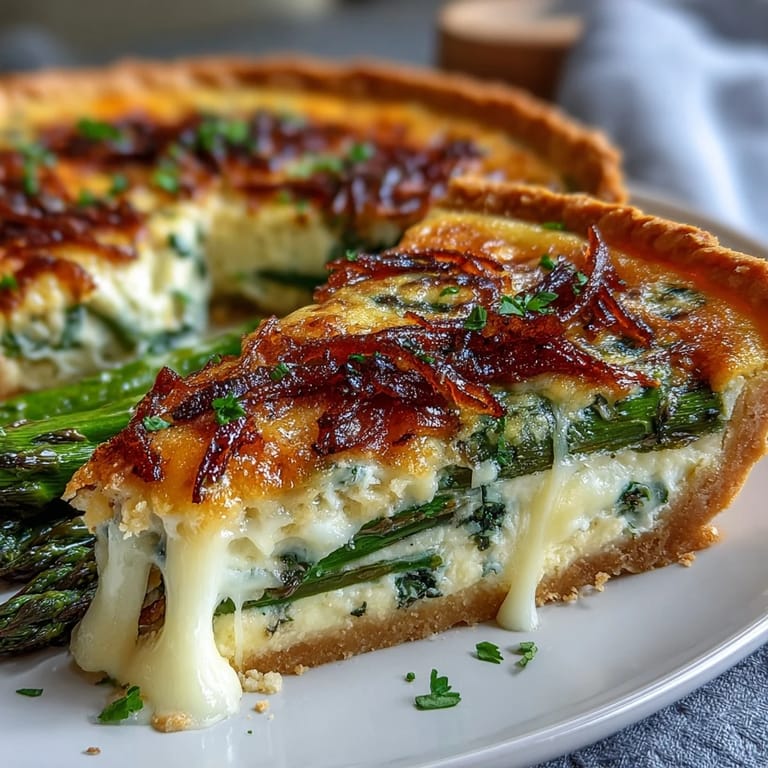
 There was a late-spring evening when I brought this quiche to a potluck, expecting it to sit quietly among flashier dishes. But as soon as I sliced it, I watched people sneak seconds and swap tips for their own fillings—the table felt like an impromptu cooking club. The recipe left my hands that night scratched onto scraps of napkin, and now a crumbly-edged photo of that quiche lives on my fridge. In a way, it wasn′t just sharing food, but passing along a little kitchen happiness. That night is why this recipe means more to me than the sum of its parts.
Tips for Seamless Dough
The trickiest bit for me used to be getting the pie dough to behave. Taking care to use absolutely chilled butter (sometimes I even freeze it for 10 minutes) made all the difference—it′s what creates those visible, flaky layers that everyone loves when they cut in. A gentle touch is your best friend here; pressing the dough too much eliminates the flake. Even if it cracks while rolling, you can patch it up easily—no stress needed. Patience, and a bit of extra flour on the counter, will see you through.
Creative Twists on the Filling
I discovered that almost any spring vegetable can be tucked into this quiche, so don′t be shy about swapping in artichoke hearts or sweet peas. A handful of fresh dill or tarragon stirred into the custard gives it a lively lift, especially paired with Gruyère. Sometimes, I swirl in a spoonful of goat cheese for tang if I have some on hand. The recipe is forgiving, which makes it a great canvas for your market finds. Just remember to keep the filling in reasonable amounts—overcrowded quiche never bakes evenly.
Serving and Storage Suggestions
Spring mornings or lazy lunches, this quiche seems to fit right in, whether you′re serving a group or sneaking a solo slice between calls. It keeps well, so I often wrap leftovers in foil and reheat them gently, or simply enjoy straight from the fridge on a sunny afternoon. For gatherings, I slice it just before guests arrive—it′s sturdy enough to be handheld, no worries about crumbling. Honestly, it′s even better the second day as flavors mingle.
- Let the quiche cool almost to room temperature before slicing for the cleanest pieces.
- Pair with a crisp green salad dressed simply with lemon and olive oil.
- Store any leftovers covered in the fridge for up to three days, and reheat low and slow.
 Pin it
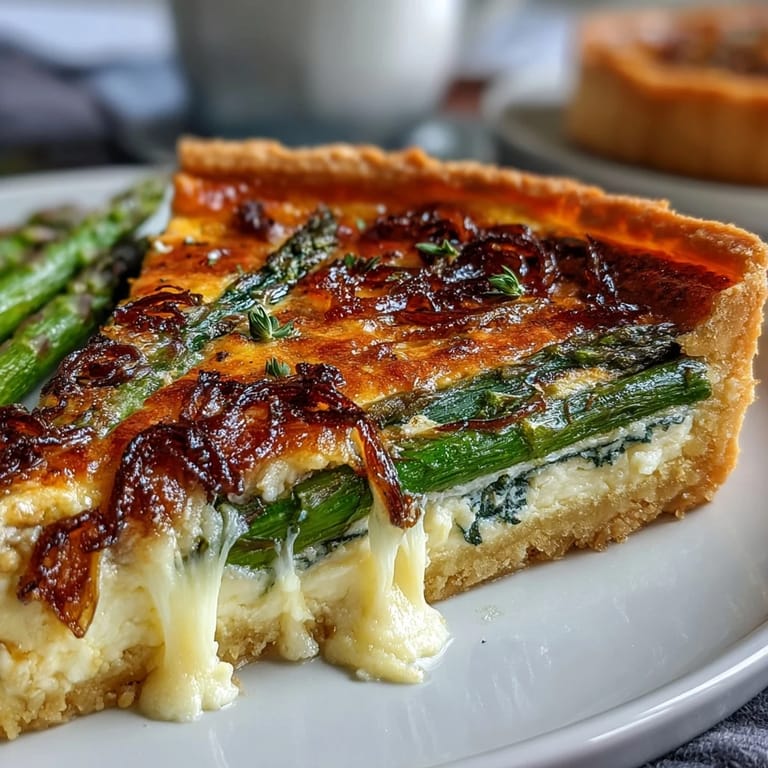
 Share a slice and you′ll see: spring cooking doesn′t have to be fussy to feel special. Here′s to new skill, cheerful flavors, and a kitchen full of laughter.
Recipe FAQs
- → Why blind bake the crust?
Blind baking firms the crust and prevents a soggy bottom when the custard is added. It helps the pastry stay crisp around the edges and ensures even browning once the filling goes in.
- → How can I tell when the filling is done?
The center should be just set with a slight gentle wobble; it will continue to cook as it rests. A clean knife inserted near the center should come out mostly clean, not runny.
- → What are good substitutes for Gruyère?
Emmental, Swiss, or a sharp white cheddar work well. Choose a melting cheese with a nutty or tangy profile to complement the asparagus and shallots.
- → How do I prevent the crust from becoming soggy?
Blind bake until lightly golden and cool slightly before adding the filling. Spread a thin layer of grated cheese or a light egg wash on the base to create a barrier between the crust and the custard.
- → Can I make this ahead and reheat?
You can assemble and bake ahead; store covered in the fridge for up to 2 days. Reheat in a 325°F (160°C) oven until warmed through to preserve texture. Slicing is easier after a short rest.
- → Should asparagus be fully cooked before baking?
Blanching the asparagus for a couple of minutes keeps it bright and tender. It will finish cooking in the oven, so avoid overcooking during blanching to preserve texture and color.