 Pin it
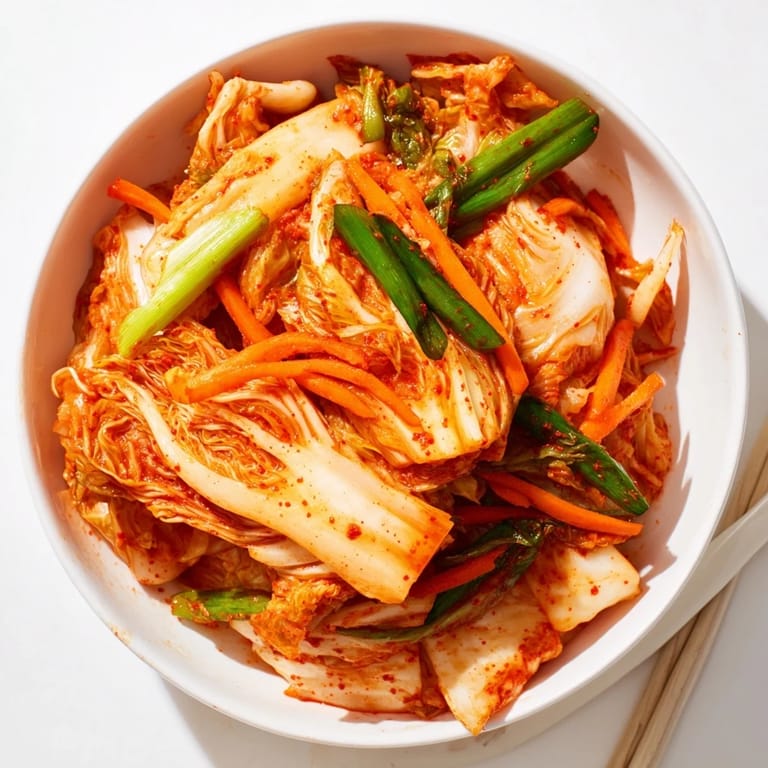
 The first time I walked into a Korean market, the sheer variety of kimchi jars stopped me in my tracks. I had no idea fermented cabbage could become such an obsession. Now my kitchen always has a batch bubbling away, and that unmistakable tangy smell has become strangely comforting.
Last winter, I made a huge batch during a snowstorm and ended up sharing jars with three neighbors who wandered over, drawn by the spicy aroma wafting through the hallway. Now we compare fermentation notes in the building group chat.
Ingredients
- Napa cabbage: The heart and soul of kimchi, its delicate leaves absorb the spice paste beautifully
- Coarse sea salt: Essential for drawing out moisture and creating the perfect brine
- Gochugaru: Korean chili flakes give authentic heat and that signature red color
- Fish sauce: Adds deep umami, though soy sauce works perfectly for vegan versions
- Rice flour: Creates the traditional porridge that helps the paste cling to vegetables
- Garlic and ginger: Use fresh and generous amounts for that authentic kick
Tired of Takeout? 🥡
Get 10 meals you can make faster than delivery arrives. Seriously.
One email. No spam. Unsubscribe anytime.
Instructions
- Prep the cabbage:
- Cut into manageable pieces and soak in the salt water brine, weighing it down so everything stays submerged.
- Rinse and drain:
- Give the salted cabbage several thorough rinses until the water runs clear, then let it drain completely.
- Make the rice porridge:
- Cook the rice flour and water until thickened, then cool completely before blending with the aromatics.
- Blend the spice paste:
- Puree the cooled porridge with garlic, ginger, onion, fish sauce, and sugar until smooth, then stir in the gochugaru.
- Massage everything together:
- Using gloves, thoroughly coat every single leaf with the paste until the vegetables are evenly reddened.
- Pack into jars:
- Press the kimchi tightly into your fermentation vessels, eliminating any air pockets.
- Let it ferment:
- Leave at room temperature for 1 to 2 days, burping daily, then refrigerate when it reaches your desired tanginess.
 Pin it
 My friend once ignored the gloves warning and spent three hours with her hands in ice water, cursing my name. Now she keeps dedicated kimchi gloves in her drawer.
Understanding Fermentation
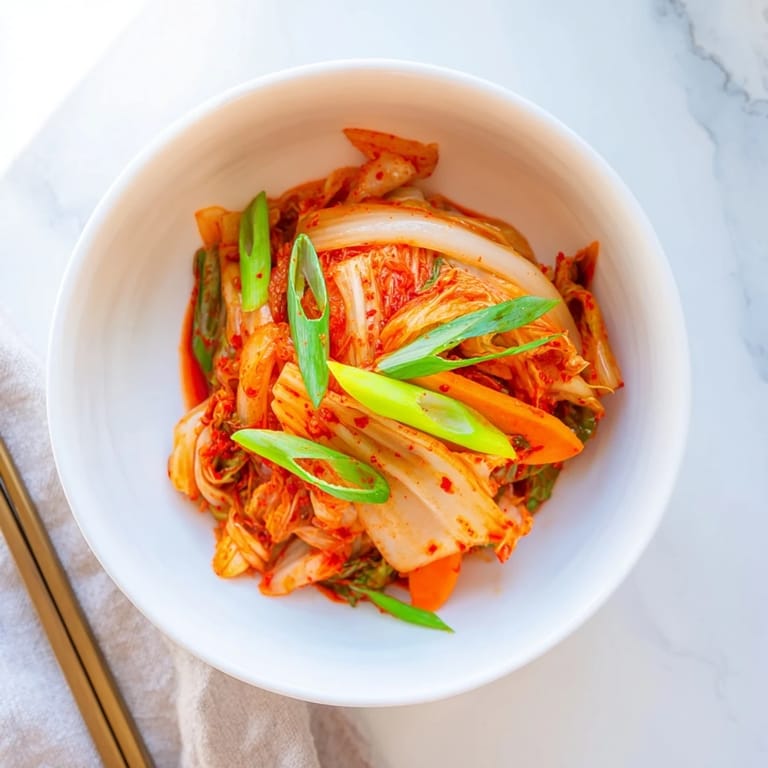
Fermentation is alive and well in your kitchen, and every batch will develop slightly differently based on temperature and time. The magic happens when beneficial bacteria multiply, creating that distinctive tang while preserving the vegetables.
Serving Ideas Beyond the Side Dish
While kimchi is perfect alongside rice, it transforms into something extraordinary when fried with eggs, folded into scrambled tofu, or even blended into softened butter for the most unexpected grilled cheese upgrade.
Storage and Aging
Refrigeration slows fermentation dramatically, so your kimchi will continue developing complexity over weeks and months. Some connoisseurs prefer the fresh, bright tang of young kimchi while others crave the deep funk of wellaged jars.
- Always use clean utensils when removing kimchi to prevent contamination
- The kimchi will become more sour and softer the longer it ages
- If liquid escapes during fermentation, place jars on a tray to catch any overflow
 Pin it
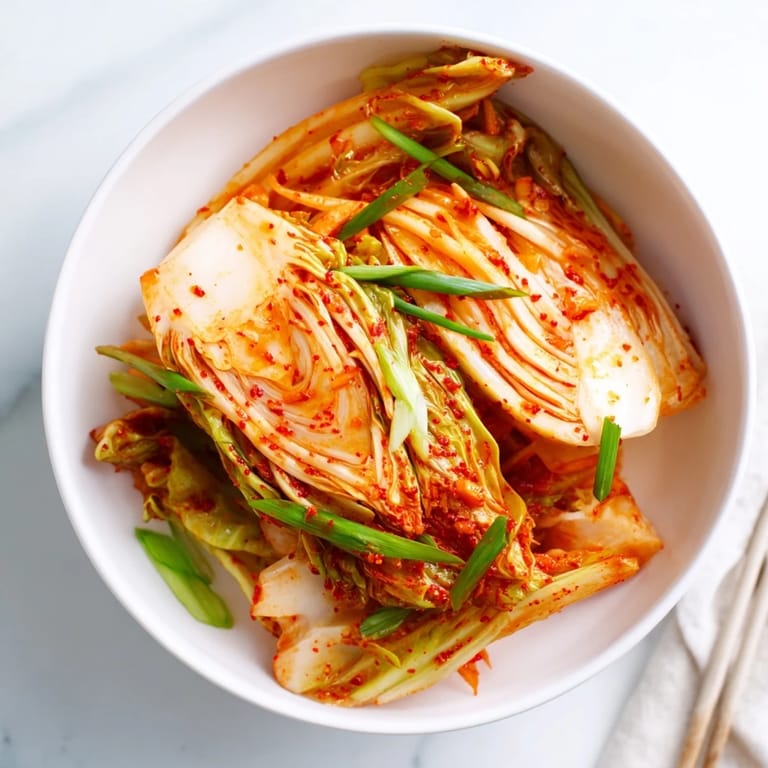
 Theres something profoundly satisfying about transforming humble cabbage into something that gets better with time. Every jar tells the story of when it was made.
Recipe FAQs
- → How long does kimchi need to ferment?
Kimchi ferments at room temperature for 1-2 days before refrigeration. The fermentation continues slowly in the refrigerator, developing deeper flavors over several weeks. Taste after 48 hours and refrigerate when desired tanginess is achieved.
- → Can I make kimchi vegan?
Yes, simply replace the fish sauce with soy sauce or vegan fish sauce alternative. All other ingredients including napa cabbage, Korean chili flakes, garlic, ginger, and vegetables are naturally plant-based.
- → What is gochugaru and can I substitute it?
Gochugaru are Korean red chili flakes with a distinct heat profile and slight sweetness. Regular red pepper flakes or cayenne can work but will alter the authentic flavor. For best results, source gochugaru from Asian markets.
- → Why do I need to burp the jars?
Burping releases built-up carbon dioxide produced during fermentation. Simply open the lid briefly once daily to prevent pressure buildup and possible jar breakage, then reseal.
- → How do I know when kimchi has gone bad?
Fresh kimchi has a tangy, sour smell. Spoiled kimchi smells unpleasantly foul or moldy. Visible white kahm yeast on surface is normal and can be skimmed off, but fuzzy colorful mold indicates spoilage.
- → What can I serve with kimchi?
Kimchi pairs perfectly with steamed rice, adds depth to soups and stews, elevates fried rice, creates savory pancakes, or enjoy it simply alongside eggs and toast. It also complements grilled meats and tofu beautifully.