 Pin it
 I stumbled on this recipe one late summer evening when I had a bowl of grapes about to turn and no idea what to make for dinner. Roasting them seemed odd at first, but the kitchen filled with a jammy sweetness that made me forget I was just winging it. Tossed with ricotta and pasta, it became one of those meals that feels fancy but comes together without fuss. Now it's my go-to when I want something that surprises people without stressing me out. The first bite always gets a quiet pause, then someone asks for the recipe.
The first time I served this to friends, someone thought I'd ordered takeout from some hidden Italian spot. I laughed because I'd only thrown it together an hour before they arrived. Watching them scoop up seconds while the kitchen still smelled like roasted fruit and basil felt better than any compliment. That night taught me that simplicity, when done right, can feel like magic.
Ingredients
- Dried short pasta: I like rigatoni because the ridges catch the ricotta, but penne or fusilli work just as well.
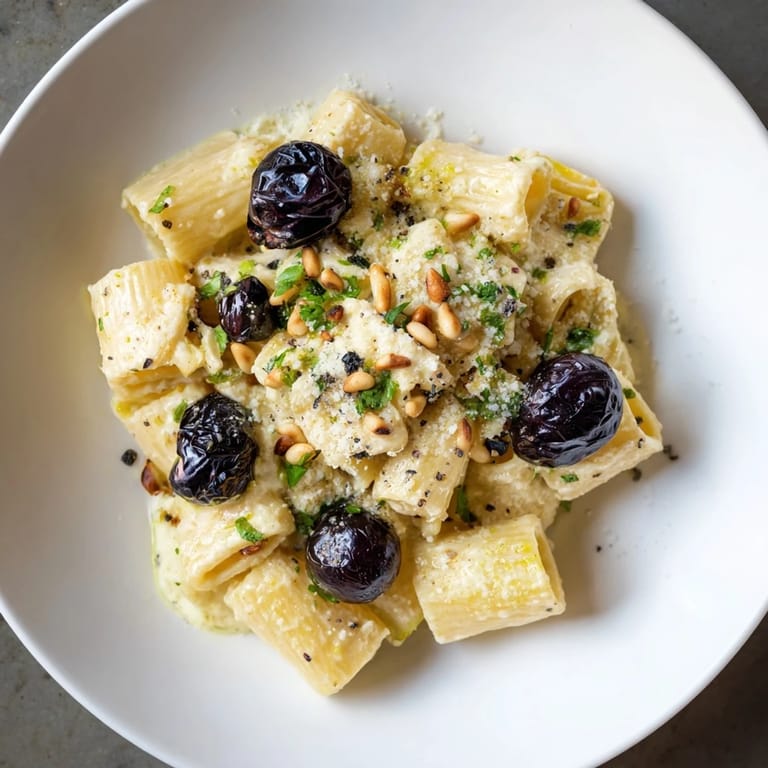
- Seedless grapes: Red or black grapes roast beautifully and their skins blister into little pockets of sweetness.
- Olive oil for roasting: Just enough to help the grapes caramelize without turning greasy.
- Coarse salt and black pepper: These bring out the natural sugar in the grapes and keep the dish balanced.
- Fresh ricotta cheese: The creamy base that holds everything together, make sure it's smooth and not grainy.
- Lemon zest and juice: This is what brightens the whole dish and cuts through the richness of the cheese.
- Fresh basil and parsley: Chopped fine, they add a green freshness that makes every bite feel alive.
- Extra-virgin olive oil: A final drizzle before serving makes the pasta glossy and ties the flavors together.
- Toasted pine nuts: Optional, but they add a nutty crunch that I never skip.
- Grated Parmesan: For those who want a little salty sharpness on top.
Tired of Takeout? 🥡
Get 10 meals you can make faster than delivery arrives. Seriously.
One email. No spam. Unsubscribe anytime.
Instructions
- Preheat and prep:
- Heat your oven to 220°C (425°F) and line a baking tray with parchment so nothing sticks. This step sets you up for easy cleanup later.
- Season the grapes:
- Toss the grapes with olive oil, salt, and pepper until they're glistening. Spread them out in a single layer so they roast evenly and don't steam.
- Roast until blistered:
- Let them roast for 20 to 25 minutes, shaking the tray halfway through. You'll know they're ready when they're soft, wrinkled, and a little caramelized at the edges.
- Boil the pasta:
- While the grapes are roasting, cook your pasta in salted water until al dente. Reserve half a cup of the starchy pasta water before draining.
- Make the ricotta mixture:
- Mix ricotta with lemon zest, lemon juice, basil, parsley, and a pinch of salt until it's smooth and fluffy. Taste it, it should be bright and creamy.
- Combine pasta and ricotta:
- Toss the drained pasta with the ricotta mixture in the pot, adding pasta water a little at a time until it becomes a silky sauce. Don't rush this part, the water is what makes it creamy.
- Fold in the grapes:
- Gently stir in the roasted grapes and any juices from the tray. They'll burst slightly and coat the pasta in sweet, jammy flavor.
- Plate and finish:
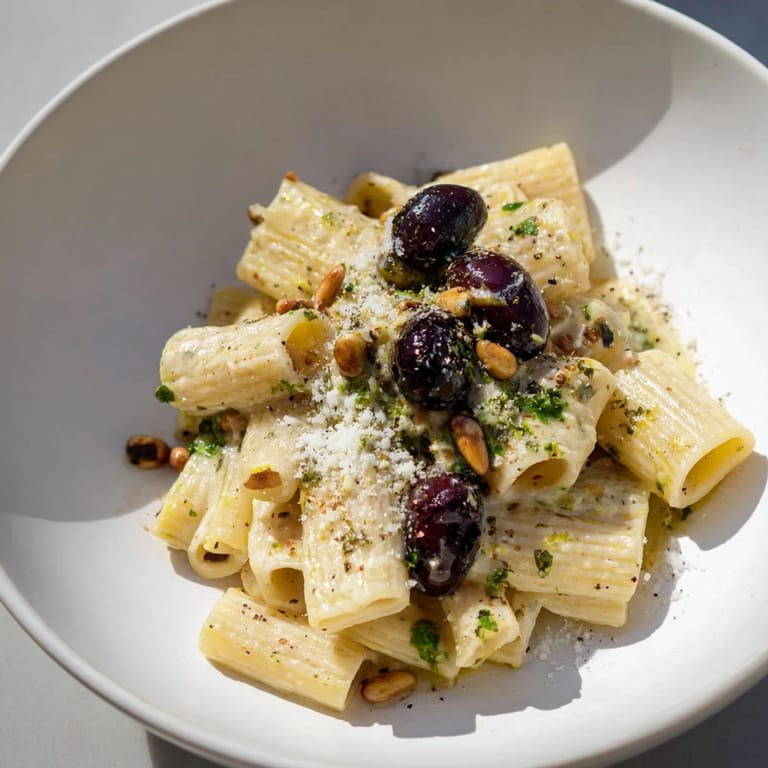
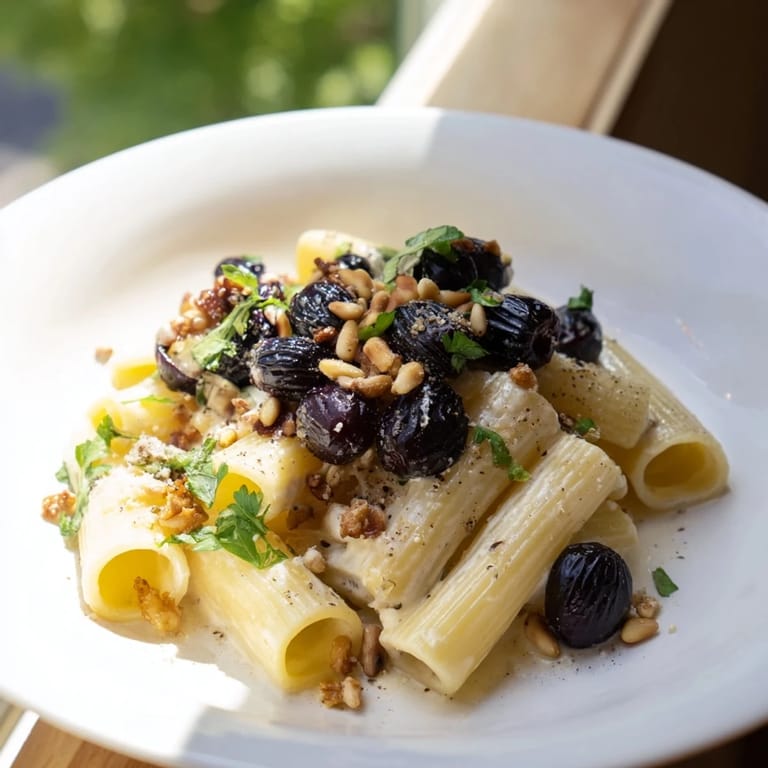
- Divide the pasta among plates, drizzle with extra-virgin olive oil, and top with pine nuts, black pepper, fresh basil, and Parmesan if you like. Serve it right away while it's warm and glossy.
 Pin it
 One evening, I made this for my sister after a long week, and she sat at the counter quietly eating, eyes closed between bites. She didn't say much, just asked if there was more. Sometimes a dish doesn't need words, it just needs to feel like a small moment of peace on a plate.
What to Serve It With
I usually keep it simple with a green salad dressed in lemon and olive oil, maybe some crusty bread to soak up any leftover sauce. A crisp white wine like Sauvignon Blanc or Pinot Grigio is perfect, but sparkling water with lemon works just as well. This dish doesn't need much company, it stands on its own.
How to Store Leftovers
Leftovers keep in the fridge for up to two days in an airtight container. The ricotta can thicken as it sits, so add a splash of water or olive oil when reheating. I usually warm it gently in a pan over low heat, stirring until it loosens up again. The grapes soften even more, which I actually love.
Ways to Make It Your Own
You can swap ricotta for goat cheese if you want something tangier, or use whole-wheat pasta for a nuttier flavor. I've made it with arugula stirred in at the end for a peppery bite, and it was just as good. If you don't have pine nuts, toasted walnuts or almonds work beautifully.
- Try adding a pinch of red pepper flakes for a subtle kick.
- Toss in some baby spinach right before serving for extra color.
- Use goat cheese instead of ricotta for a sharper, creamier twist.
 Pin it
 This dish reminds me that good cooking doesn't have to be complicated, it just has to feel intentional. I hope it becomes one of those recipes you reach for when you want something special without the stress.
Recipe FAQs
- → How should the grapes be prepared for this dish?
Roast seedless grapes with olive oil, salt, and pepper until blistered and caramelized to enhance their sweetness and texture.
- → Can the pasta be substituted with gluten-free options?
Yes, whole-wheat or gluten-free pasta can be used without altering the dish's flavor profile significantly.
- → What cheeses work well as a ricotta alternative?
Goat cheese offers a tangier flavor and can replace ricotta for a different but complementary taste.
- → How do reserved pasta water contribute to the sauce?
Reserved pasta water helps create a silky texture by loosening the ricotta mixture into a creamy sauce.
- → What herbs complement the flavors in this dish?
Fresh basil and parsley provide bright, herbal notes that balance the creaminess and sweetness of the dish.