 Pin it
 The first time I made paella, I was standing in a borrowed kitchen in Barcelona, and my host placed a worn paella pan in my hands like it was a sacred thing. She'd given me strict instructions: don't stir once the stock hits the rice, listen for the socarrat—that golden crust at the bottom—and trust the sizzle. I was nervous, honestly, but something about the saffron dissolving into amber liquid made me feel like I belonged in that moment.
Years later, I made this for my partner's family on a foggy evening, and I remember being shocked by how quiet the kitchen got once everyone started eating. No one was talking, just occasionally reaching for another piece of lemon or stealing a bite of the socarrat from the edges. That's when I knew this recipe had become something I'd make again and again.
Ingredients
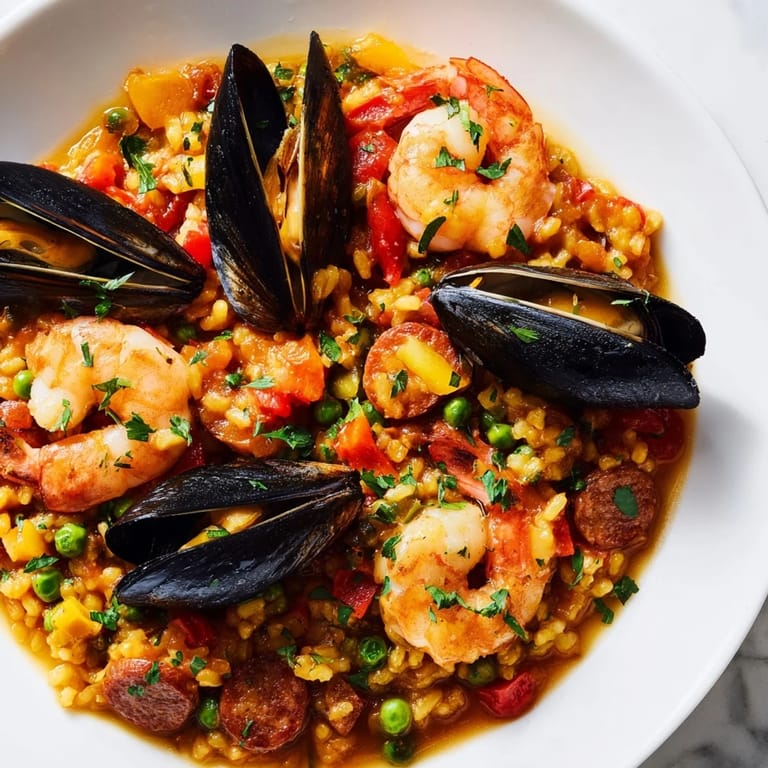
- Chorizo sausage, sliced: The smoke from good chorizo is non-negotiable—it flavors the whole pan and gives you that deep, savory backbone.
- Chicken thighs, bite-sized pieces: Use thighs, never breasts; they stay tender and don't dry out during the simmer.
- Large shrimp, peeled and deveined: Add these late so they don't toughen up and turn rubbery.
- Mussels, cleaned and debearded: Fresh mussels are worth seeking out, and discard any that don't open—your guests will appreciate the care.
- Calamari rings (optional): This adds a tender chew if you want extra texture, but it's forgiving either way.
- Short-grain paella or Arborio rice: The short grains absorb the stock perfectly without turning mushy; don't use long-grain.
- Chicken or seafood stock, heated: Heating the stock beforehand keeps the temperature steady and cooks the rice evenly.
- Saffron threads: Steep them in hot stock first to unlock their color and subtle floral notes.
- Olive oil: Good olive oil matters here because it's not just cooking—it's flavoring everything.
- Onion and bell peppers: These soften into the rice and provide sweetness without overpowering the seafood.
- Tomatoes, diced: Fresh tomatoes add acid and brightness that balances the richness.
- Frozen peas: Frozen actually work better than fresh because they hold their shape and color.
- Garlic, minced: Add it after the peppers soften so it doesn't burn and turn bitter.
- Smoked paprika: This is your secret weapon—use Spanish pimentón if you can find it for that authentic smoky depth.
- Bay leaf, salt, and black pepper: Bay leaf adds a subtle earthiness that ties everything together.
- Fresh parsley and lemon wedges: Parsley is fresh brightness at the end, and lemon is your adjustment tool for balance.
Tired of Takeout? 🥡
Get 10 meals you can make faster than delivery arrives. Seriously.
One email. No spam. Unsubscribe anytime.
Instructions
- Bloom the saffron:
- Pour hot stock over the saffron threads in a small bowl and let them steep while you prep everything else. This is when the magic starts—watch the liquid turn from golden to amber.
- Brown the proteins:
- Heat olive oil in your paella pan and cook the chorizo and chicken until they're golden and smell incredible. Remove them and set aside—this is your flavor foundation.
- Build the base:
- Sauté the onion and peppers until soft, then add the garlic and tomatoes. This soffritto becomes the soul of the dish, so don't rush it.
- Toast the rice:
- Stir in the rice and paprika, letting each grain get coated in the oil and vegetables. You'll see the rice become translucent at the edges—that's your cue it's ready for the stock.
- Add the stock and simmer:
- Return the chicken and chorizo, pour in the saffron-infused stock and the remaining stock, add the bay leaf, then bring to a boil. Once it boils, lower the heat and let it simmer undisturbed for 15 minutes—this is when you sit down and take a breath.
- Nestle in the seafood:
- Gently push the shrimp, mussels, and calamari into the rice, scatter the peas on top, and cover loosely with foil. Cook for another 10–12 minutes until the mussels open and the shrimp turn pink.
- Rest and serve:
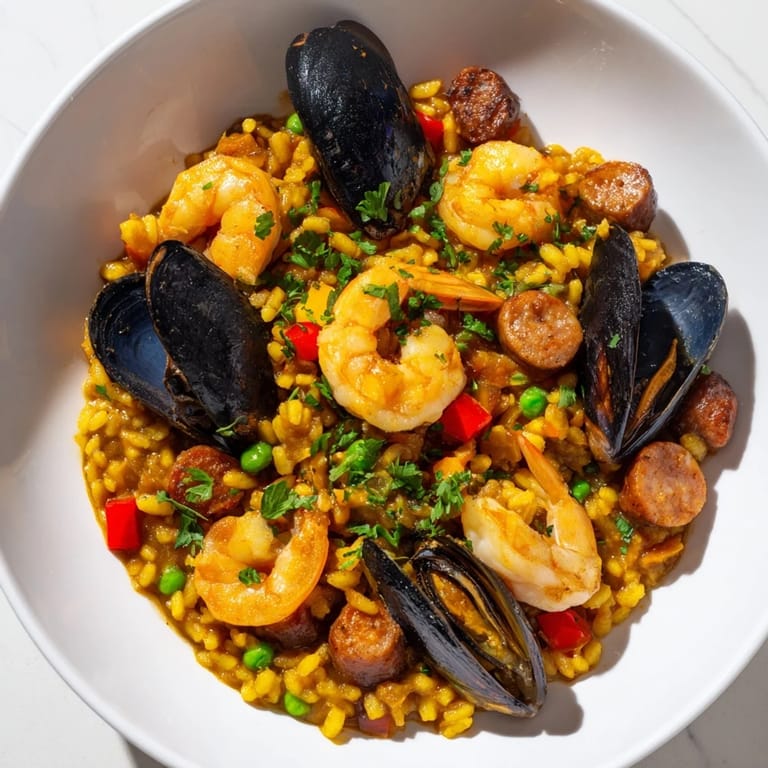
- Remove from heat, keep it covered for 5 minutes, then discard any unopened mussels. Garnish with parsley and lemon wedges and let everyone dig in.
 Pin it
 I think what I love most about paella is that it's patient cooking. You're not standing there fussing; you're just trusting the pan and the heat. By the time people sit down to eat, there's already something special in the air.
The Socarrat Secret
The socarrat is that golden, slightly crispy bottom layer that forms in the last minute or two of cooking. Some people think it's burnt, but once you taste it, you understand it's actually the prize. In Spanish paella-making, cooks actively listen for a subtle crackling sound near the end—that's your signal the rice is developing that prized crust. It adds texture and a toasted, nutty flavor that regular rice can't match.
Seafood Timing and Substitutions
Seafood timing is everything in paella because every protein has a different cooking clock. Shrimp take 2–3 minutes to turn pink, mussels pop open in about 3–5 minutes, and calamari need gentle heat so they stay tender. If you can't find one type, think about what cooks at a similar speed and swap it in—clams, scallops, or even chunks of white fish all work beautifully. The important thing is adding everything at the same moment so it all finishes together.
Wine Pairing and Variations
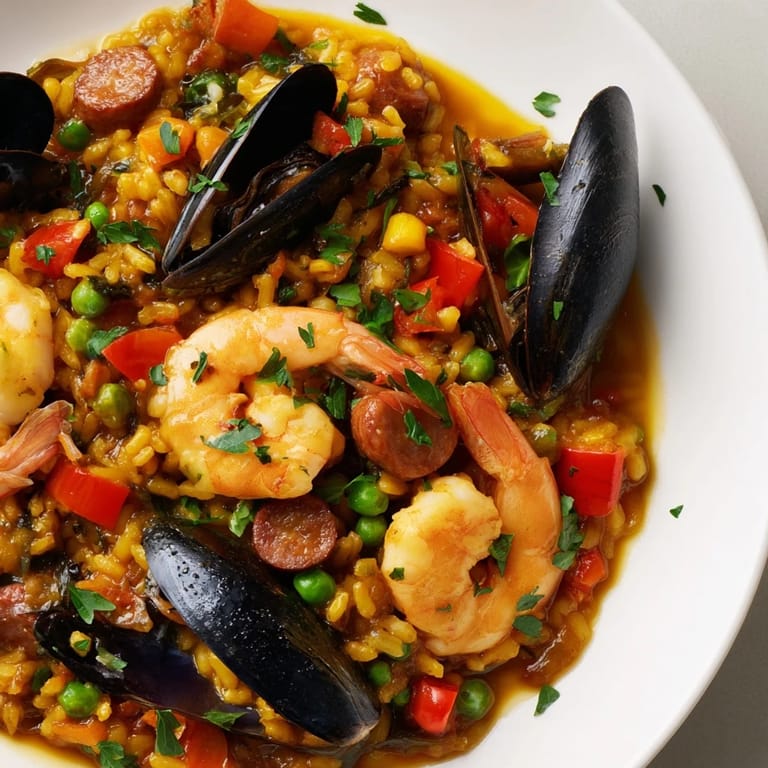
Paella pairs beautifully with crisp Spanish whites like Albariño or Verdejo because the acidity cuts through the richness of the seafood and chorizo. If you want to make it vegetarian, skip the meats entirely and load up with artichoke hearts, green beans, chickpeas, or roasted cauliflower—the saffron rice and smoky paprika carry enough flavor on their own. For a special touch, you can make individual paella portions in smaller pans, which feels fancy and tastes just as good.
- A dry Fino sherry is another excellent choice if you want to go full Spanish.
- The vegetarian version actually works best with vegetable stock instead of chicken stock.
- Always taste and adjust seasoning with salt and pepper just before serving.
 Pin it
 Paella feels like more than dinner—it feels like you've gathered people around something that matters. Make it, listen for the sizzle, and watch what happens.
Recipe FAQs
- → What type of rice works best for paella?
Short-grain varieties like Arborio or traditional paella rice absorb flavors well while maintaining a firm texture.
- → How do I achieve the signature saffron flavor?
Steep saffron threads in hot broth before adding to the rice to fully release their vibrant color and aroma.
- → Can I use different seafood in this dish?
Yes, clams, scallops, or other shellfish can be substituted or added to enhance the seafood profile.
- → What is the purpose of not stirring during simmering?
Allowing the rice to cook undisturbed helps form the desired crispy bottom layer called 'socarrat.'
- → How do I best serve this dish?
Garnish with fresh parsley and lemon wedges, and serve warm as a hearty and colorful main dish for gatherings.