 Pin it
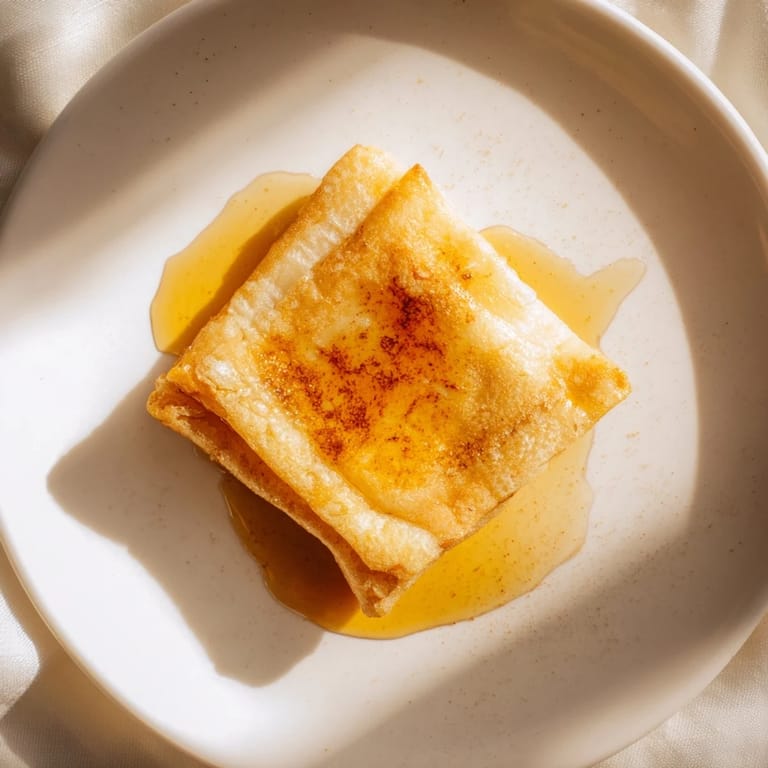
 The first time I watched my neighbor fold msemen in her kitchen, I was struck by how her hands moved with such certainty, layering butter and semolina with almost meditative precision. She didn't measure or fuss—just worked the dough like she'd done it a thousand times, which I suppose she had. When that first square hit the hot skillet and started puffing up, golden and crisp, I understood why this pastry has been a Moroccan staple for generations. It's the kind of recipe that rewards patience and a little bit of intuition.
I made these one Sunday morning for my sister's visit, and she literally closed her eyes after the first bite, honey dripping down her chin in a way that made me laugh. That moment—when food makes someone stop talking—is when you know you've gotten it right. Now she calls me before she visits, asking if I'll have msemen ready.
Ingredients
- All-purpose flour (2 cups): The foundation of your dough—it needs to develop enough gluten to create those gorgeous layers, so don't skimp on the kneading.
- Fine semolina (1 cup plus 1/4 cup for sprinkling): This is what gives msemen its signature texture and prevents sticking; regular semolina works but fine semolina creates that delicate, almost sandy finish.
- Warm water (1 1/4 cups): The temperature matters—too hot and you'll start cooking the dough, too cold and it won't come together smoothly.
- Melted butter (1/4 cup): This is the magic that creates those distinct layers; brush it on generously as you fold each square.
- Vegetable oil (1/2 cup plus extra): Use a neutral oil you don't mind frying with repeatedly—olive oil's too heavy and will make these taste off.
- Sugar (1 tsp) and salt (1 tsp): A touch of sugar enhances browning and balances the richness, while salt deepens all the other flavors.
- Instant yeast (1 tsp, optional): If you add this, your msemen will puff up lighter and airier; skip it for a denser, more traditional chew.
- Honey for serving: Warm your honey gently so it flows like silk over the pastries—cold honey pools rather than soaks in.
Tired of Takeout? 🥡
Get 10 meals you can make faster than delivery arrives. Seriously.
One email. No spam. Unsubscribe anytime.
Instructions
- Mix the dough base:
- Combine your flour, semolina, sugar, salt, and yeast in a large bowl, then add warm water gradually while mixing—you're aiming for a soft, shaggy dough. Knead for a full 10 minutes until it's smooth and elastic; your hands will tell you when it's ready, becoming less sticky and more responsive. This kneading develops the gluten you need for layers.
- First rest:
- Cover your dough and let it sit for 15 minutes while you breathe and prepare yourself for the next step, which requires patience and oiled hands.
- Divide into portions:
- Divide your dough into 8 equal balls using wet hands or a scale if you're precise—each one will become one pastry.
- Shape the pastry:
- Grease your hands and work surface generously with oil, then flatten one ball into a thin circle, almost translucent if you can manage it. Brush it with melted butter, sprinkle fine semolina all over, then fold one corner toward the center, brush that fold with butter and sprinkle more semolina, then repeat with the other three corners to form a rough square—this folding and layering is what creates the flaky magic.
- Rest the squares:
- Let your folded squares sit for 5 minutes to relax; this prevents them from shrinking back when they hit the pan.
- Pan preparation:
- Heat a non-stick skillet over medium heat and brush it lightly with oil—you want it hot enough that the dough sizzles immediately when it touches down.
- Fry to golden:
- Gently flatten each square to about 1/4-inch thick using your fingertips or a spatula, then fry for 2–3 minutes per side until deep golden brown and impossibly crispy. Add more oil as you go if the pan looks dry—msemen drinks up oil like it's meant to.
- Finish and serve:
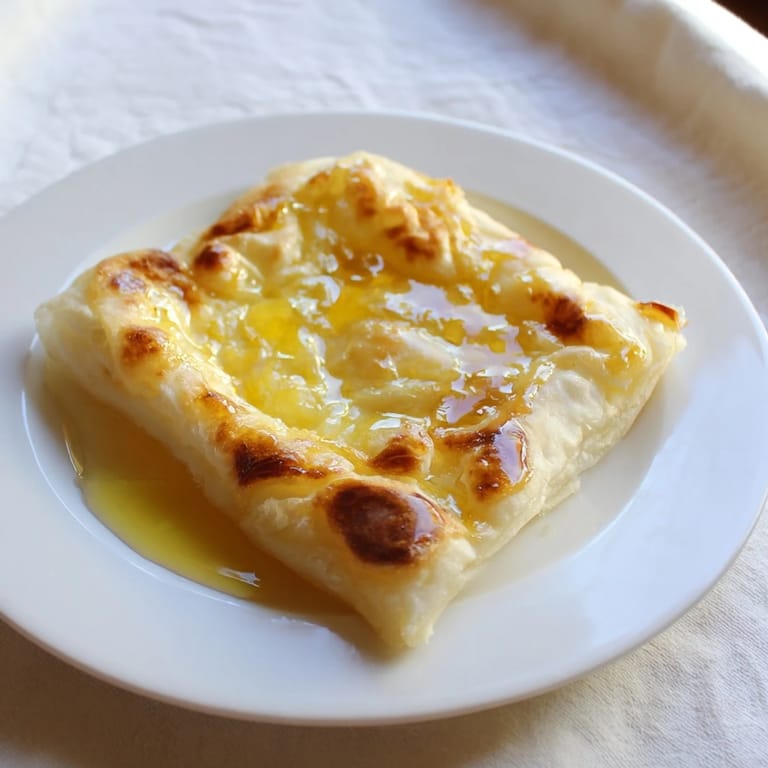
- Transfer each pastry to a plate and drizzle warm honey over the top immediately while it's still hot and the honey will soak into every flaky crevice.
 Pin it
 There's something deeply satisfying about watching someone's face when they bite into a perfectly made msemen—that moment when they realize it's both delicate and substantial at the same time. It became a ritual for me, this pastry, less about impressing people and more about showing up for them in a way that feels intentional.
The Art of the Fold
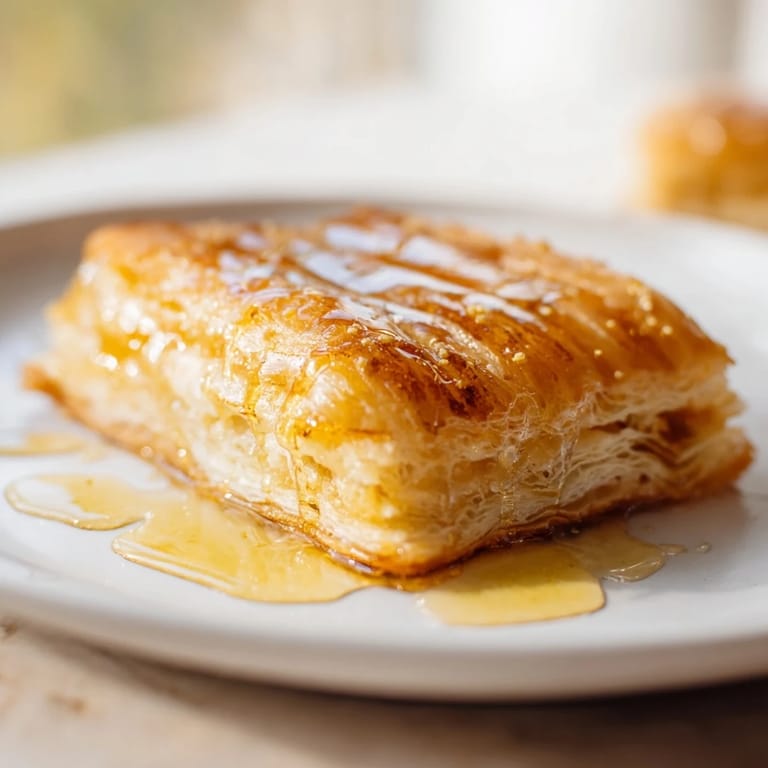
The folding technique is where msemen separates itself from other pastries—it's not laminated like croissant dough, but it's not a simple fold either. You're creating distinct layers by brushing butter and semolina between each fold, and the semolina acts as a buffer, preventing the layers from sticking together and fusing into a single sheet. When I first learned this, I kept folding carelessly and ending up with dense, heavy pastries. The moment I slowed down and treated each fold with intention, brushing thoroughly and sprinkling generously, everything changed. The pastries began to puff and separate and behave the way they were supposed to.
Oil Temperature and Texture
Frying msemen is a different beast than baking pastry, and the oil temperature controls everything. Too hot and you get a hard, dark exterior that cracks when you bite it, trapping moisture inside that creates sogginess within seconds. Too cool and the oil seeps into every layer, turning what should be crispy into something greasy and heavy. I've learned to trust the medium heat setting on my stove and to watch for the immediate, confident sizzle when the pastry hits the pan—that sound is your green light that everything's going right.
Honey and Serving Traditions
In Morocco, msemen is often served as a communal treat, torn apart and shared, which means the honey drizzle is part of the experience rather than an afterthought. Warming the honey beforehand changes everything—it transforms from a topping into something that actually flows into and through the pastry layers. I've experimented with everything from regular honey to darker varieties like acacia, and each one brings its own personality to the dish. Some people serve msemen with amlou, which is a thick, grainy almond-honey paste that adds another texture entirely, while others keep it simple with just warm honey and strong tea alongside.
- Warm your honey gently on the stove or in a small bowl over hot water so it's pourable but not scorching hot.
- Serve msemen immediately after frying while it's still warm and the layers are at their most pliable.
- If you're making these ahead, you can reheat them gently in a skillet without oil to restore some of the crispness.
 Pin it
 Making msemen is about understanding that pastry is just flour, water, and fat learning to work together, and your hands are the tool that teaches them how. Once you've made one batch and tasted that moment when crispy and flaky meet honey, you'll understand why this simple pastry has endured for centuries across North Africa.
Recipe FAQs
- → What ingredients make the dough flaky?
Combining all-purpose flour with fine semolina and layering melted butter during folding creates the characteristic flaky texture.
- → How is the pastry shaped before cooking?
The dough balls are flattened thin, brushed with butter and sprinkled semolina, then folded into squares to form delicate layers.
- → What cooking method is used for Msemen?
Each square is pan-fried in a lightly oiled non-stick skillet until golden brown and crisp on both sides.
- → How should Msemen be served for best flavor?
Serving warm with honey enhances its sweetness and complements the flaky texture perfectly.
- → Can additional flavors be added to the dough?
Optional additions like cinnamon or orange blossom water can be mixed into the dough for an aromatic twist.
- → How can leftovers be reheated successfully?
Reheat leftovers gently in a skillet or toaster to restore crispiness without drying them out.