 Pin it
 There's a particular moment I chase every time I make this tagine—when the kitchen fills with that unmistakable drift of cinnamon and cumin, and you suddenly remember why slow cooking exists. My first Moroccan tagine came together almost by accident, born from a conversation with a friend who described her grandmother's method of layering spices until the lamb practically melted into the sauce. I've made it dozens of times since, and it never fails to transport everyone at the table somewhere warm and spiced and deeply satisfying.
I remember cooking this for a dinner party on a cold January evening, and my neighbor wandered over drawn by the smell before anyone had even arrived. We ended up sharing wine in the kitchen for an hour while the tagine simmered, talking about travel and family recipes. By the time guests showed up, the house smelled so welcoming that everyone just naturally gravitated toward the table.
Ingredients
- Lamb shoulder, 1.5 kg cut into 2-inch cubes: The key is not rushing the browning step—a good crust on each piece adds depth that carries through the entire stew.
- Olive oil, 2 tbsp: Use something flavorful; it sets the foundation for everything that follows.
- Onions, 2 large finely chopped: They dissolve into the sauce and become the base layer of sweetness.
- Garlic, 4 cloves minced: Mince it fine so it distributes evenly and doesn't leave harsh bits.
- Fresh ginger, 1-inch piece grated: Fresh is essential here—it brings a brightness that powdered ginger can't match.
- Ground cinnamon, 1½ tsp: This is the soul of the dish, so don't skip it or use the pre-ground version that's been sitting for years.
- Ground cumin, 1 tsp: It adds earthiness that grounds all the sweeter spices.
- Ground coriander, 1 tsp: A subtle player that you won't notice is missing until it is.
- Ground turmeric, 1 tsp: Brings both color and a gentle warmth that builds layer by layer.
- Black pepper, ½ tsp: Don't skip this—it brightens everything and prevents the spices from feeling flat.
- Ground allspice, ½ tsp: Just enough to make people wonder what that familiar-but-unfamiliar flavor is.
- Ground ginger, ½ tsp: Complements the fresh ginger without overwhelming it.
- Saffron threads, 1 pinch optional: If you have it, it's worth the investment—it adds a subtle floral note that feels luxurious.
- Beef or lamb broth, 400 ml: Use homemade if you have it, but quality store-bought works fine too.
- Canned chopped tomatoes, 400 g: They add acidity that keeps the dish from becoming cloying with all the spices and sweetness.
- Honey, 2 tbsp: Just enough to round out the flavors without making it taste like dessert.
- Pitted prunes, 200 g: Choose soft ones if you can find them—they plump up beautifully in the cooking liquid.
- Whole blanched almonds, 80 g: Toasting them yourself makes a real difference in flavor and prevents them from tasting stale.
- Toasted sesame seeds, 2 tbsp: A finishing touch that adds texture and a subtle nutty note.
- Fresh cilantro or parsley, chopped: Add this at the very end so it keeps its brightness and doesn't cook down into nothing.
- Salt, to taste: Hold back initially since the broth already contains salt, then adjust at the end.
Tired of Takeout? 🥡
Get 10 meals you can make faster than delivery arrives. Seriously.
One email. No spam. Unsubscribe anytime.
Instructions
- Set your heat source and prepare to brown:
- Preheat your oven to 160°C (325°F) if using that method, or get your Dutch oven or tagine ready on the stovetop. The low, gentle heat is what makes this dish work—rushing it with high heat will make the meat tough.
- Brown the lamb in batches:
- Heat 1 tbsp olive oil over medium-high heat until it shimmers, then add lamb in a single layer without crowding. You want golden-brown edges, not gray steamed meat, so let each piece sit undisturbed for a minute or two. Transfer to a plate and repeat with remaining meat.
- Build the aromatics base:
- Add the remaining oil, then the onions, garlic, and fresh ginger to the same pot. Cook for about 5 minutes, scraping up any browned bits from the bottom—this is where flavor lives. When the onions are soft and golden, you're ready for the next step.
- Toast the spices until fragrant:
- Add all the spices and saffron at once, stirring constantly for about a minute. You'll smell the exact moment they release their oils—that's when you know they're activated and ready to flavor the entire dish.
- Reunite the lamb with its sauce:
- Return the browned meat to the pot, then add the tomatoes, broth, and honey. Stir everything together so the spices are distributed evenly, then bring it to a gentle simmer. You're not looking for a rolling boil here—just a quiet, peaceful simmer.
- Transfer to the oven or reduce heat for the long cook:
- Cover the pot and move it to the oven for 1 hour 30 minutes, or keep it on the stovetop over very low heat. Either way, this is when time does the work for you. Stir occasionally if you remember, but don't obsess over it.
- Toast the almonds separately:
- While everything simmers, warm a dry skillet over medium heat and add your almonds. Toast them for 2-3 minutes, shaking the pan often so they brown evenly without burning. They should smell incredible when they're done.
- Add the prunes and almonds for the final cooking:
- After 1 hour 30 minutes, open the pot—the lamb should be getting tender and the sauce should be darkening. Stir in the toasted almonds and prunes, then cover and cook for another 30-45 minutes until the lamb falls apart when you touch it and the sauce has thickened.
- Taste and adjust the seasoning:
- Before serving, add salt to taste. The broth already has some, but you might want more depending on what you used.
- Serve with joy:
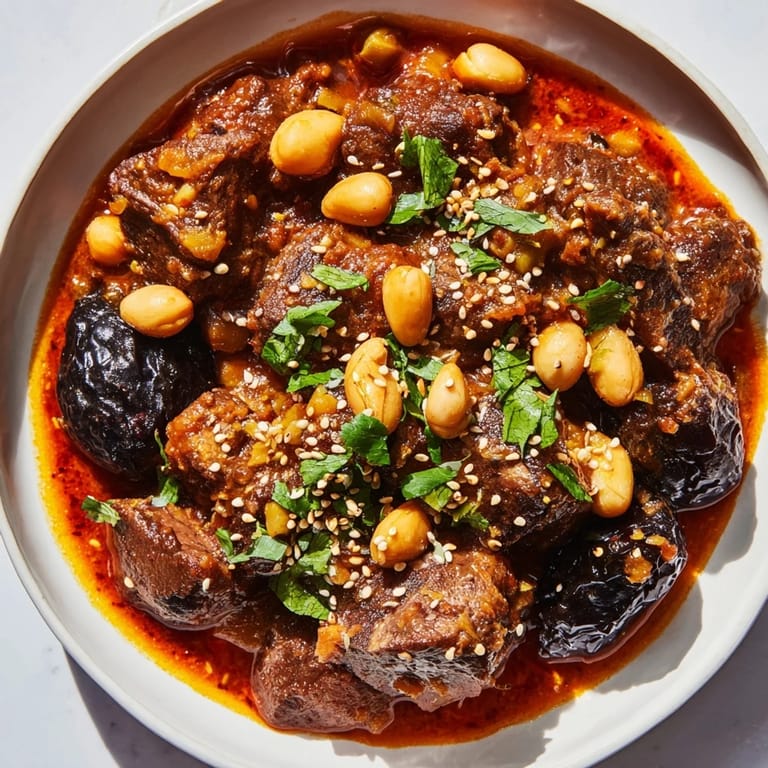
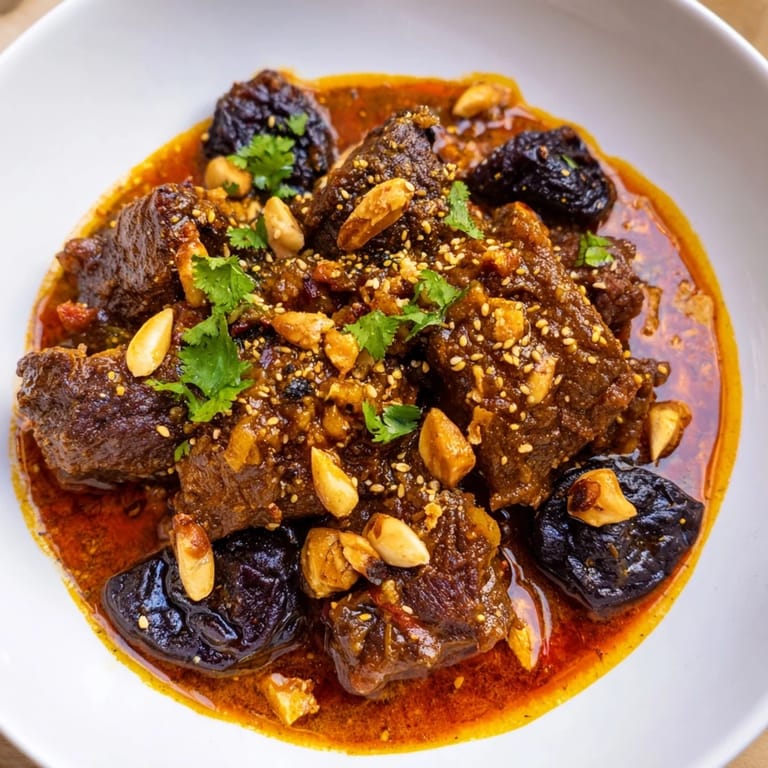
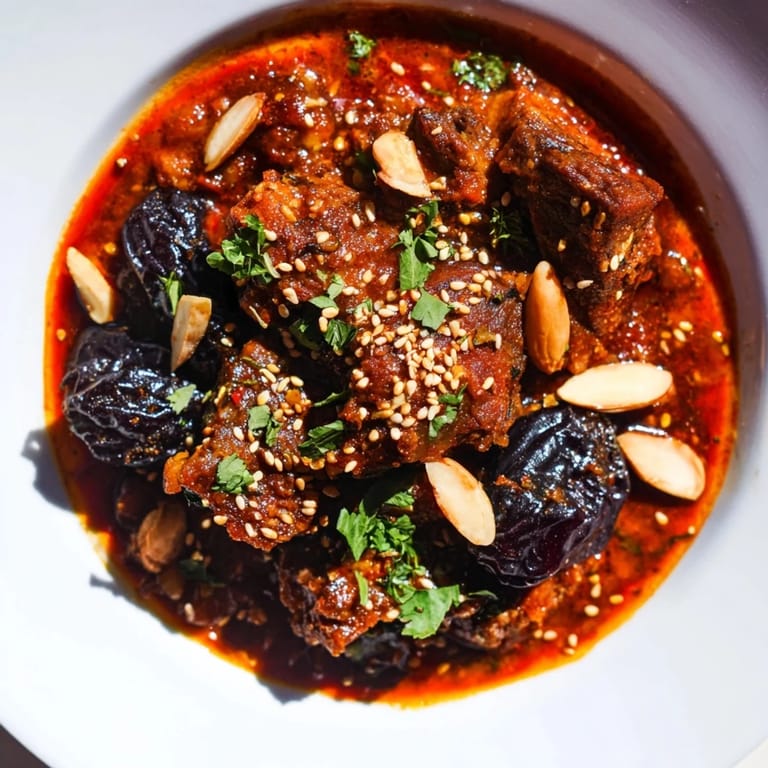
- Ladle the tagine into bowls, garnish with sesame seeds and fresh cilantro, and serve with couscous, saffron rice, or crusty bread. This is the moment when everything comes together.
 Pin it
 There's something almost meditative about this dish—the way the kitchen fills with warmth while you're doing almost nothing, just letting heat and time work their magic. I've found myself returning to it again and again, not just because it tastes extraordinary, but because making it feels like slowing down and actually cooking rather than just putting dinner on the table.
Making This Your Own
Once you make this tagine a few times, you'll start to see where your own preferences can shape it. Some people prefer dried apricots instead of prunes for a brighter, less intense sweetness. Others add a splash of red wine during the simmering to deepen the flavors. I've experimented with adding pomegranate seeds at the end for tartness, which cuts through the richness beautifully. There's no single right way—there's just the way that makes your kitchen smell like home.
What to Serve Alongside
Couscous is the traditional partner, and it's perfect because it soaks up all the sauce without competing for attention. But I've also served this over saffron rice for something a bit more luxurious, and with thick slices of crusty bread for a more casual feeling. The point is to have something that lets the tagine be the star while giving people a vehicle for getting every last drop of sauce.
Make It Ahead and Storage
This is one of those dishes that tastes noticeably better the next day, when all the flavors have had time to marry and deepen. You can make it up to three days ahead and store it in the refrigerator, then gently reheat it on the stove or in the oven. It also freezes beautifully for up to three months, which makes it perfect for cooking when you have time and eating when you don't.
- Let the tagine cool completely before refrigerating or freezing so condensation doesn't water down the sauce.
- If reheating from frozen, thaw it overnight in the refrigerator first for even warming.
- Add fresh cilantro after reheating so it tastes bright and alive rather than cooked down.
 Pin it
 This tagine has become my go-to when I want to feel like I've given people something special without actually spending much time in the kitchen once the initial prep is done. It's the kind of meal that makes a regular Tuesday feel like an occasion.
Recipe FAQs
- → What cut of lamb works best for this dish?
Lamb shoulder cut into cubes works best as it becomes tender and flavorful when slow-cooked.
- → Can I use other dried fruits instead of prunes?
Yes, dried apricots offer a slightly different sweetness that complements the spices well.
- → How do I toast almonds without burning them?
Toast almonds in a dry skillet over medium heat, stirring frequently for 2–3 minutes until golden.
- → What garnishes enhance the dish’s flavor?
Toasted sesame seeds and chopped fresh cilantro or parsley add crunch and freshness.
- → Is saffron essential in this preparation?
Saffron is optional but adds a subtle floral aroma that deepens the dish’s complexity.
- → What are ideal side pairings for this dish?
Steamed couscous, saffron rice, or crusty bread balance the rich flavors nicely.