 Pin it
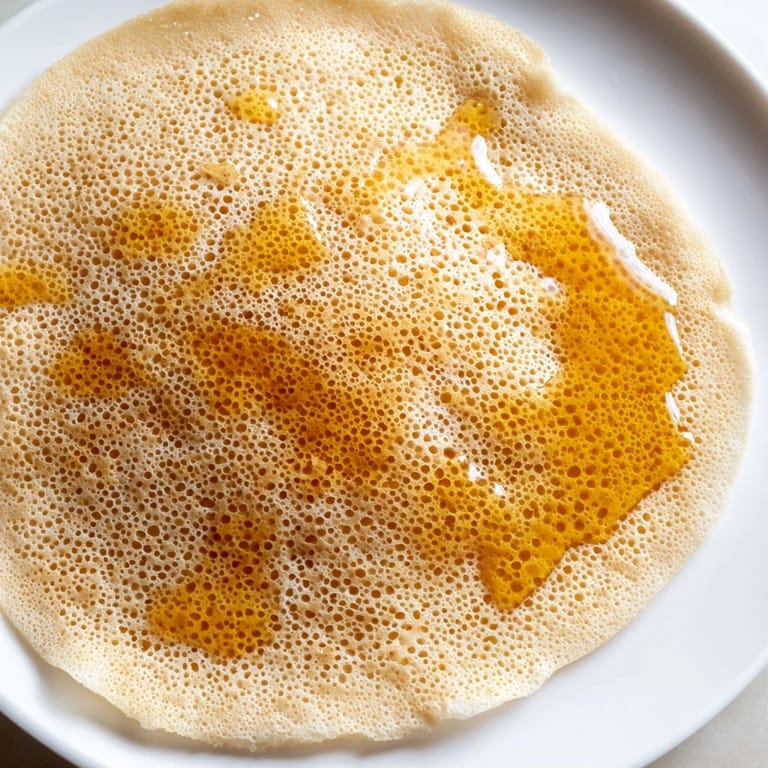
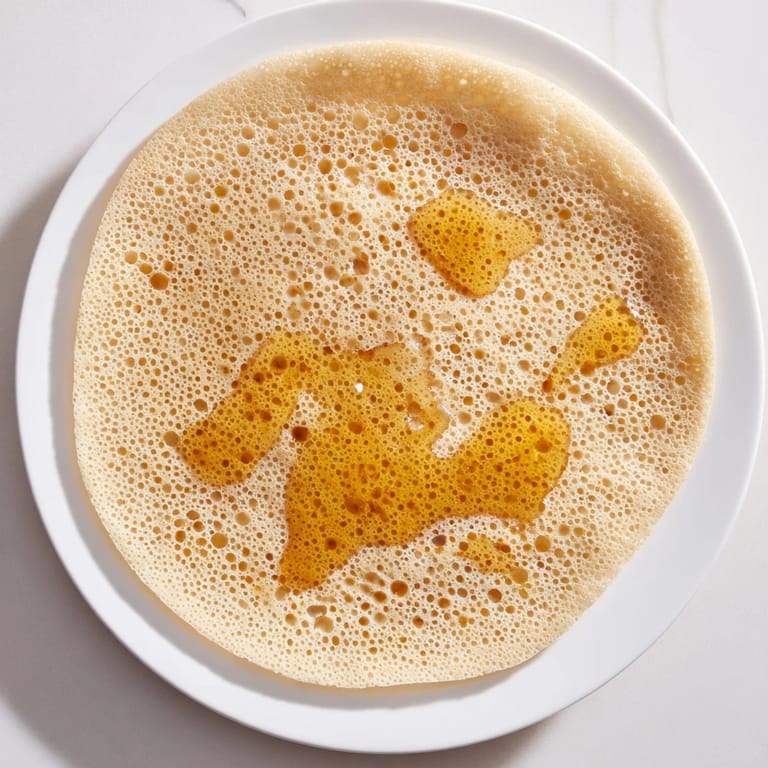
 The first time I made baghrir, I wasn't expecting the batter to come alive. I'd whisked together semolina and flour with a touch of yeast, covered the bowl, and stepped away. Twenty minutes later, I peeked under the cloth and found tiny bubbles dotting the surface, the dough practically whispering that it was ready. When those first crepes hit the hot pan, the magic happened instantly—a thousand delicate holes blooming across the top like edible lace. That honeycomb texture, golden and impossibly light, tasted like warmth and butter and something borrowed from my grandmother's kitchen, even though I'd never actually seen her make them.
I remember a Saturday morning when I made a double batch because my neighbor smelled them cooking and showed up at my door with that hopeful expression. We sat on the kitchen counter with warm baghrir draped over our hands, honey running down our wrists, talking about nothing important. That simple moment—the steam rising from the pan, the rich smell of melted butter and honey, laughter over sticky fingers—reminded me why food matters.
Ingredients
- Fine semolina: This is the secret to baghrir's distinctive texture—it creates those thousands of tiny holes as the batter cooks and the yeast does its gentle work, giving you that spongy honeycomb you can't get with regular flour alone.
- All-purpose flour: A supporting player that gives structure without overpowering the delicate crumb that semolina brings to the party.
- Warm water: Think bathwater temperature, not hot—too cold and the yeast won't activate, too hot and you'll kill the living culture that makes this dough breathe.
- Active dry yeast: Just a teaspoon does the work; it's what creates those beautiful holes and gives baghrir its light, airy texture that sets it apart from every other pancake you've eaten.
- Baking powder: A small helper that works alongside the yeast to ensure you get maximum lift and that perfect spongy crumb.
- Granulated sugar: Feeds the yeast and adds the gentlest sweetness to the batter itself, so the crepes don't taste bland before the honey even hits them.
- Salt: Balances everything and makes the flavor sing louder than you'd expect from half a teaspoon.
- Unsalted butter: Melted together with honey, this creates the warm sauce that baghrir was practically invented to receive.
- Honey: The non-negotiable finishing touch—use something good here because it's the main event.
Tired of Takeout? 🥡
Get 10 meals you can make faster than delivery arrives. Seriously.
One email. No spam. Unsubscribe anytime.
Instructions
- Gather and mix your dry ingredients:
- Combine semolina, flour, sugar, yeast, baking powder, and salt in a large bowl. I like using a whisk here because it distributes the yeast evenly throughout, giving you consistent rise across all your crepes rather than spotty, unpredictable results.
- Build the batter slowly:
- Add your warm water gradually while whisking, moving steadily so no lumps hide anywhere. This takes patience, but it's worth it—a smooth batter cooks evenly and creates that perfect honeycomb pattern.
- Let time do the heavy lifting:
- Cover the bowl and let it rest at room temperature for thirty minutes until small bubbles appear across the surface. You're watching for the dough to wake up, not to rise dramatically—this gentle fermentation is what makes baghrir different from regular pancakes.
- Heat your pan with intention:
- Use a nonstick skillet or crepe pan over medium heat and skip the grease entirely. A dry pan is essential because the batter's moisture content is designed to cook without added fat, and any oil will change how those holes form.
- Pour and swirl with a light touch:
- Ladle about a quarter cup of batter into the center of the pan and swirl gently to spread it into a thin, even circle. Think of it like guiding the batter rather than forcing it—aggressive swirling tears the delicate structure you're trying to build.
- Watch for the magic moment:
- Cook until the surface is covered with holes and the top is dry, about two to three minutes. You'll see bubbles forming and breaking across the top, and when the top looks completely set but still pale, that's your signal to stop. Don't flip—ever.
- Build your stack with rhythm:
- Remove each finished baghrir to a plate and repeat with the remaining batter, stirring occasionally to keep the yeast distributed evenly throughout the bowl. Stir before each pour or you'll end up with thick crepes at the bottom and thin ones at the top.
- Make your honey-butter finish:
- In a small saucepan over low heat, melt butter and honey together until they're warm and pourable. This takes maybe two minutes, and you want them just warm enough to drizzle, not so hot they're bubbling aggressively.
- Serve while steam still rises:
- Drizzle that honey-butter mixture generously over warm baghrir and eat immediately. Cold baghrir becomes dense and loses everything that makes it special, so timing is everything here.
 Pin it
 Years ago, I made these for someone who'd been going through a rough time, and they sat at my table and ate three in a row without saying much. When they finally looked up, they just said the food tasted like home, even though they'd never had it before. That's when I understood baghrir isn't just breakfast or dessert—it's edible comfort, a small gesture that says you took time and care to make something beautiful.
Understanding the Honeycomb Texture
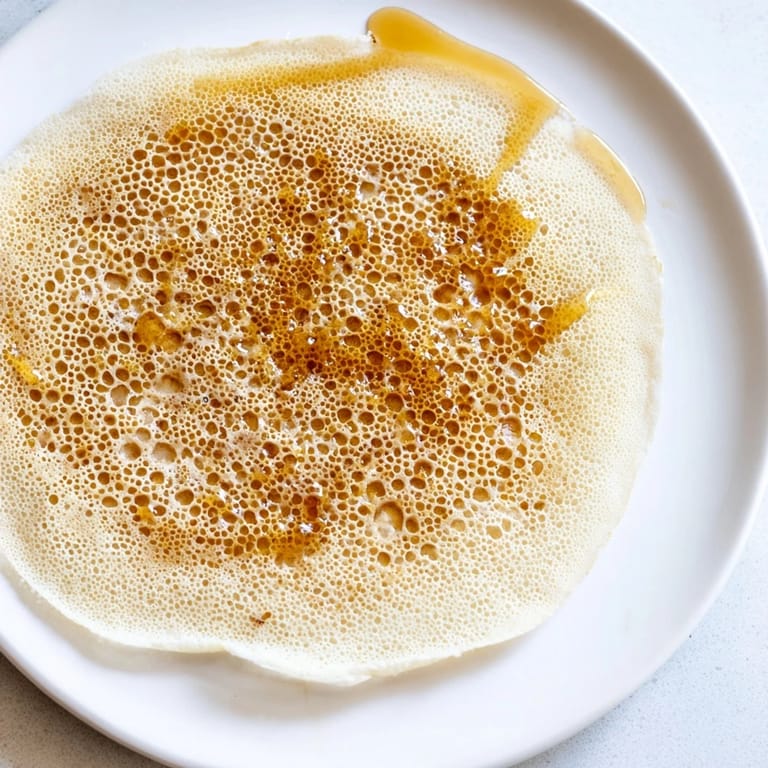
The holes in baghrir aren't accidental—they're the whole point. The yeast creates gas bubbles in the batter during that resting period, and when the batter hits the hot pan, those bubbles burst through the surface and create tiny craters that stay open as the crepe sets. It's the same principle that makes English muffins have those nooks and crannies, except baghrir's texture is even more delicate and refined. The result is a crepe that's somehow both light and substantial, able to hold pools of butter and honey without becoming soggy, and that textural contrast between the airy crumb and the rich sauce is what keeps people coming back.
Timing and Temperature Matter More Than Precision
I don't obsess over exact pan temperature when I make baghrir—I heat the pan over medium and trust my senses instead of a thermometer. You want the pan hot enough that the batter begins cooking the instant it touches the surface, creating those holes immediately, but not so hot that the bottom burns before the top sets. Medium heat works beautifully, and you'll know it's right when the first crepe takes about two to three minutes and the bottom is pale gold rather than dark. Once you make the first batch, you'll develop an intuition for the rhythm—it becomes a dance between the pan, your hand, and the batter.
Storage and Serving Variations
Baghrir is best the moment it comes off the pan, but life doesn't always cooperate with perfect timing. If you need to make them ahead, let them cool completely, stack them between parchment paper, and refrigerate them in an airtight container for up to two days. Reheat gently in a warm skillet over low heat for just a minute or two, then finish with fresh honey-butter while they're still warm. Some people serve baghrir with toasted almonds or pistachios scattered on top, others add a drizzle of orange-flower water to the honey for subtle floral notes, and a few brave souls have suggested a savory version with herbs and cheese, though that feels like a conversation for another time.
- Try adding orange-flower water, rosewater, or a pinch of cinnamon to the honey-butter mixture for subtle complexity without overpowering the delicate crepe.
- Chopped pistachios, toasted almonds, or sesame seeds scattered on top add texture and transform the dish into something that feels special enough for guests.
- Make a double batch and freeze cooled baghrir on a baking sheet before transferring to freezer bags—they'll keep for up to a month and reheat beautifully whenever you need comfort food fast.
 Pin it
 There's something almost meditative about making baghrir, watching those holes appear across the surface one after another, each crepe a small perfect thing. It's the kind of dish that reminds you why you cook.
Recipe FAQs
- → What gives baghrir its unique honeycomb texture?
The texture comes from the batter fermenting slightly, creating bubbles that form tiny holes during cooking on one side without flipping.
- → Can I use regular flour instead of semolina?
Semolina provides the distinctive texture, but you can substitute with fine wheat flour for a softer crepe, though the texture will differ.
- → How do I prevent the batter from becoming too thick?
If the batter thickens after resting, gradually add a tablespoon or two of warm water and whisk until pourable consistency is restored.
- → Is it necessary to flip baghrir while cooking?
No flipping is needed; cook on one side until holes form and surface is dry, which preserves its delicate texture.
- → What toppings complement baghrir best?
Melted butter and honey are traditional, but chopped nuts or a sprinkle of cinnamon can add pleasing texture and flavor.