 Pin it
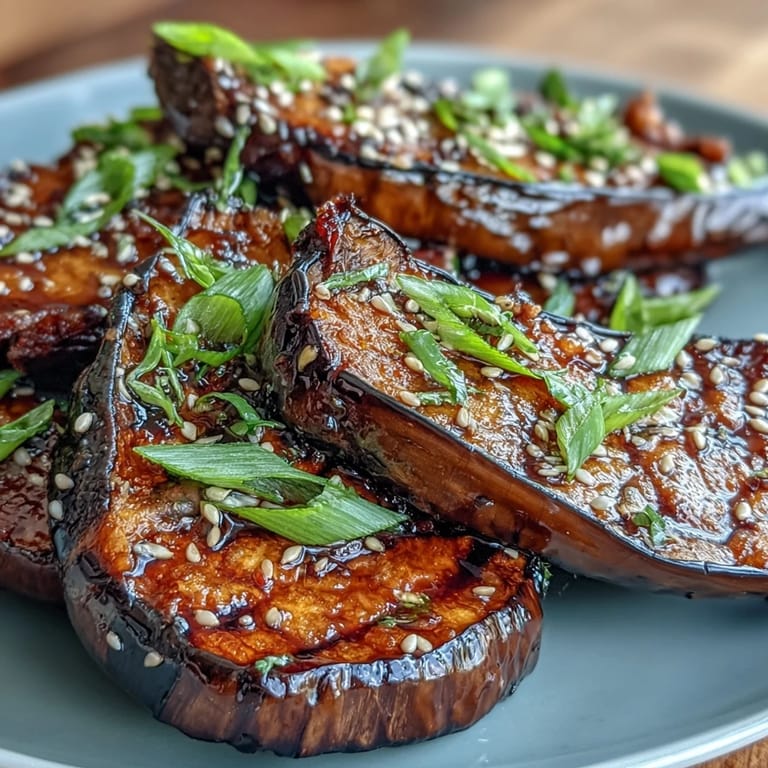
 There's something magical about watching eggplant transform in the oven, its flesh turning silky and almost melting into itself. I discovered this dish on a quiet Tuesday night when I was experimenting with what felt like the last vegetables in my crisper drawer, and I happened to have a small jar of white miso tucked in the back of my pantry. What started as improvisation became something I now make constantly, especially when I need a side dish that feels both humble and unexpectedly special.
I made this for my partner one evening when we were both exhausted from work, and we ended up sitting on the kitchen counter eating it straight off the pan while talking about nothing in particular. The simplicity of it somehow made the evening feel less chaotic, like we'd done something right just by choosing to slow down for thirty minutes.
Ingredients
- Japanese eggplants, 2 medium: Look for the slender, delicate ones rather than the bloated globe varieties—they have fewer seeds, silkier flesh, and cook more evenly.
- White miso paste, 3 tbsp: This is the sweet, mellow cousin of red miso, and it's the backbone of the entire dish; don't substitute darker varieties or you'll lose that subtle sweetness.
- Mirin, 1 tbsp: This Japanese cooking wine brings natural sweetness and a slight shine to the glaze, and it actually helps the caramelization happen faster.
- Sake, 1 tbsp: A splash of dry sake rounds out the glaze with depth; if you don't have it, substitute with a tiny bit of water mixed with a pinch of sugar.
- Sugar, 1 tbsp: This helps the glaze bubble and caramelize under the broiler, creating those beautiful burnished edges.
- Sesame oil, 1 tbsp: Use toasted sesame oil for maximum flavor impact, and don't be shy—it's what gives the whole thing its signature nutty richness.
- Toasted sesame seeds, 1 tbsp: Buy them already toasted if you can, or toast raw ones yourself for about two minutes in a dry pan until they smell incredible.
- Green onions, 2, thinly sliced: These add a fresh, bright note right at the end that cuts through all that rich umami perfectly.
Tired of Takeout? 🥡
Get 10 meals you can make faster than delivery arrives. Seriously.
One email. No spam. Unsubscribe anytime.
Instructions
- Set up your oven:
- Preheat to 400°F and line your baking sheet with parchment paper so nothing sticks and cleanup becomes a breeze.
- Prep the eggplants:
- Slice each eggplant in half lengthwise, then use a sharp knife to score the flesh in a crosshatch pattern, cutting about a quarter inch deep but never piercing through to the skin. This helps the eggplant roast evenly and absorb the glaze better.
- Get them oiled and ready:
- Brush the cut sides lightly with sesame oil and place them cut-side up on your prepared baking sheet.
- First roast:
- Roast for 20 to 25 minutes until the flesh looks golden and feels tender when you poke it with a fork—it should have a slight give but still hold together.
- Make the glaze:
- While the eggplants are roasting, whisk together the miso paste, mirin, sake, sugar, and remaining sesame oil in a small bowl until completely smooth. The mixture should look glossy and smell absolutely intoxicating.
- Apply the glaze:
- Remove the eggplants from the oven and spread a generous layer of miso glaze evenly over each cut side, covering the entire surface.
- Broil for caramelization:
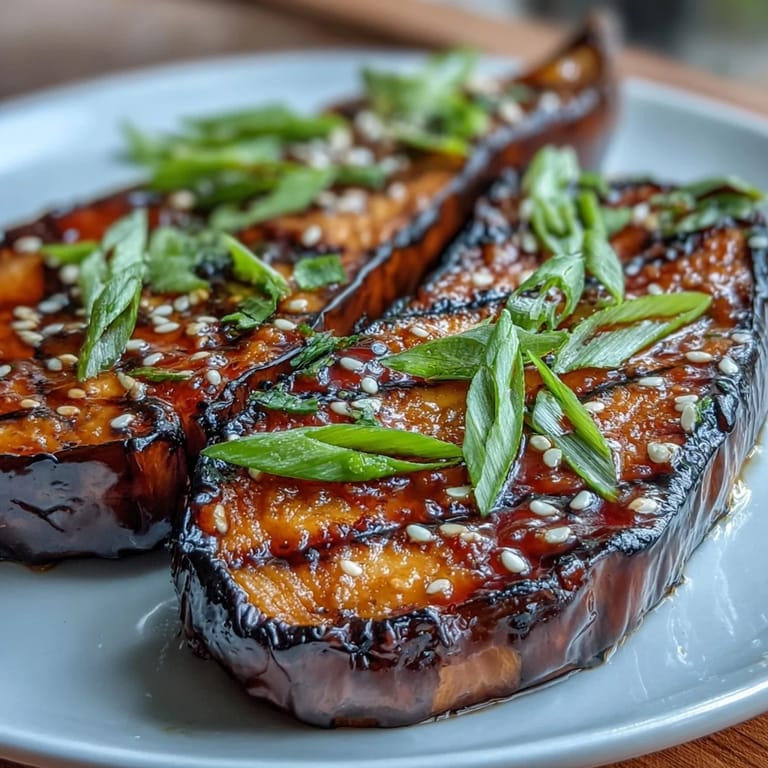
- Switch your oven to broil and return the eggplants to the top rack for 2 to 3 minutes, watching constantly because this is where magic happens and also where things can burn in a heartbeat. You're looking for the glaze to bubble and turn a deep caramel color.
- Finish and serve:
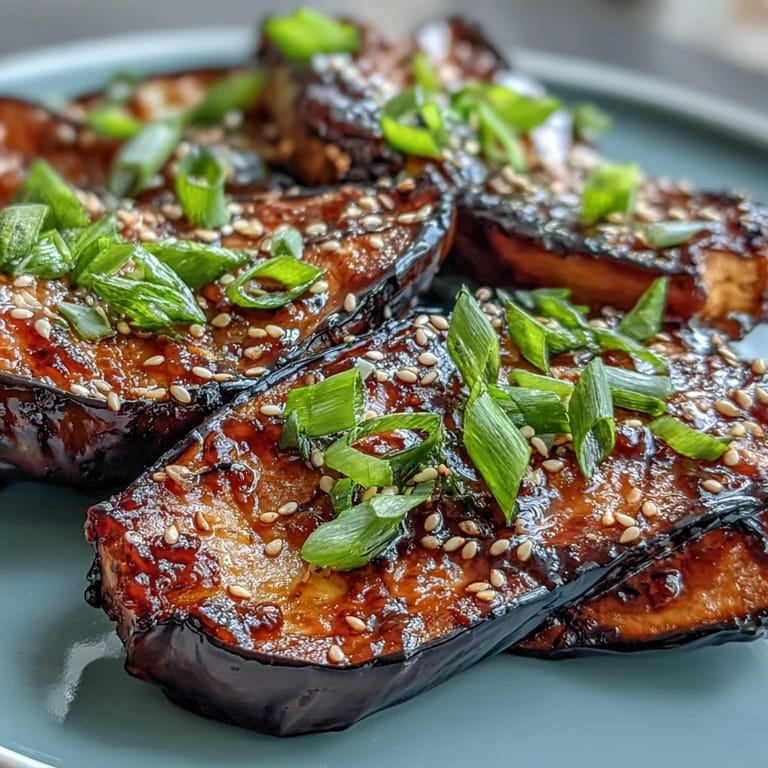
- Remove from the oven, sprinkle generously with toasted sesame seeds and sliced green onions, and serve while everything is still warm.
 Pin it
 My neighbor actually came over because something smelled so good wafting through our shared walls, and we ended up eating this together while sitting in my kitchen watching the sunset through the window. It turned into a conversation about food and memory and how sometimes the simplest dishes mean the most.
Why This Dish Works
The beauty of miso-glazed eggplant lies in the contrast between the soft, yielding flesh and that caramelized, slightly sticky glaze clinging to the top. When you roast eggplant slowly, you're essentially cooking out the water content that makes it soggy, replacing it with a tender, almost buttery texture that absorbs every bit of that umami-rich glaze. The scoring matters more than people realize because it creates little pockets where the miso seeps in, flavoring the eggplant from the inside out rather than just sitting on top.
Playing With The Glaze
Once you've made this a few times, you'll start seeing all the variations hiding in your pantry. I've experimented with swapping the sugar for a drizzle of honey, which makes the glaze taste almost caramel-like, or adding a tiny splash of soy sauce for even more savory depth. Some nights I add a pinch of red pepper flakes or a grated garlic clove if I'm feeling like something bolder, though that changes the whole character of the dish.
Serving Suggestions & Storage
This dish is stunning alongside steamed jasmine rice and a simple miso soup, or even as part of a larger Japanese-inspired spread with pickled vegetables and grilled fish. It's also wonderful served at room temperature the next day, which makes it perfect for meal prep or lunch boxes, though the glaze does lose some of its shine.
- Leftovers keep for three days in the refrigerator, covered with parchment or plastic wrap to preserve that beautiful glaze.
- You can reheat gently in a 350°F oven for about five minutes, or eat it cold straight from the fridge if you're in a rush.
- If you're making this vegan, just double-check that your miso and mirin brands are certified vegan, as some versions contain fish-based ingredients.
 Pin it
 There's something deeply satisfying about turning humble eggplant into something that feels like restaurant-quality food, and this recipe proves that you don't need complicated techniques or impossible-to-find ingredients to make something that tastes like a small celebration. Make this the next time you need to feel like you're taking care of yourself in the kitchen.
Recipe FAQs
- → Can I use regular eggplant instead of Japanese?
Yes, though Japanese eggplants have thinner skin and a more delicate texture. Regular globe eggplants work but may need longer roasting time to become tender.
- → What does miso glaze taste like?
The glaze delivers a perfect balance of salty umami from miso, subtle sweetness from sugar and mirin, and a hint of earthiness from sake. It creates a rich, complex flavor profile.
- → Can I make this gluten-free?
Absolutely. Use certified gluten-free miso paste and verify that your sake and mirin are gluten-free. Many traditional brands now offer gluten-free versions.
- → How do I store leftovers?
Store in an airtight container in the refrigerator for up to 3 days. Reheat in a 350°F oven or enjoy cold—the flavors develop beautifully overnight.
- → Can I meal prep this dish?
You can roast the eggplants ahead and store them glazed. Add fresh sesame seeds and green onions just before serving for the best texture and presentation.