 Pin it
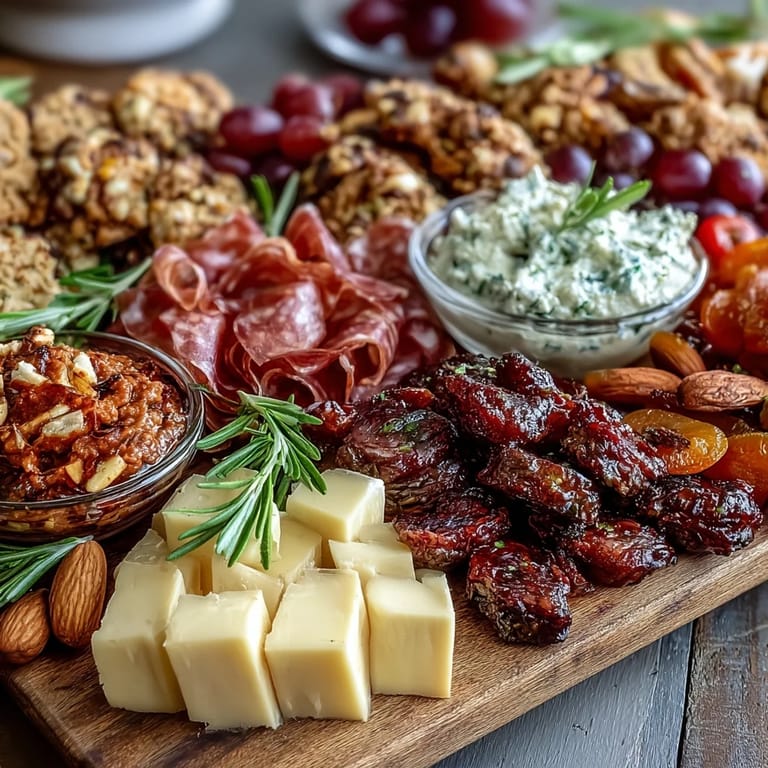
 My neighbor knocked on my door with a bottle of wine and a sheepish grin—they'd just closed on the house three doors down. I realized I had exactly two hours to throw together something that looked effortless but felt celebratory, something that wouldn't require heating the oven or detailed plating. A charcuterie board materialized in my mind, the kind that says you care without screaming you spent all day cooking. I grabbed everything I had scattered across my kitchen and fridge, arranged it on my largest board, and suddenly had a masterpiece that looked like I'd been planning it for weeks.
That housewarming gathering turned into the kind of evening where people lingered around the board, picking and talking, discovering flavor combinations they'd never considered before. Someone paired blue cheese with a dried fig and looked genuinely surprised by how well it worked. Another guest mixed hummus with the red pepper dip and created something entirely new. The board became less about eating and more about connection, which felt fitting for celebrating someone's fresh start in a new home.
Ingredients
- Prosciutto: Buy it sliced but not paper-thin, and let it come to room temperature—it'll drape more gracefully and taste less muted.
- Salami: Choose a variety that's slightly spicy or herbed to keep things interesting; plain won't sing as brightly.
- Smoked ham: This bridges the gap between the delicate and the bold, giving people a familiar anchor point.
- Chorizo slices: The color and heat from chorizo wake up the whole board and pair beautifully with mild cheeses.
- Brie: Slice it just before assembling so it stays creamy and hasn't oxidized; it's the luxe moment everyone expects.
- Aged cheddar: Cubing it instead of slicing makes it easier to grab and gives the board visual texture.
- Gouda: Its subtle sweetness is a secret weapon that makes people reach for it again and again.
- Blue cheese: Crumble it loosely so people can take as much or as little as they want without feeling committed.
- Hummus: Make your own if you have time, but store-bought lets you focus on what matters—the presentation.
- Tzatziki: This cool, herby dip anchors the board and gives relief if the salty meats become too intense.
- Roasted red pepper dip: Its sweetness bridges the gap between savory and the fruit on the board.
- Assorted crackers: Mix textures—crispy, delicate, sturdy—so people have options depending on what they're pairing.
- Baguette: Slice at an angle for elegance, and only do this right before serving so it stays crisp.
- Breadsticks: They add height and visual interest while giving people something to dunk.
- Red and green grapes: Their natural sweetness and juiciness reset your palate between bites of savory items.
- Cherry tomatoes: Leave some whole and halve others so there's variety in how much juice releases with each bite.
- Cucumber slices: These stay fresher longer if you slice them just before serving and keep them slightly separated so they don't sweat.
- Bell pepper: Slice it into strips rather than rings—it feels less formal and easier to grab.
- Baby carrots: Their natural sweetness makes them an underrated MVP on any board.
- Mixed nuts: Toast them lightly if they've been sitting around, which brings out their oils and flavor.
- Olives: Buy them pitted to save your guests the surprise of a pit mid-conversation.
- Dried apricots and figs: These jewel-like fruits add sweetness and sophistication, especially paired with blue cheese or brie.
- Fresh herbs: Scatter them at the very end for color and aroma—they're edible decoration that makes everything feel intentional.
Tired of Takeout? 🥡
Get 10 meals you can make faster than delivery arrives. Seriously.
One email. No spam. Unsubscribe anytime.
Instructions
- Start with the meats:
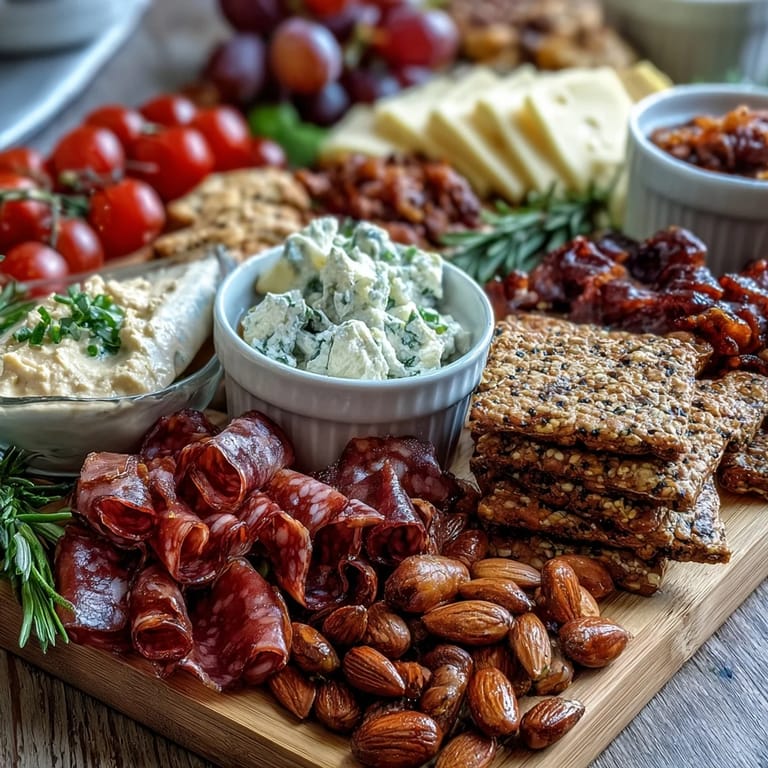
- Arrange prosciutto, salami, and smoked ham in loose, casual folds—think ripples rather than precise lines. Let them overlap slightly and leave some breathing room so people can easily pull pieces away without disturbing the whole arrangement.
- Anchor with cheese:
- Position your cheeses around the board in different zones, spreading them so no one section feels crowded. The variety of shapes—slices, cubes, crumbles—creates natural visual rhythm that makes the board feel abundant.
- Nestle the dips:
- Spoon each dip into its own small bowl and tuck them into gaps between other items, angling them so the edges are visible and inviting. This prevents the board from looking flat and gives people clear landing spots for crackers and vegetables.
- Fan out the crackers and bread:
- Arrange crackers in loose sections and lean baguette slices and breadsticks upright or at angles in various spots. This creates height variation and makes the board feel less static and more three-dimensional.
- Fill strategic gaps:
- Scatter grapes, cherry tomatoes, cucumber slices, bell pepper strips, and carrots in clusters, leaving some pockets of emptiness so the eye can rest. These vegetables do double duty—they're delicious and they fill negative space with color.
- Add the finishing touches:
- Scatter nuts, olives, dried apricots, and figs in small clusters throughout, creating pockets of variety and surprise. These little treasures encourage people to explore the whole board instead of camping in one corner.
- Garnish for drama:
- Scatter fresh rosemary sprigs and thyme leaves across the board right before serving, focusing on empty spaces. This final step signals that everything is ready and smells amazing.
- Serve and replenish:
- Place the board where people can gather comfortably around it, and keep an eye on gaps that need refilling. A well-tended board stays inviting throughout the entire party.
 Pin it
 That evening, I watched my neighbor's face light up when they saw the board, and then watched it light up even brighter when their partner tasted the combination of fig and blue cheese. Food creates these small moments of discovery, and a board gives people permission to be playful and experimental. It's the opposite of a plated meal—instead of being told what flavors go together, people get to make those discoveries themselves.
The Art of Arrangement
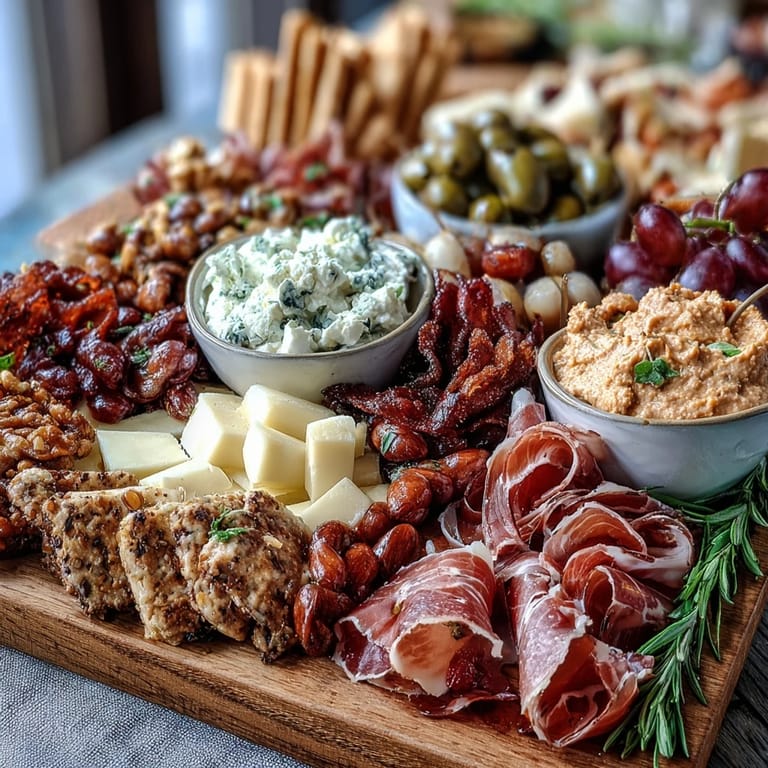
The magic of a charcuterie board lives in how it catches the eye before it reaches the mouth. I learned this through trial and error, eventually realizing that height variation and color balance matter as much as flavor balance. Grouping similar colors together actually makes them pop more—reds against whites against golds. Leaving some empty space, even though it feels counterintuitive, makes the whole board feel curated rather than crammed.
Flavor Pairings That Create Moments
The best part of building a board is discovering unexpected combinations. The slight spice of chorizo with creamy gouda, the brightness of tzatziki cutting through rich prosciutto, the textural contrast of crispy breadsticks against soft cheese—these aren't accidents but natural harmonies you're inviting people to find. I've noticed that when you offer diverse flavors and textures without forcing them together, people become more adventurous and confident in their choices.
Making It Work For Your Crowd
Every crowd is different, and the board adapts to whatever your guests need. For that housewarming, I included extra vegetables and hummus because I knew one guest was vegetarian, but nobody felt like they were eating a separate meal—they were just accessing a different part of the same gorgeous spread. Dietary needs don't diminish the celebration; they just expand what you're offering.
- Swap out any meat for additional cheeses, nuts, or marinated vegetables if you're hosting vegetarians.
- Include gluten-free crackers and breadsticks alongside regular ones so nobody has to ask or feel excluded.
- Add honey, fig jam, or hot sauce in small bowls so people can customize their flavor experience without you predicting their preferences.
 Pin it
 A charcuterie board is really an invitation to slow down and be present with the people around you. I still think of that housewarming whenever I build one, and how something so simple created such a genuine moment of connection.
Recipe FAQs
- → How should I arrange the meats and cheeses?
Place cured meats in loose folds or rolls on the board. Distribute cheeses evenly around to allow easy access and appealing presentation.
- → What dips complement this spread best?
Hummus, tzatziki, and roasted red pepper dip add varied flavors and textures that pair well with the meats and crackers.
- → Can I substitute ingredients for dietary needs?
Yes, meats and cheeses can be swapped to suit preferences; gluten-free crackers and vegetarian options can easily be included.
- → How do I keep the board fresh if preparing ahead?
Arrange ingredients shortly before serving to maintain texture and freshness. Cover and refrigerate if needed, then bring to room temperature.
- → What pairs well as a beverage with this board?
A crisp white or light red wine complements the flavors nicely, enhancing the overall tasting experience.