 Pin it
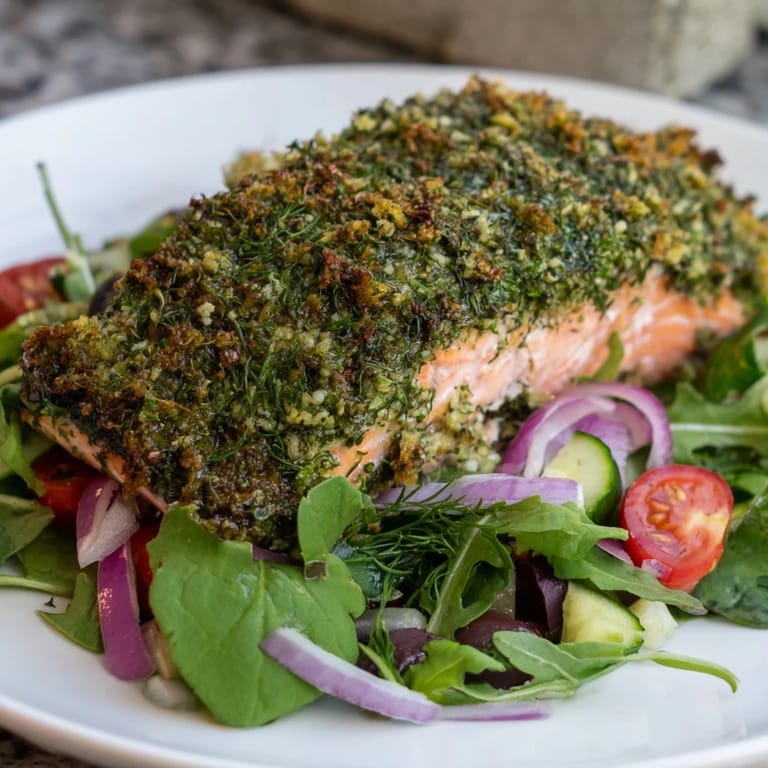
 There's something about a perfectly seared salmon fillet that makes everything else fade away. I discovered this herb-crusted version on a Tuesday evening when I had exactly twenty minutes before guests arrived, some decent salmon in the freezer, and an armful of fresh herbs from the farmer's market that were threatening to wilt. The combination of crisp greens, warm fish, and that bright vinaigrette became my go-to when I needed something that looked impressive but wouldn't keep me stressed in the kitchen.
My friend Marcus came over one Saturday and watched me make this, and halfway through he asked if I'd ever considered that the warm salmon against the cold salad was like "summer and winter on the same plate." I'd never thought about it that way, but he was right, and now every time I make it, that's exactly what I taste.
Ingredients
- Salmon fillets: Four pieces, skinless and about 5 ounces each—they should be roughly the same thickness so they cook evenly, and honestly, letting them sit out for ten minutes before the oven helps them cook through without drying out.
- Olive oil: Two tablespoons goes into the herb paste, and it helps everything stick to the fish while it bakes.
- Dijon mustard: Just two teaspoons might seem small, but it's the backbone of both the herb crust and the vinaigrette—it adds that subtle tang that makes you wonder what the secret is.
- Lemon juice: A tablespoon in the herb paste brightens everything, and I learned the hard way that fresh squeezed makes a real difference.
- Fresh parsley, dill, and chives: One tablespoon each, finely chopped—these three together create that garden-fresh flavor that makes people ask for the recipe.
- Garlic powder: Just a teaspoon, because fresh garlic would burn at the oven temperature and leave a bitter taste.
- Salt and black pepper: Half a teaspoon each for the salmon, though you'll adjust to taste.
- Mixed salad greens: Four cups of whatever looks good that day—arugula has peppery notes that play beautifully against the fish.
- Cherry tomatoes and cucumber: One cup halved and half sliced respectively, adding crunch and freshness that contrast with the soft salmon.
- Red onion: A quarter sliced thin provides a sharp bite that cuts through the richness.
- Walnuts or almonds: A quarter cup toasted if you want texture, though the salad works beautifully without them.
- Feta cheese: A quarter cup crumbled is optional but adds a salty, creamy element that feels a bit luxurious.
- Extra-virgin olive oil for vinaigrette: Three tablespoons of your good oil makes a difference here since it's not getting cooked.
- White wine vinegar or lemon juice: A tablespoon balances the oil and adds brightness to every bite.
- Honey or maple syrup: Just a teaspoon rounds out the vinaigrette with a whisper of sweetness.
Tired of Takeout? 🥡
Get 10 meals you can make faster than delivery arrives. Seriously.
One email. No spam. Unsubscribe anytime.
Instructions
- Heat your oven and prep:
- Get your oven to 200°C (400°F) and line a baking sheet with parchment paper so nothing sticks.
- Make the herb paste:
- In a small bowl, stir together the olive oil, Dijon mustard, lemon juice, and all those fresh herbs with the garlic powder, salt, and pepper until you have something that looks like a vibrant green paste. This is where the magic happens.
- Coat the salmon:
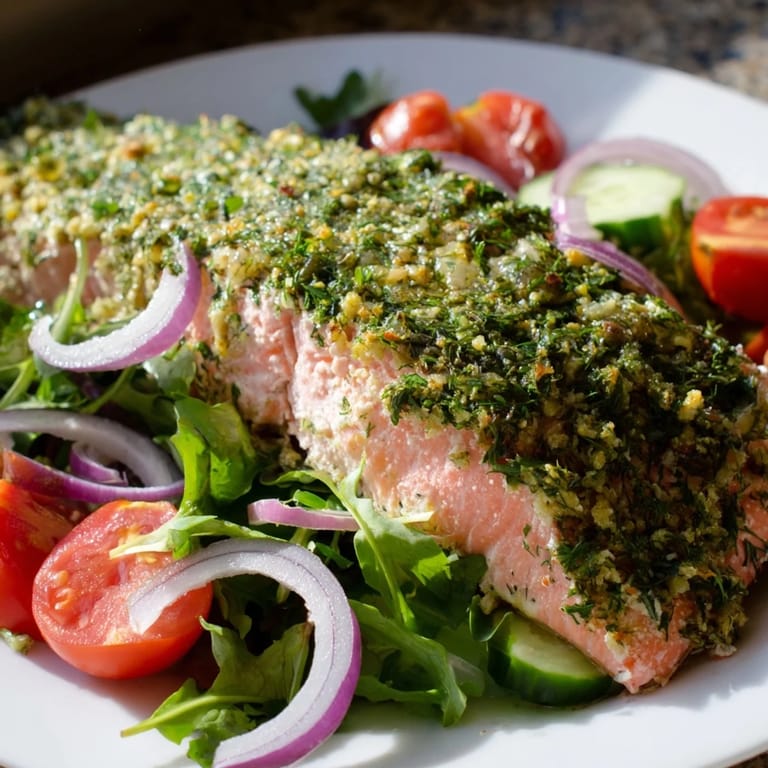
- Lay your salmon fillets on the parchment and spread this herb mixture generously over the top of each one, pressing gently so it adheres.
- Bake until just done:
- Slide the sheet into the oven for 12 to 15 minutes, watching until the salmon flakes easily with a fork and the herb crust has turned golden. The moment it's done, take it out—overcooked salmon becomes dry and sad.
- Assemble the salad:
- While the salmon bakes, toss your salad greens, tomatoes, cucumber, red onion, nuts, and feta into a large bowl, but don't dress it yet.
- Make the vinaigrette:
- Whisk together the extra-virgin olive oil, vinegar, honey, and mustard in a small bowl, then taste and adjust the salt and pepper until it sings.
- Dress and plate:
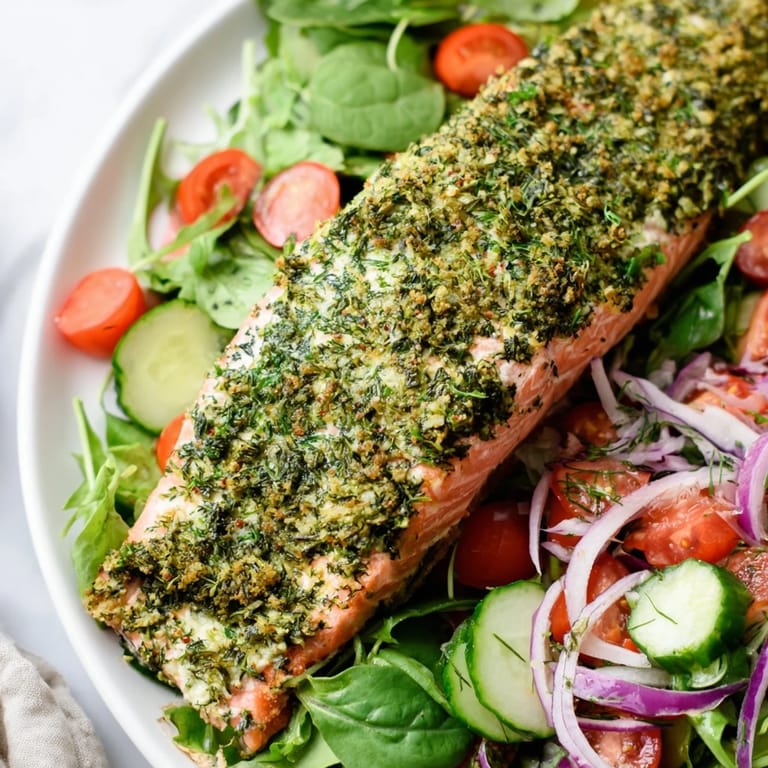
- Drizzle the vinaigrette over the salad and toss gently so everything gets coated but nothing bruises. Divide the greens among four plates and crown each portion with a warm herb-crusted fillet.
 Pin it
 I made this for my mom on her birthday last spring, and she said it was the first meal in months that felt light but still like actual food. That's when I knew this recipe had become more than just something convenient—it was something that made people feel taken care of.
Why Fresh Herbs Are Non-Negotiable
The first time I made this with dried herbs because the market was closed, the dish fell completely flat. The salmon was fine, the salad was fine, but that vibrant green crust that should taste like you've captured a garden became dusty and one-dimensional. Fresh herbs—parsley, dill, and chives—are what separate this from just grilled salmon. They should smell bright and alive when you chop them, and if they're wilting or smell like old hay, find different ones or wait for another day.
The Temperature Trick That Changes Everything
Serving warm salmon on cold salad creates this wonderful play of textures and temperatures that feels more sophisticated than it has any right to be. The warmth of the fish slightly wilts the greens closest to it without making them soggy, and the cool salad keeps the salmon from feeling too heavy. I learned this wasn't accidental when I once made the mistake of letting everything cool to the same temperature—it was fine, but it lost something essential, a certain elegance that makes this dish feel special rather than ordinary.
Variations and What Works
This framework is forgiving enough that you can adapt it to what you have or what you're craving. I've made it with trout when that's what was available, and it's equally delicious—any firm white or pink fish works beautifully. Some nights I add sliced avocado for creaminess, or scatter cooked quinoa through the salad for substance if I'm making this for a late lunch. A handful of thinly shaved radishes adds peppery crunch if your market has them. The vinaigrette can shift too—swap the white wine vinegar for sherry vinegar if that's what you have, or double down on lemon juice for something brighter.
- Trout, halibut, and sea bass all take the herb crust beautifully and bake in similar timeframes.
- If you want to make this vegan, skip the feta and double the nuts for richness and texture.
- A crisp Sauvignon Blanc or even sparkling water with lemon makes this feel like a celebration.
 Pin it
 This is the kind of meal that makes you feel like you've done something special without the exhaustion. It's proof that simple, good ingredients treated with a little care and intention are really all you need.
Recipe FAQs
- → What herbs are used for the crust?
Fresh parsley, dill, and chives are finely chopped and combined with garlic powder, salt, and pepper to create the flavorful herb crust.
- → Can I substitute the salmon with another fish?
Yes, firm fish like trout can be used as an alternative while maintaining a similar texture and flavor profile.
- → How do I prepare the vinaigrette?
Whisk together extra-virgin olive oil, white wine vinegar or lemon juice, honey or maple syrup, Dijon mustard, and seasoning for a zesty, balanced dressing.
- → Is it necessary to use nuts in the salad?
Nuts are optional but add a pleasant crunch. Toasted walnuts or almonds complement the fresh salad flavors well.
- → What are some serving suggestions?
This dish pairs nicely with a crisp Sauvignon Blanc or sparkling water with lemon for a refreshing accompaniment.