 Pin it
 The first time I made gumbo, I stood at my stove for twenty minutes, watching oil and flour transform into something that smelled like deep earth and patience. My grandmother's voice kept drifting through my head—she always said the roux was the soul of the dish, and you couldn't rush it. When my friend wandered into the kitchen and asked what I was making, I realized I'd been so focused on that chocolate-brown moment that I'd lost track of time entirely. That's when I knew this was going to be something special.
I made this on a gray Saturday when my partner came home stressed about work, and by the time that first spoonful hit the table, everything had shifted. We sat with bowls of gumbo and rice, not talking much, just existing in the kind of quiet that only happens when food is genuinely good. Three hours later, we were still at the table, and I realized this dish does something beyond feeding—it creates space for the kind of togetherness that doesn't need explaining.
Ingredients
- Boneless, skinless chicken thighs (350 g): Thighs stay tender and flavorful through the long simmer, unlike breast meat which can dry out; I learned this the hard way with my first batch.
- Smoked andouille sausage (225 g): This is your shortcut to authentic Cajun depth—the smoke and spice do half the work for you.
- Fresh or frozen okra (250 g): It thickens the gumbo naturally while it cooks, giving you silky texture without extra flour; thaw frozen okra first so you're not adding ice water to the pot.
- Onion, green bell pepper, celery (the holy trinity): This combination is non-negotiable in Louisiana cooking—it's how you build flavor from the ground up.
- Garlic (3 cloves): Mince it fine so it melts into everything rather than sitting as chunks.
- Diced tomatoes (2 fresh or 1 can): They brighten what could otherwise feel heavy, and canned works just as well if fresh tomatoes aren't good.
- All-purpose flour and vegetable oil (60 g each): These two ingredients are the entire foundation—I've learned that getting them to that deep chocolate color is worth every minute of stirring.
- Chicken stock (1.5 liters): Use something you'd taste on its own; weak stock makes weak gumbo.
- Bay leaves, thyme, smoked paprika, cayenne: Smoked paprika is the secret that makes people ask what your secret ingredient is, and cayenne gives it a gentle heat that builds slowly.
- Spring onions and fresh parsley: These scatter on top at the end and wake everything up with freshness.
- Optional filé powder: Sprinkle this after cooking to add another layer of flavor and a little more thickness if you want it.
Tired of Takeout? 🥡
Get 10 meals you can make faster than delivery arrives. Seriously.
One email. No spam. Unsubscribe anytime.
Instructions
- Build your roux foundation:
- Heat oil in your Dutch oven over medium heat, then whisk in flour slowly so no lumps form. Stir constantly—this is meditative work—until you reach that deep chocolate brown color, about 15 to 20 minutes. You'll know it's right when it smells toasty and rich, not burned.
- Wake up the vegetables:
- Add your chopped onion, bell pepper, and celery to the roux and let them soften for 3 to 4 minutes, stirring gently. The vegetables will stick slightly to the roux, and that's exactly what you want—it means they're building flavor into the base.
- Introduce the proteins:
- Toss in your chicken and andouille sausage and let them brown lightly for about 5 minutes, until the chicken loses that raw look. The sausage will release its smoky oils into everything.
- Let the okra do its work:
- Add the sliced okra and cook for 3 to 4 minutes—it will start to release its natural thickening power, and you'll notice the whole mixture becoming more silky.
- Build the full broth:
- Pour in your tomatoes, chicken stock, bay leaves, thyme, paprika, cayenne, Worcestershire sauce, salt, and pepper. Bring everything to a boil, then lower the heat to a gentle simmer. This is where patience transforms ingredients into something deeper—let it bubble quietly for 45 to 50 minutes, stirring every now and then.
- Finish and taste:
- Remove the bay leaves and taste carefully—you might want more salt, more heat, or more of that smoky paprika. If you want it thicker, sprinkle in filé powder off the heat and stir it through.
- Serve with intention:
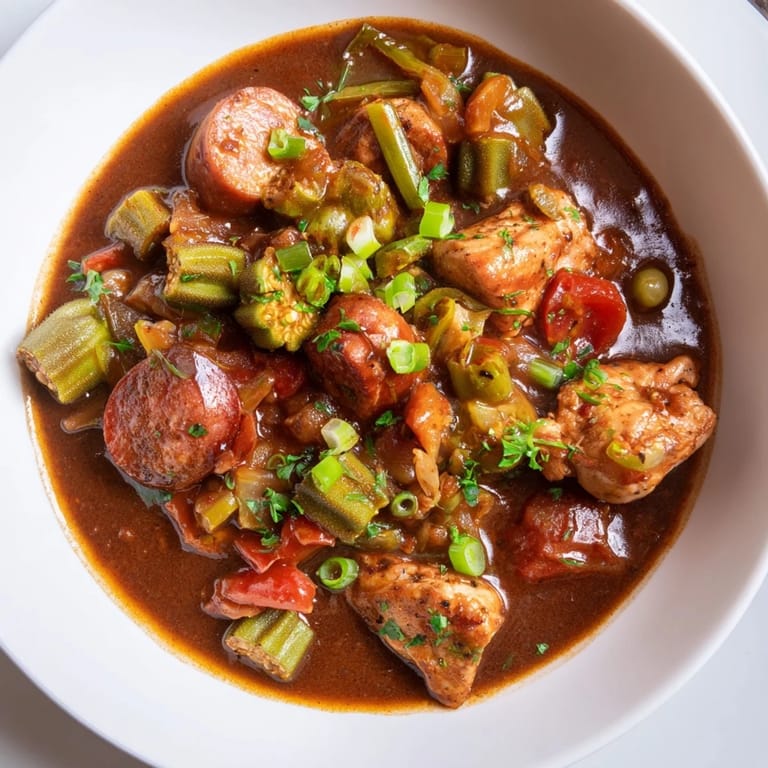
- Ladle over white rice in wide bowls, then scatter spring onions and parsley across the top. Let people add hot sauce if they want—it's their choice how much fire they need.
 Pin it
 My neighbor smelled this cooking from her front porch and knocked on the door without thinking, something she'd never done before. We ended up sharing the whole pot with her family, and in that moment, I understood why gumbo exists as a dish—it's generous by nature, the kind of food that invites people in. That's when cooking became less about the recipe and more about what happens around the table.
The Story Behind the Roux
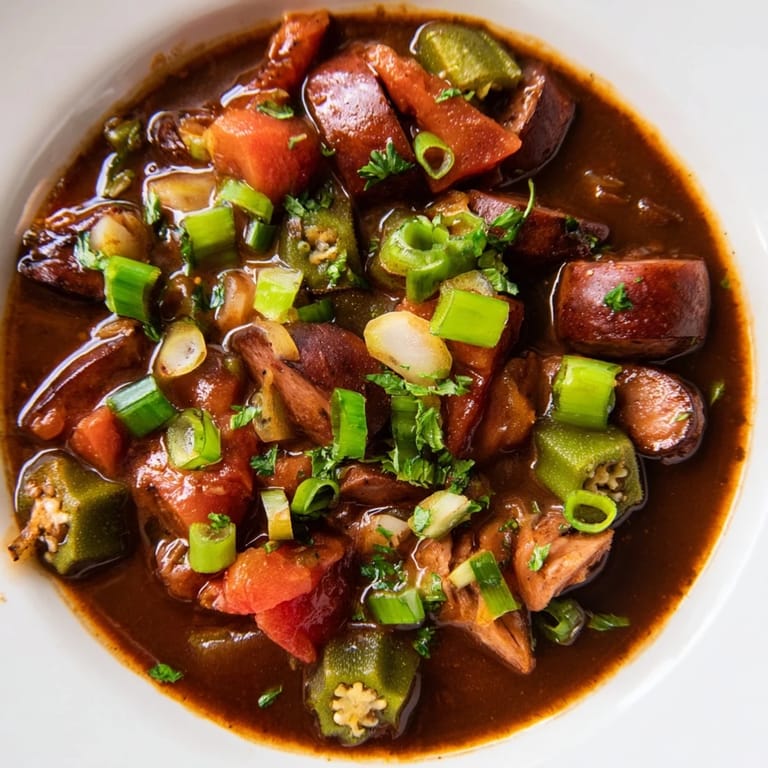
The roux is where gumbo separates from every other soup you'll ever make. In New Orleans kitchens, making roux is almost a ritual—you stand there, wooden spoon in hand, watching the transformation from pale to golden to mahogany to that impossible deep chocolate that seems almost black. I've learned that this isn't a shortcut moment; it's the whole point. When you make a roux properly, you're not just thickening a soup, you're building a flavor base that tastes like caramelized depth, like time spent, like something worth the attention. Some cooks in Louisiana will tell you their roux color matters more than any other ingredient, and I've come to believe them.
Why Okra Is More Than Just a Thickener
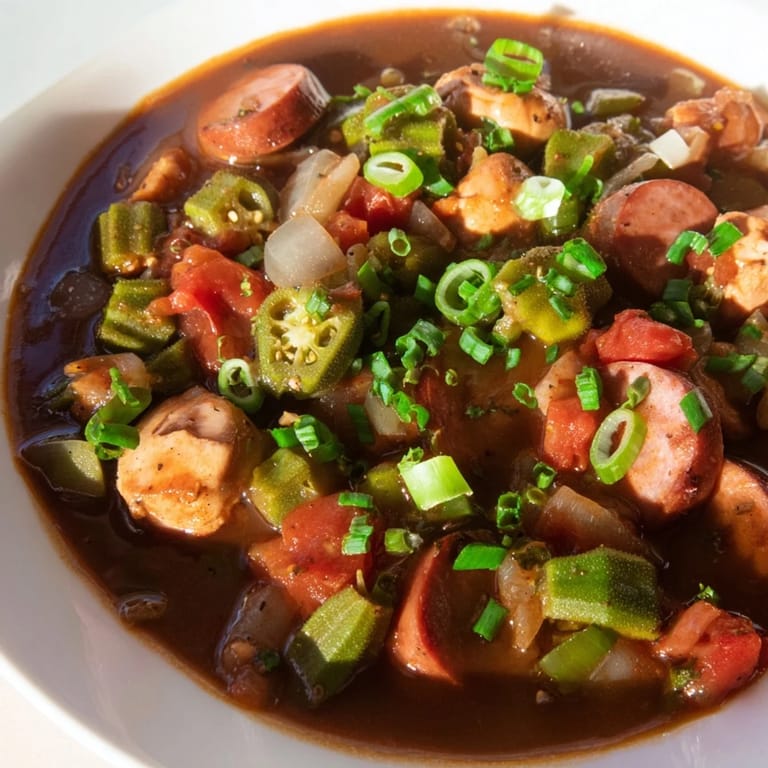
Okra shows up in gumbo with a purpose that goes beyond texture. It's a vegetable that polarizes people—some hate the slickness, others crave it—but in this dish, it becomes something almost elegant. When you cook okra for 45 minutes in a gentle broth, it softens into the background and releases natural starches that make the whole pot silkier without you having to add cream or extra flour. I used to think okra was just there to thicken, but I've realized it also adds a subtle earthiness that balances all the smoke and spice. Fresh okra is ideal, but frozen works beautifully too—just thaw it and drain away any ice crystals first.
Making It Your Own
The magic of gumbo is that it invites variations without losing its identity. I've made it with seafood on nights when the market had beautiful shrimp and crab—you add those in the last 10 minutes so they don't overcook and turn rubbery. Some cooks skip the tomatoes or add more vegetables like okra if they love it. The heat level is entirely yours to control; that cayenne is just a suggestion. What matters is that you're building on something traditional while making it speak to your own kitchen and your own taste.
- If you want a seafood version, add shrimp or crab meat in the final 10 minutes of simmering so they stay tender.
- Filé powder is optional but worth trying once—it adds a subtle sassafras note that feels mysteriously right in a spoonful of gumbo.
- This dish tastes even better the next day, and it freezes beautifully, so make extra if you can.
 Pin it
 Every time I make this, I think about all the kitchens in Louisiana where gumbo is just what you make when you want people to feel at home. I hope this version does that for you.
Recipe FAQs
- → What is the base ingredient for the broth?
The broth is built on a dark roux made from flour and vegetable oil, combined with chicken stock and spices for a rich flavor.
- → Can I substitute any ingredients in this dish?
Yes, smoked andouille sausage can be replaced with other smoked sausages, and frozen okra can be used if fresh isn't available.
- → How long should the roux be cooked?
The roux should be cooked for 15 to 20 minutes, stirring constantly until it reaches a deep chocolate brown color without burning.
- → What is the purpose of filé powder in this dish?
Filé powder, made from ground sassafras leaves, is added off the heat to thicken and add a unique flavor to the dish.
- → What are common garnishes used?
Fresh spring onions and chopped parsley are commonly used to garnish the dish just before serving.
- → Is it possible to add seafood to this dish?
Yes, peeled shrimp or crab meat can be added during the final 10 minutes of simmering for a seafood variation.