 Pin it
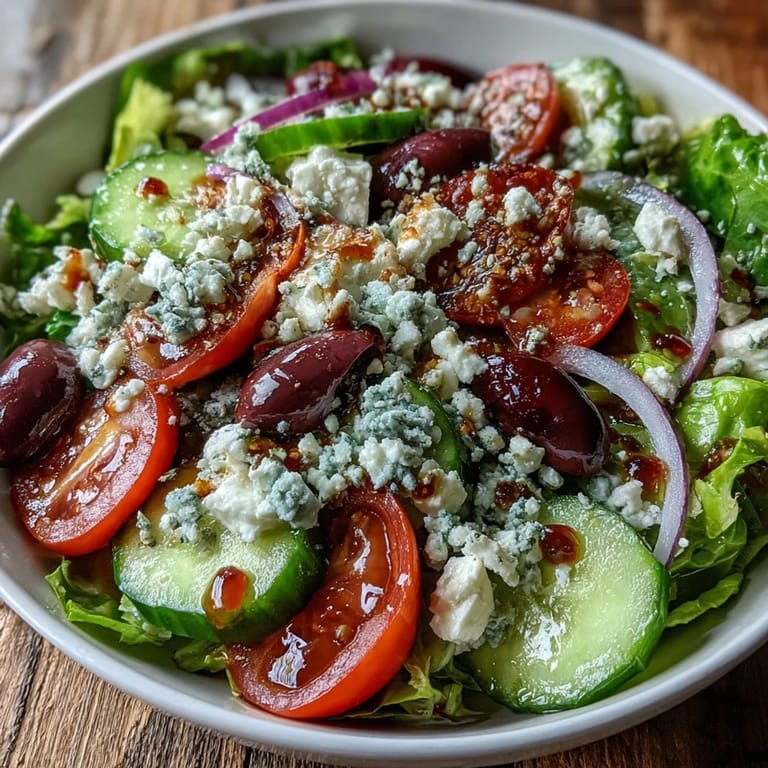
 My neighbor Maria handed me a bowl of this salad one summer evening, and I watched her toss it together with such ease that I felt embarrassed I'd been overcomplicating Greek salads for years. The way the vinaigrette clung to each leaf, how the feta didn't get lost among all those vegetables—it was simple, but there was something deliberate about every choice. She laughed when I asked for her secret, as if the secret was just paying attention to what you were doing.
I made this for a friend who'd just moved into a new apartment with an empty refrigerator, and watching her face when she tasted it—the way she closed her eyes for a second—made me realize how much we all need something that tastes like actual food, not obligation. That was the moment I stopped thinking of salad as a side dish and started seeing it as something worth making well.
Ingredients
- Romaine lettuce: Use it the day you buy it if you can; the moment it starts to wilt, the whole salad loses its backbone.
- Cherry tomatoes: Halving them instead of leaving them whole keeps them from rolling everywhere and lets the vinaigrette reach their insides.
- Cucumber: English cucumbers have thinner skin and fewer seeds, so they feel less watery than the regular kind.
- Red onion: The purple color is half the appeal, and slicing it thin means your mouth won't be overpowered by sharpness.
- Feta cheese: Buy it from the barrel at a good cheese counter if you can; the pre-crumbled stuff turns to powder.
- Kalamata olives: Pit them yourself if you have time, or hunt for ones already pitted—biting down on a pit in front of someone is never graceful.
- Extra-virgin olive oil: This is where you taste the difference, so choose one you actually like drinking by the spoonful.
- Red wine vinegar: The acidity wakes everything up; don't skip it or use something milder.
- Dried oregano: Fresh would be nice, but dried oregano is honest and reliable here.
- Garlic: One clove minced fine is all you need; garlic can hijack a salad if you're not careful.
- Dijon mustard: It acts as an emulsifier, helping the oil and vinegar stay friends instead of separating.
Tired of Takeout? 🥡
Get 10 meals you can make faster than delivery arrives. Seriously.
One email. No spam. Unsubscribe anytime.
Instructions
- Prepare your vegetables with intention:
- Chop the romaine into bite-sized pieces, halve the tomatoes, slice the cucumber, and thinly slice that red onion so every piece feels intentional. This takes a few minutes but changes everything about how the salad feels to eat.
- Build the bowl in layers:
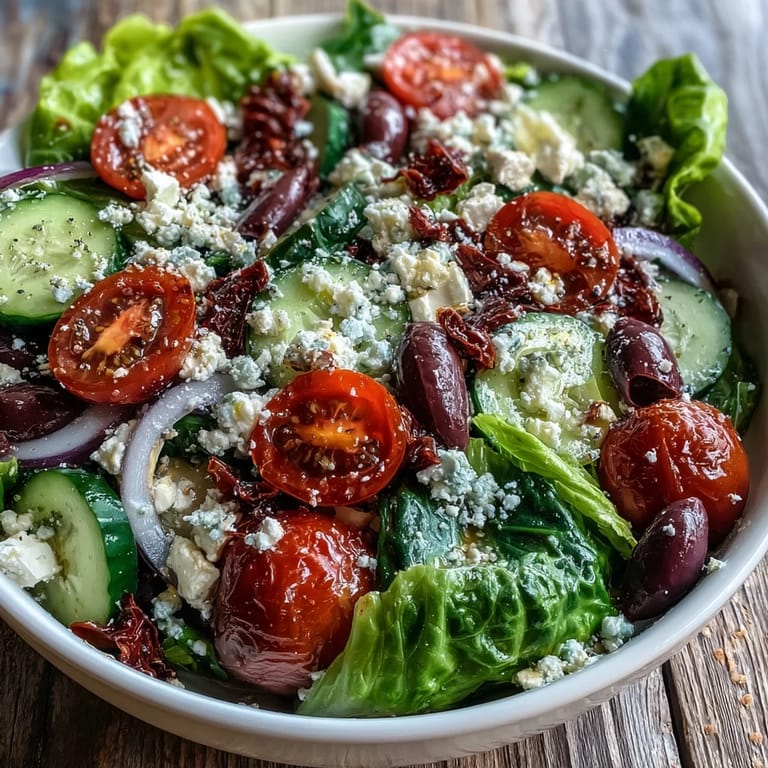
- Pile the lettuce first, then scatter the tomatoes and cucumber across the top, letting the colors show. Sprinkle the feta and olives last so they don't sink into the lettuce and disappear.
- Make the vinaigrette properly:
- In a small bowl or jar, whisk the olive oil, red wine vinegar, oregano, minced garlic, mustard, salt, and pepper until it looks emulsified and tastes right to you. This takes about a minute and tastes nothing like what you'd buy in a bottle.
- Dress at the last moment:
- Drizzle the vinaigrette over the salad just before serving, then toss everything gently until each piece is touched but not drenched. If you dress it too early, the lettuce starts weeping and the whole thing falls apart.
- Serve with honesty:
- Bring it to the table right away while everything is still crisp and cold, and watch people actually enjoy a salad.
 Pin it
 My kid asked me once why this salad tasted better than the ones I'd made before, and I realized I couldn't explain it in a way that made sense except to say that sometimes food tastes better when you stop rushing through it. That's when cooking stops being a chore and starts being something you actually care about.
The Vinaigrette Is Everything
The dressing makes or breaks this salad, and it's worth the thirty seconds it takes to whisk it properly instead of just shaking everything in a jar and hoping for the best. When the oil and vinegar actually come together, you get something silky that clings to the vegetables instead of pooling at the bottom like an afterthought.
How to Make It Your Own
This salad is a foundation, not a prison. I've added sliced bell peppers when I had them, thrown in fresh dill because it was growing in the garden, crumbled some croutons for crunch when I felt like it. The core stays solid, but the edges are where you get to play.
Serving and Storage
This salad is best eaten the moment you finish tossing it, when everything is cold and crisp and the flavors are singing together. If you have leftovers, store the vinaigrette separately from the vegetables and dress them fresh the next day, or the lettuce will turn into something you don't want to think about.
- Keep the dressing in a jar in the fridge where it'll last for a week and make you feel smart for being prepared.
- Chop your vegetables ahead of time if you need to, but don't assemble the salad until right before serving.
- This salad pairs beautifully with warm pita bread, grilled chicken, or a piece of good bread if you're in the mood to turn it into something more substantial.
 Pin it
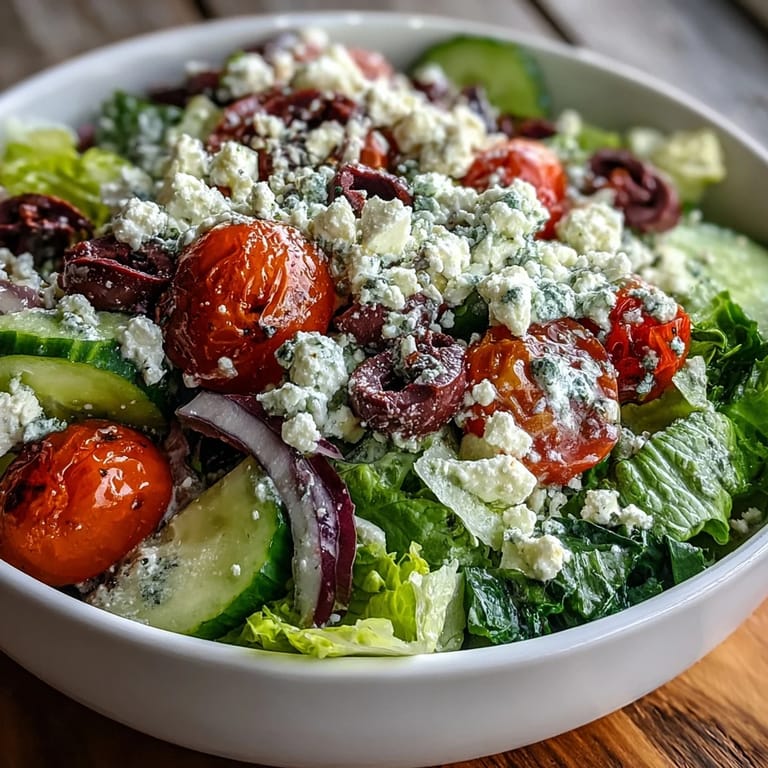
 A good Greek salad is proof that you don't need fancy techniques or obscure ingredients to make something people actually want to eat. Make it once and mean it, and you'll find yourself reaching for this recipe again and again.
Recipe FAQs
- → Can I make Greek salad ahead of time?
You can prepare the vegetables and dressing separately up to a day in advance. Store chopped vegetables in an airtight container and keep the vinaigrette in a sealed jar. Toss everything together just before serving to maintain the crisp texture and prevent wilting.
- → What can I use instead of feta cheese?
For a dairy-free version, try vegan feta alternatives made from almonds or tofu. Cotija cheese provides a similar crumbly texture and salty flavor. If you prefer a milder taste, fresh goat cheese or ricotta salata work well as substitutes.
- → How long does homemade Greek vinaigrette last?
The homemade Greek vinaigrette will stay fresh in the refrigerator for up to one week when stored in a sealed jar. Give it a good shake or whisk before using, as the ingredients may separate slightly. The flavors often develop and improve after a day or two.
- → What type of olives work best in Greek salad?
Kalamata olives are traditional and provide the most authentic Greek flavor with their deep purple color and rich, briny taste. If unavailable, you can substitute with other Mediterranean olives like Gaeta, Niçoise, or black olives. Just ensure they're pitted for easy eating.
- → Is Greek salad healthy?
Yes, Greek salad is nutrient-rich with fresh vegetables providing vitamins, fiber, and antioxidants. The olive oil offers healthy monounsaturated fats, while feta adds protein and calcium. This Mediterranean-style bowl aligns with heart-healthy eating patterns and fits well into balanced diets.
- → Can I add protein to make it a complete meal?
Absolutely. Grilled chicken, shrimp, or salmon work wonderfully with the Mediterranean flavors. For vegetarian options, add chickpeas, quinoa, or grilled halloumi. The bowl also pairs nicely with warm pita bread or hummus for added substance and satisfaction.