 Pin it
 I discovered this dish while wandering through a Parisian charcuterie one autumn evening, mesmerized by how the shopkeeper had arranged delicate breadsticks in an architectural arc above a marble board of cheeses. It struck me that elegance doesn't always require complexity—sometimes it's just about marrying what you love with intention and a little theatrical flair. That night, I became obsessed with recreating the moment at home, imagining guests' faces when they'd see this edible sculpture emerge from my kitchen.
I remember my sister's partner taking a photo of this before we ate it, then immediately deconstructing the dome with childlike enthusiasm, laughing about how we'd engineered something beautiful just to destroy it. That's when I realized the real magic wasn't just in how it looked—it was in the moment where everyone stopped, appreciated it together, and then enjoyed it messily and joyfully.
Ingredients
- All-purpose flour: The foundation—250g creates enough dough for a sturdy dome that won't collapse under its own weight.
- Instant dry yeast: Just one teaspoon gives you a gentle rise without over-proofing; trust the timing.
- Lukewarm water: Too hot and you'll kill the yeast, too cold and nothing happens—aim for bath temperature.
- Olive oil: Two tablespoons makes the dough silky and the breadsticks have a subtle richness.
- Egg yolk glaze: Creates that golden burnish that catches the light beautifully.
- Sesame seeds: Optional but they add a whisper of texture and elegance to each stick.
- Triple-cream Brie: Buttery and soft, it anchors the cheese selection with pure comfort.
- Aged Comté: Nutty and firm enough to hold its shape when cubed, it's the backbone of sophistication.
- Truffled goat cheese: Shaping it into balls is meditative, and those little spheres catch the eye.
- Blue cheese: Roquefort crumbles bring an earthy contrast and a hint of boldness.
- Parmigiano Reggiano shavings: Use a vegetable peeler for delicate curls that feel precious.
- Red grapes: Their sweetness and color break up the richness and add visual drama.
- Honey or fig jam: A small drizzle transforms the tasting experience—sweet against savory is everything.
- Fresh herbs: Thyme and rosemary scattered on top smell incredible and ground the whole composition in garden freshness.
Tired of Takeout? 🥡
Get 10 meals you can make faster than delivery arrives. Seriously.
One email. No spam. Unsubscribe anytime.
Instructions
- Mix and knead the dough:
- Combine flour, yeast, sugar, and salt in a large bowl, then add water and olive oil. Knead for 8–10 minutes until smooth and elastic—you'll feel the transformation as it goes from shaggy to silky.
- Let it rise:
- Cover the bowl and leave it in a warm spot for 30 minutes; it should roughly double in size, becoming puffy and alive.
- Prepare your workspace:
- Preheat your oven to 200°C and line a baking tray with parchment paper so the breadsticks won't stick.
- Shape the sticks:
- Divide dough into 18–20 pieces and roll each into a thin stick about 3 mm thick and 25 cm long—they'll look fragile but they're stronger than you think.
- Glaze and season:
- Brush each breadstick lightly with egg yolk, then sprinkle sesame seeds if using; this is where the golden magic starts.
- Bake until crisp:
- Bake for 15–18 minutes, turning halfway through, until they're golden and snap when bent. Let them cool completely on the tray.
- Arrange the cheese foundation:
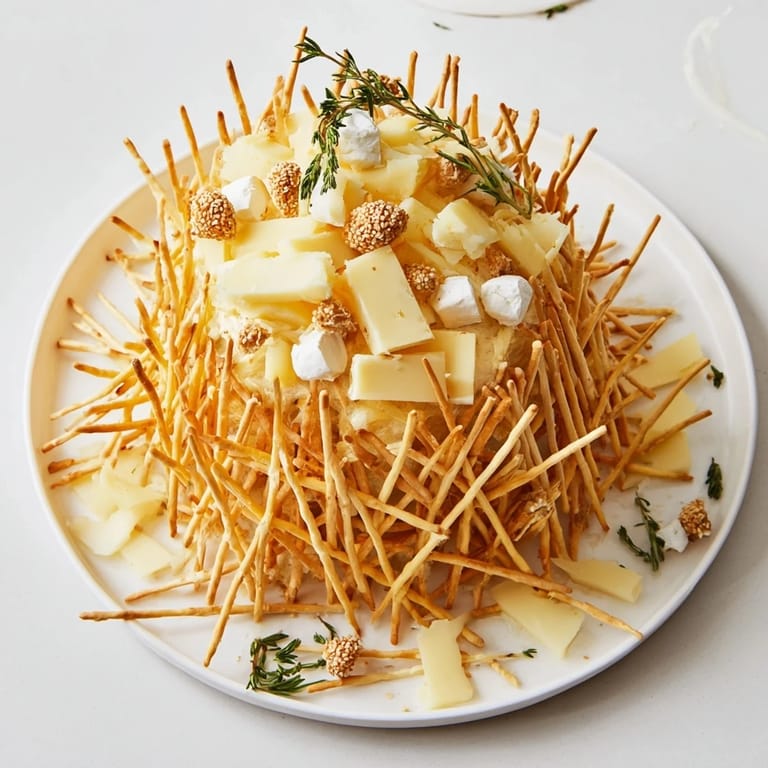
- On your serving platter, create a mound with the cubed cheeses, crumbled blue cheese, and goat cheese balls clustered in the center.
- Build the dome:
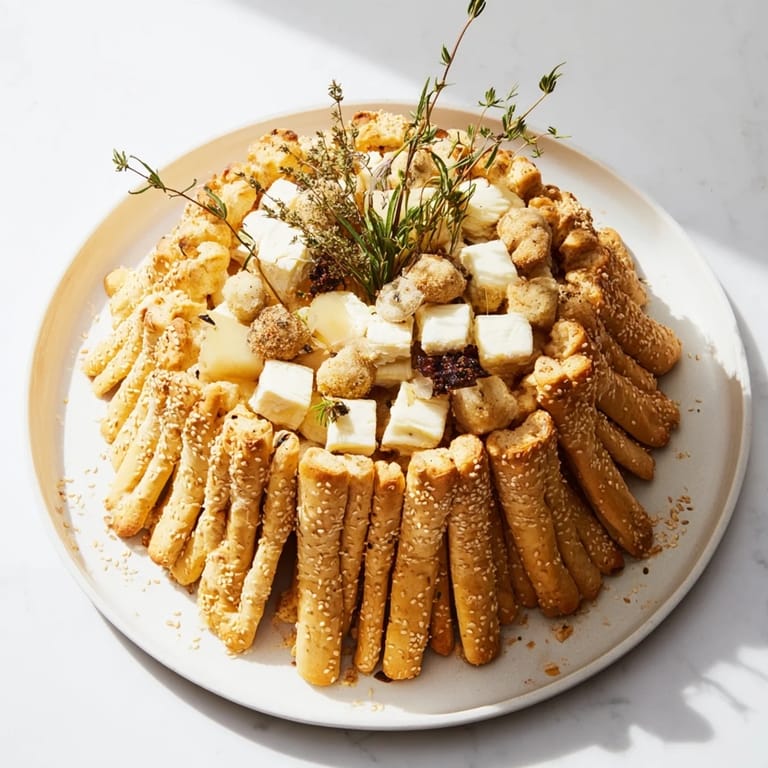
- Carefully lean breadsticks against the cheese pile, crossing and balancing them to form an arch; if stability feels shaky, use a small bowl as a temporary scaffold while you work, then remove it before serving. Add grapes, a drizzle of honey, and fresh herb sprigs tucked around the base.
 Pin it
 There was a moment, just before guests arrived, when I stepped back and saw the whole thing—light catching the sesame seeds, the colors of the cheeses visible through the lattice of breadsticks, that small pool of honey waiting. I realized this wasn't just food; it was a tiny edible sculpture that said 'I'm glad you're here' in a language everyone understood.
The Art of Breadstick Architecture
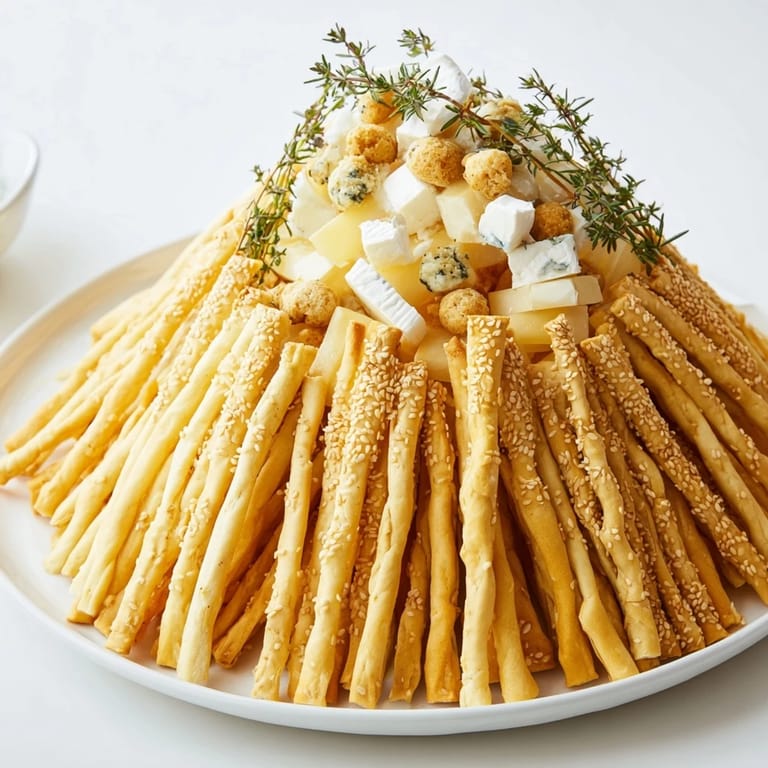
Building the dome is part engineering, part intuition. The breadsticks lean on each other and the cheese pile like they're in conversation, each one supporting the next. I've learned that slight imperfections actually add character—a stick that's tilted at an unusual angle catches more light, and the whole structure looks more organic, less stiff. Think of it like a game where the rules are gentle: gravity helps, cheese acts as an anchor, and if something wobbles, you're probably close to the right spot.
Cheese Selection and Substitutions
The beauty of this dish is that your cheese board can reflect your own palate or what's available at your market. I've made versions with Manchego instead of Comté, creamy Taleggio replacing the Brie, even aged cheddar when I was craving something sharper. The only rule I follow is contrast: you want soft and firm, mild and bold, so the tasting journey has dimension. Aged Gouda brings a caramel note, fresh mozzarella adds delicate creaminess, and pungent cheeses like Époisses become show-stoppers if you're cooking for the adventurous.
Serving and Storage Moments
This is best assembled no more than an hour before serving so the breadsticks stay crisp; they're hygroscopic, meaning they'll absorb moisture from the cheese and the air. Once the dome starts to soften, it's still delicious but loses that satisfying crunch. Leftovers are wonderful—break the breadsticks apart and use them as vehicles for the soft cheeses the next day, or crumble them into salads.
- Serve alongside a crisp white wine or Champagne to echo the elegance of the presentation.
- For theatrical flair, paint a few breadsticks with edible gold leaf before assembly so they catch light like little torches.
- If making this for a gluten-free guest, prepare a separate batch of breadsticks using a reliable gluten-free dough recipe and build a smaller dome just for them—it's worth the extra effort.
 Pin it
 This dish reminds me that sometimes the most memorable meals aren't the fanciest—they're the ones where someone took care to create a moment. The Gilded Cage is your invitation to do exactly that.
Recipe FAQs
- → How do I achieve crisp breadsticks?
Knead the dough until smooth and elastic, roll thinly, and bake at 200°C for 15–18 minutes, flipping once for even crispness.
- → Can I use different cheeses?
Absolutely. Try aged cheddar, Manchego, or Taleggio to customize the cheese selection to your taste.
- → What is the best way to assemble the dome?
Arrange the cheeses in a mound, then carefully build the breadstick dome over them, using gentle pressure to secure the structure or a small bowl as a mold.
- → Are there garnish suggestions?
Fresh herbs like thyme and rosemary, along with seedless grapes and a drizzle of honey or fig jam, complement the presentation and flavor.
- → How can I make this gluten-free?
Substitute the breadsticks with a gluten-free dough variant while maintaining the same shaping and baking steps.