 Pin it
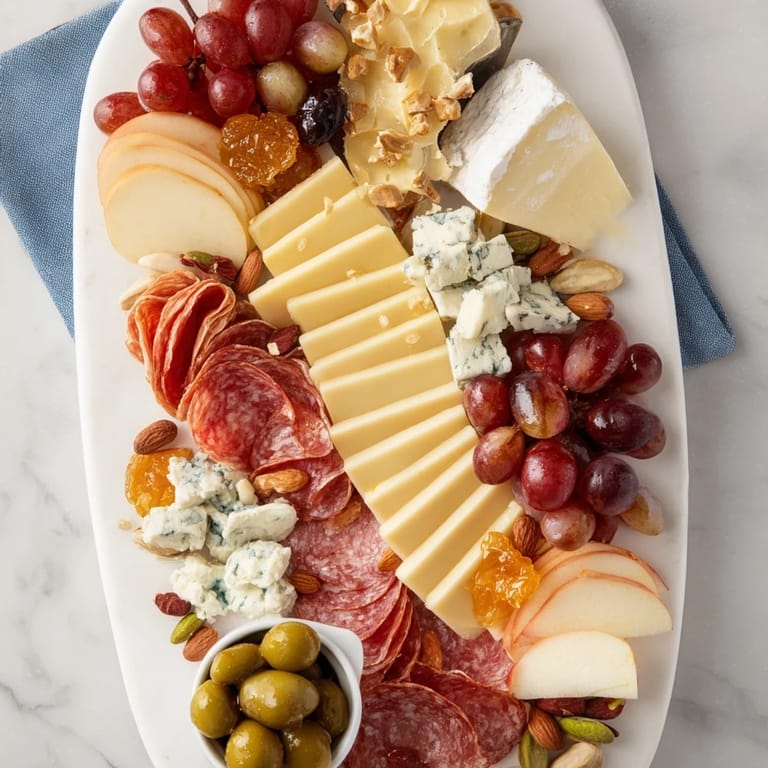
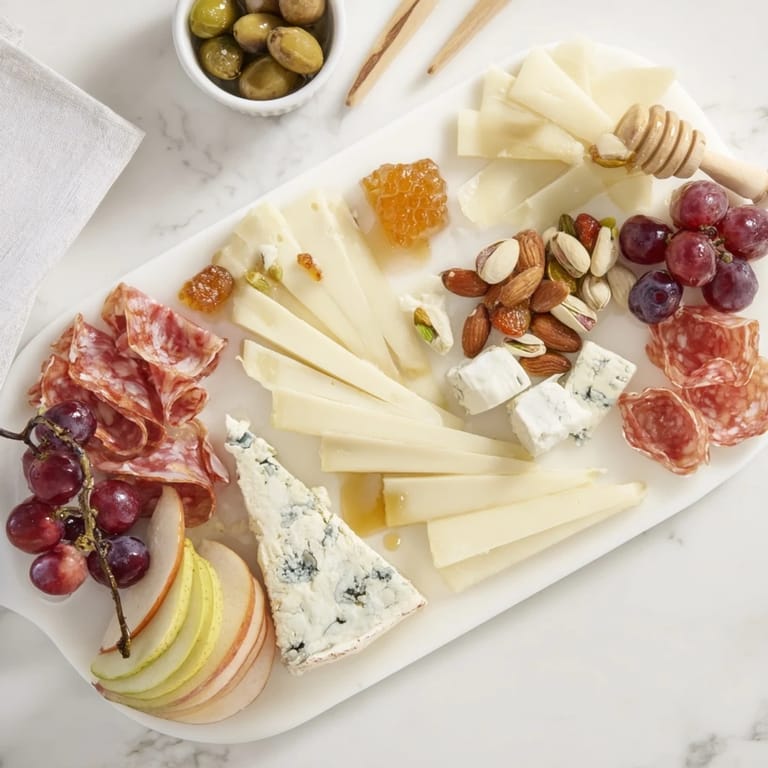
 I'll never forget the first time I arranged a proper charcuterie board for a dinner party—I was convinced it had to be symmetrical and perfectly balanced, every item accounted for in neat little sections. But then I discovered this elegant approach: leaving the center dramatically bare, letting the rim tell the story. It felt almost theatrical, like framing a masterpiece. Now, whenever I'm hosting something special, this is the design that makes everyone pause before reaching for their first bite.
I served this board at my sister's engagement party last spring, and I watched people actually linger around it, genuinely admiring how it looked before diving in. Someone even took a photo of it before eating anything—that's when I knew the presentation had crossed from nice to memorable.
Ingredients
- Triple-cream Brie, 120 g: Slice this into slim wedges rather than cutting it thick—it looks more elegant and lets people taste its delicate richness without the richness overwhelming everything else on their plate
- Aged Manchego, 120 g: This Spanish cheese has a nutty sweetness that sits beautifully between soft cheeses and sharp ones; slice it thin so it catches light and looks sophisticated
- Blue cheese, 100 g: Crumble or slice based on your mood; I prefer slices for this presentation as they hold their shape better along the rim
- Goat cheese, 100 g: Form small rounds using two spoons—they look precious and invite people to take exactly one perfect bite
- Prosciutto, 100 g: Fold it into loose ribbons just before arranging; it dries out if left exposed too long, but those gentle folds catch light beautifully
- Salami, thinly sliced, 120 g: Roll some slices into loose tubes and let others lay flat—the variety in shape makes the arrangement feel dynamic
- Coppa or bresaola, 100 g: These are silkier than salami and add textural contrast; their deep color grounds the board visually
- Red grapes, 1 small bunch: Keep them clustered together in one area of the rim; they're jewel-like and provide visual anchors
- Green grapes, 1 small bunch: Place opposite the red grapes to balance color around the board
- Pear, 1 ripe, thinly sliced: Slice just before serving to prevent browning; toss with a whisper of lemon juice if making ahead
- Apple, 1 crisp, thinly sliced: The tartness cuts through rich cheeses beautifully; Honeycrisp or Granny Smith work perfectly
- Dried apricots, 1 small handful: Their deep amber color is unexpected and sophisticated; they provide sweetness without being cloying
- Marcona almonds, 1/4 cup: These are buttery and roasted, nothing like raw almonds; they're worth seeking out for this board
- Salted pistachios, 1/4 cup: Their bright green is stunning, and the salt plays with both sweet and savory elements
- Castelvetrano olives, 1/4 cup: Buttery and mild, these are the olives that convert olive skeptics
- Cornichons, 1/4 cup: Their pickle brightness cuts through richness; they're essential for palate cleansing
- Fig jam or quince paste, 1/4 cup: Serve in a small ramekin as part of the rim; fig jam is traditional, but quince has deeper complexity
- Honeycomb or honey drizzle: This is your flourish—real honeycomb looks dramatic, or a small bowl of honey lets people control sweetness
- Baguette, 1, thinly sliced and lightly toasted: Toast just before serving so slices stay crisp and warm; this is better than serving it plain
- Assorted crackers, 1 box: Choose ones that are substantial enough to hold cheese without crumbling; reserve about a third to refill as people eat
Tired of Takeout? 🥡
Get 10 meals you can make faster than delivery arrives. Seriously.
One email. No spam. Unsubscribe anytime.
Instructions
- Choose Your Stage:
- Select a large round or oval board with a prominent rim—this shape is essential to the design. Wood or marble both work; I prefer marble when it's a special occasion because it stays cooler and looks more refined. The rim should be obvious and inviting, not subtle.
- Start With Your Foundation:
- Before you place anything, take a breath and imagine the empty center as the star of the show. This is what makes the arrangement elegant. Wipe your board clean, and if it's marble, give it a light polish so it gleams.
- Begin With Cheese:
- Place your cheeses first, working your way around the rim. Start with the softer Brie—position wedges so they lean slightly, showing their creamy interior. Move to harder cheeses like Manchego. Tuck the goat cheese rounds into gaps. Think of this like you're telling a story that moves around the board; let each cheese have its moment.
- Nestle in the Charcuterie:
- Now add your cured meats between cheese portions. Fold prosciutto into loose ribbons—don't bunch them tightly, let them breathe. Roll salami into tubes that stand slightly. These meats should feel like they're playing with the cheeses, not competing.
- Scatter Your Fruits:
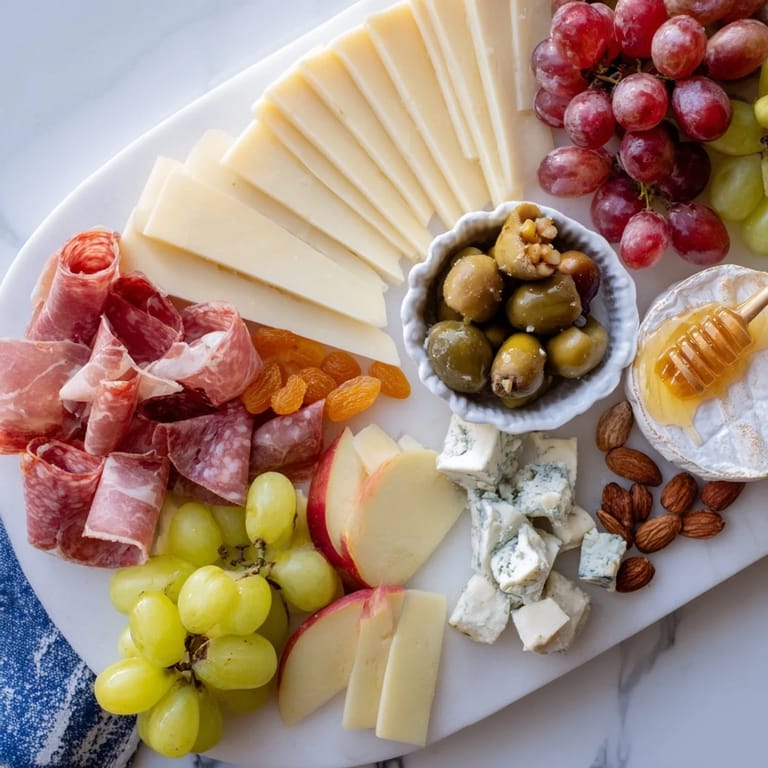
- Cluster grapes together in one spot—keep them on the stem if possible, as it looks more intentional. Arrange apple and pear slices in a slightly overlapping pattern, like roof shingles. Tuck dried apricots into gaps. Fruits should feel like jeweled surprises among the savory items.
- Layer In Your Nuts and Olives:
- Scatter almonds and pistachios in small clusters, not spread thin. Pile olives together slightly. These items create textural interest and visual variation—they're the accent pieces.
- Position Your Support Bowls:
- Place small ramekins or bowls for jam, honey, and any cornichons directly on the rim, treating them as part of the arrangement, not separate additions. They should feel integrated, not tacked on.
- Edge It With Bread and Crackers:
- Position toasted baguette slices and a selection of crackers around the remaining gaps in the rim. Stand some up slightly so people can see the variety. Keep extras nearby to refresh as the board depletes.
- Step Back and Assess:
- Before serving, look at your board from above and from eye level. The colors should feel balanced around the circle, textures should vary in every direction you look, and that center should feel deliberately, intentionally empty—like the most important part of the design.
- Serve With Grace:
- Set out cheese knives and small tongs. Bring the board to room temperature if it was chilled. Let people explore it. The beauty of this arrangement is that as people take bites, the remaining items naturally settle and create new compositions.
 Pin it
 The best moment came when a guest said, 'This is so beautiful I almost don't want to eat it'—and then she did, anyway, and discovered how perfectly the flavors work together. That's when I realized this board is more than just an appetizer; it's an experience.
The Philosophy Behind the Empty Center
I used to think a good charcuterie board meant using every inch of space, packing it so full that there was nowhere left to place another crumb. Then I learned something counterintuitive: leaving space is actually more generous. The empty center isn't a gap; it's a statement. It says, 'I've been intentional about this. I've chosen quality over quantity. I'm showing you the board itself, not hiding it under food.' It's the difference between decorating a room and designing one. Once you see it this way, you can't go back.
Building Flavor Bridges Around the Rim
Every good board needs what I call flavor bridges—items that transition people's palates smoothly from one area to another. A slice of apple between salty prosciutto and rich Brie, or cornichons next to creamy goat cheese, creates moments of discovery. When you arrange thoughtfully, you're actually guiding people through a tasting experience. The cornichons don't just look good; they're there to cleanse your mouth so you taste the next cheese freshly. This is why random placement matters less than intentional placement.
Timing and Temperature Secrets
I learned the hard way that a beautiful board served too cold tastes like sadness. Cheese needs warmth to express its personality—a cold, dense block of aged Manchego doesn't sing the way it does at room temperature. The same is true for prosciutto; when it's cold, it's brittle and one-dimensional, but at room temperature, it becomes silky and nuanced. The trick is pulling everything from the fridge about 20-30 minutes before guests arrive. This is also why I serve the board immediately after arranging it—the moment between 'finished' and 'people are eating' is when everything tastes its best. Don't let it sit on the counter for an hour waiting for people; they'll eat the beautiful food you've prepared, and it'll taste even better.
- Pull everything from the fridge 20-30 minutes before serving—room temperature transforms flavors completely
- Toast the baguette slices just before serving so they stay crisp and offer pleasant contrast to soft cheeses
- Keep extra crackers and bread nearby to refresh the board as people eat; there's nothing worse than running out of vehicles for cheese
 Pin it
 This board has taught me that sometimes the most elegant thing you can do is restrain yourself. Serve it with intention, let people explore it, and watch how a simple arrangement of good ingredients becomes the heart of your gathering.
Recipe FAQs
- → How should the items be arranged on the board?
Arrange cheeses, charcuterie, fruits, nuts, and condiments exclusively along the outer rim, maintaining the board’s shape and leaving the center empty for visual impact.
- → What are good vegetarian alternatives for charcuterie?
Replace charcuterie with marinated artichoke hearts, roasted peppers, or extra cheeses to maintain variety and flavor balance.
- → What pairings complement this spread?
Champagne, sparkling wine, or a crisp Sauvignon Blanc pair beautifully with the diverse flavors on the board.
- → How can I add extra festivity to the display?
Enhance the board by adding edible gold leaf or gold-dusted nuts for a luxurious festive touch.
- → What tools are recommended for serving?
Use a large wooden or marble board with a prominent rim, ramekins for condiments, cheese knives, and tongs for easy serving.