 Pin it
 The first time I made dirty rice, my hands were shaking a little—not from nervousness, but from excitement. A friend had just returned from New Orleans with stories about this dish, and I was determined to capture that magic in my own kitchen. The aroma that filled my small apartment as the meat browned and the vegetables softened told me I was on the right track. What surprised me most was how the Cajun spices seemed to deepen and bloom once they hit the warm oil, filling the air with something almost smoky and alive. I knew right then this would become a regular rotation in my cooking.
I made this for my sister on a rainy afternoon when she was feeling homesick for the South, and watching her face light up on that first bite was worth every minute at the stove. She said it tasted like something her grandmother would've made, which honestly moved me—I'd never met her grandmother, but apparently I'd channeled her somehow through rice and spices. That's when I understood that this dish carries memory in it, the kind that travels across generations and kitchens and settles into whoever's brave enough to cook it.
Ingredients
- Ground pork and beef (or chicken livers): The combination creates depth; if you go traditional with livers, they add an earthy richness that feels authentic and honest to the dish.
- Onion, bell pepper, and celery: This is your holy trinity—the foundation of Cajun cooking that teaches your vegetables to work together.
- Garlic: Three cloves might seem modest, but they're essential for cutting through the spice and adding warmth.
- Long-grain white rice: Rinsing it matters more than you'd think; it keeps the grains distinct instead of turning starchy and clumpy.
- Chicken broth: Use good broth if you can—it's not just liquid, it's the backbone of flavor here.
- Cajun seasoning, thyme, smoked paprika, salt, pepper, and cayenne: These aren't random additions; they're a carefully balanced equation that creates that signature warm, spicy complexity.
- Vegetable oil: A neutral oil is your friend here so the spices and meat can shine without competition.
Tired of Takeout? 🥡
Get 10 meals you can make faster than delivery arrives. Seriously.
One email. No spam. Unsubscribe anytime.
Instructions
- Brown the meat with intention:
- Heat your oil until it's shimmering and almost smoking—this is the moment that matters. Add your meat and let it sizzle without stirring constantly; you want that caramelized crust to develop, golden and flavorful, breaking everything up only as needed to cook through evenly over about 6 to 7 minutes.
- Build the flavor base:
- Once the meat's cooked, add your chopped vegetables and let them soften for 5 minutes, stirring occasionally so they catch the flavorful bits at the bottom of the pan. This is where the kitchen starts smelling like someone's cooking with real soul.
- Wake up the spices:
- Sprinkle in your Cajun seasoning, thyme, smoked paprika, salt, pepper, and cayenne pepper, then stir everything together so every grain of meat and vegetable gets coated. You'll notice the aroma shift immediately—that's the spices blooming, releasing their complexity.
- Toast the rice briefly:
- Add your rinsed rice and stir for 1 to 2 minutes, letting it toast slightly in the oil and spiced meat. This small step adds texture and prevents the rice from turning mushy later.
- Introduce the liquid and let it work:
- Pour in your chicken broth, bring everything to a boil, then lower the heat and cover. The rice will absorb the liquid over 20 to 22 minutes, transforming into something tender and infused with every spice you've built.
- Rest and fluff:
- Once the rice is tender and the liquid's absorbed, let it sit covered for 5 minutes—this resting period lets the flavors settle. Fluff everything gently with a fork, breaking up any clumps.
- Finish with brightness:
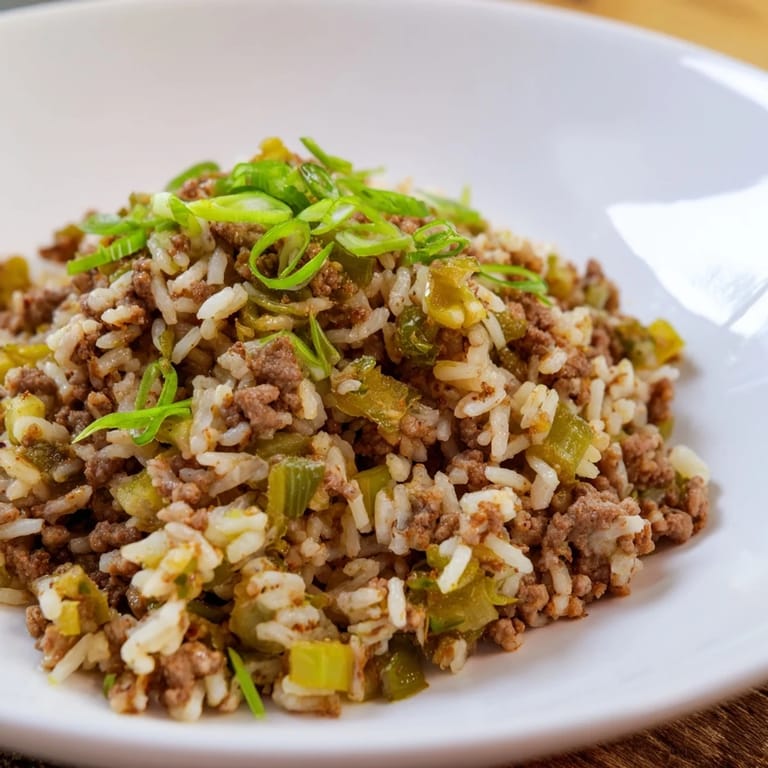
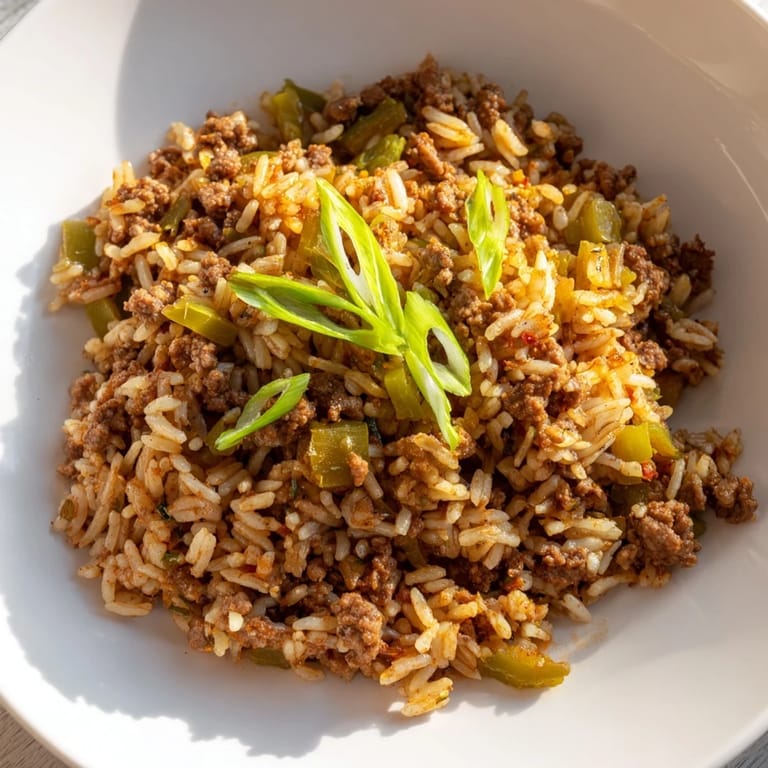
- Scatter fresh sliced spring onions on top just before serving, adding a fresh bite that cuts through the richness.
 Pin it
 There's a moment, right around minute 15 of simmering, where the steam rises and the scent hits you fully—that's when you know you're about to serve something that matters beyond just being food. The first time someone told me this tasted like home, even though they weren't from the South, I understood that comfort has a way of transcending geography.
The Soul of Cajun Cooking
Dirty rice earned its name from the ground meat that colors the grains, making them look earthier and more rustic than plain white rice. There's nothing delicate about it—it's meant to be hearty, full, and unapologetic about its richness. The beauty is that this simplicity becomes strength; every ingredient has a job and nothing's wasted on presentation or unnecessary flourish.
Playing With Heat and Flavor
The cayenne pepper is optional, but here's my honest take: if you're hesitant about spice, start without it and taste as you go. The Cajun seasoning already carries warmth, and you can always add heat at the table with hot sauce. That said, if you love bold flavors, don't be shy—the rice absorbs spice beautifully without becoming one-note.
Make It Your Own
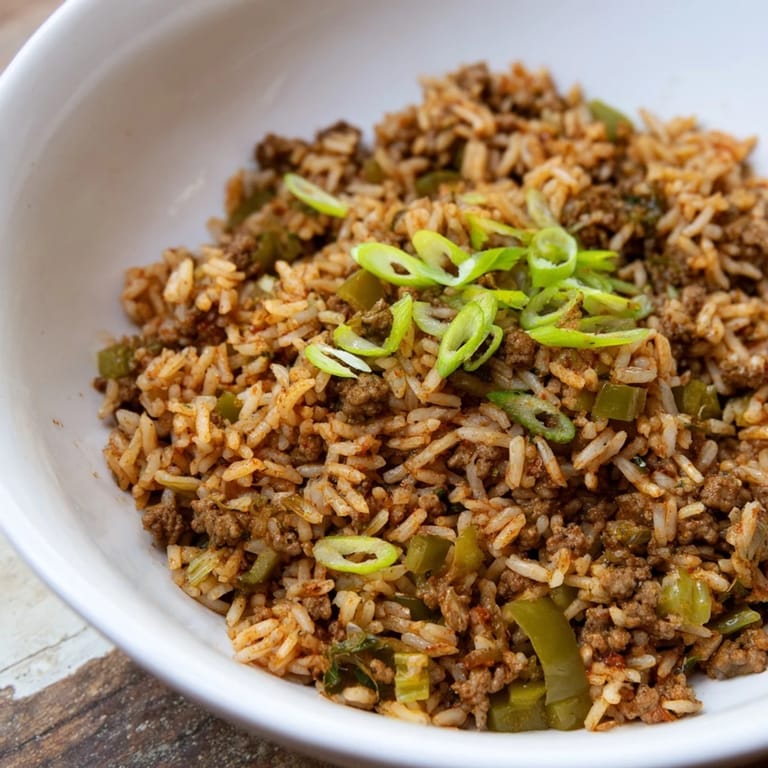
Some nights I add fresh parsley or sliced scallions stirred in after cooking for a brightness that feels like opening a window. Other times I'll use chicken broth infused with a smoked paprika I made myself, or swap in half the beef for andouille sausage if I'm feeling adventurous. The framework stays the same, but the dish bends to what you have on hand and what you're hungry for.
- If you have leftover dirty rice, store it in an airtight container in the fridge for up to three days—it reheats beautifully and sometimes tastes even better the second day.
- A splash of hot sauce stirred in during the last minute adds complexity without overpowering the dish's built-in flavor.
- This pairs beautifully with a simple green salad or cornbread, turning a weeknight dinner into something that feels special and complete.
 Pin it
 This is the kind of dish that asks nothing fancy of you but rewards you with something that feels both timeless and entirely yours. Make it, share it, and watch how it settles into the stories your friends and family tell about meals they won't forget.
Recipe FAQs
- → What type of meat is traditionally used?
Ground pork and beef are common, but chicken livers provide a traditional, richer flavor.
- → Can I adjust the spice level?
Yes, reduce or omit cayenne pepper for milder heat or add more for extra spice.
- → What cooking vessels are ideal?
A large skillet or Dutch oven works best to brown the meat and simmer the rice evenly.
- → How should I prepare the vegetables?
Onion, bell pepper, celery, and garlic should be finely chopped or diced for even cooking and flavor melding.
- → What can I serve this dish with?
It pairs well with crisp lager or chilled white wine and complements hot sauce on the side.